





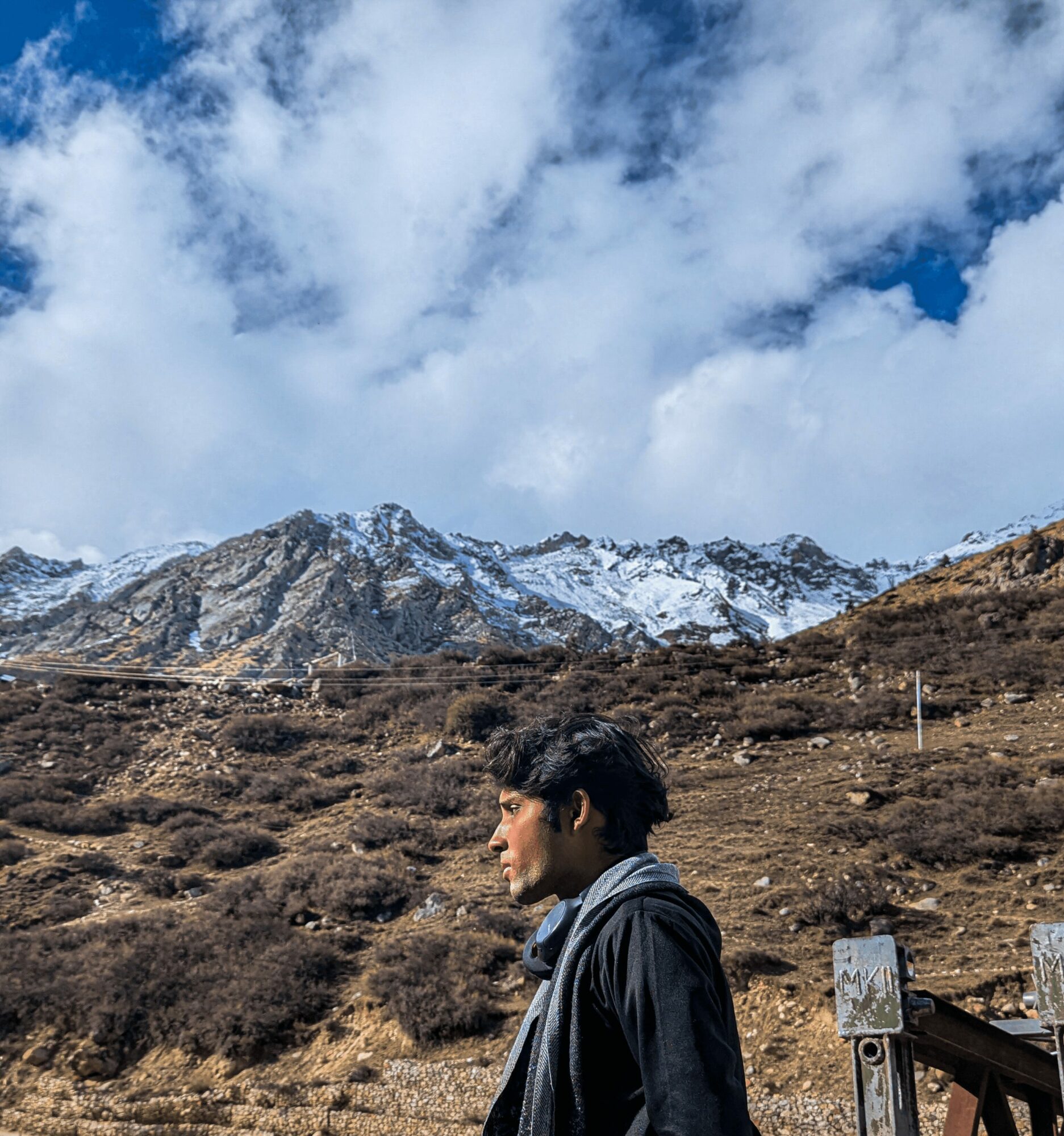
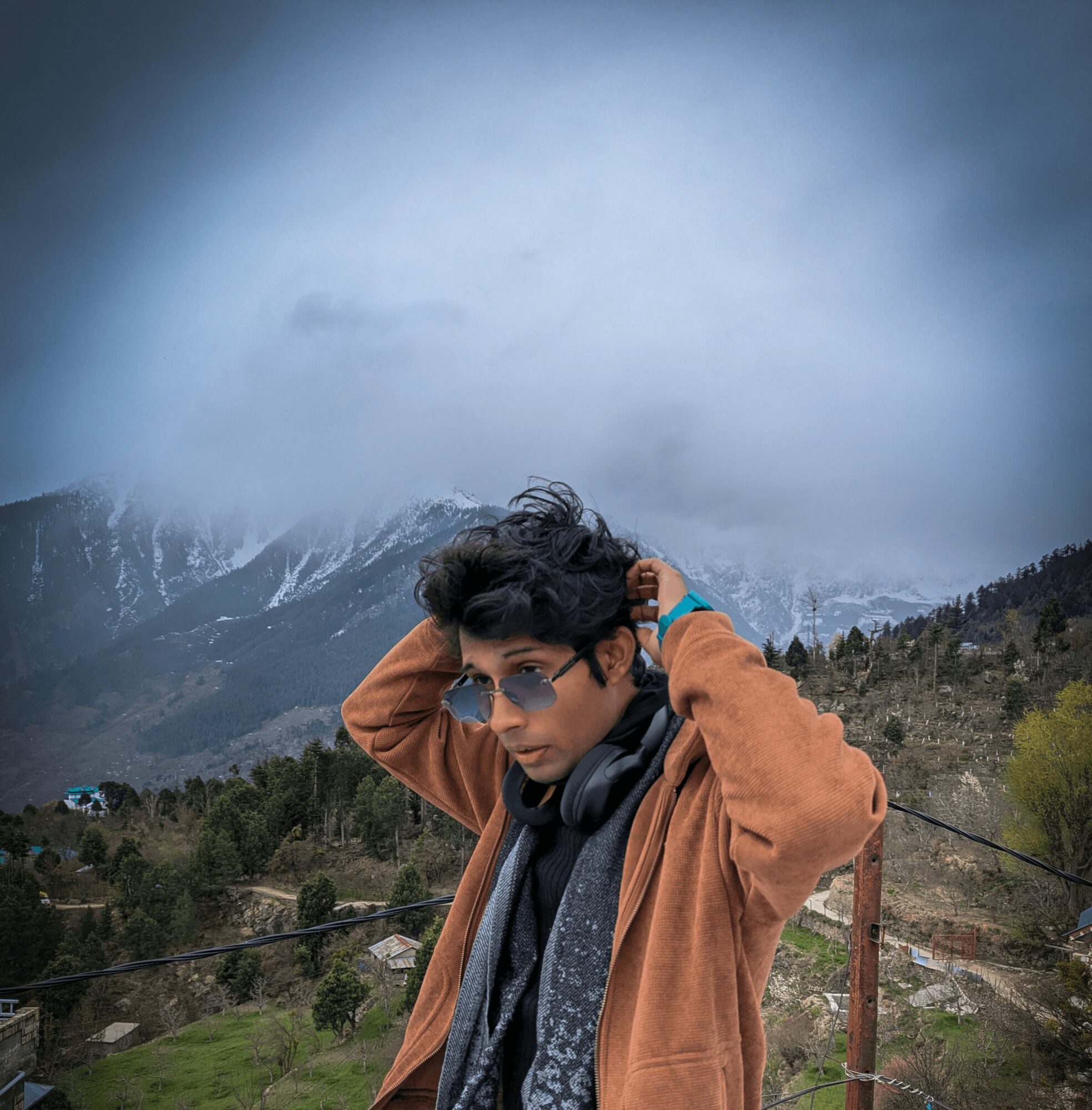
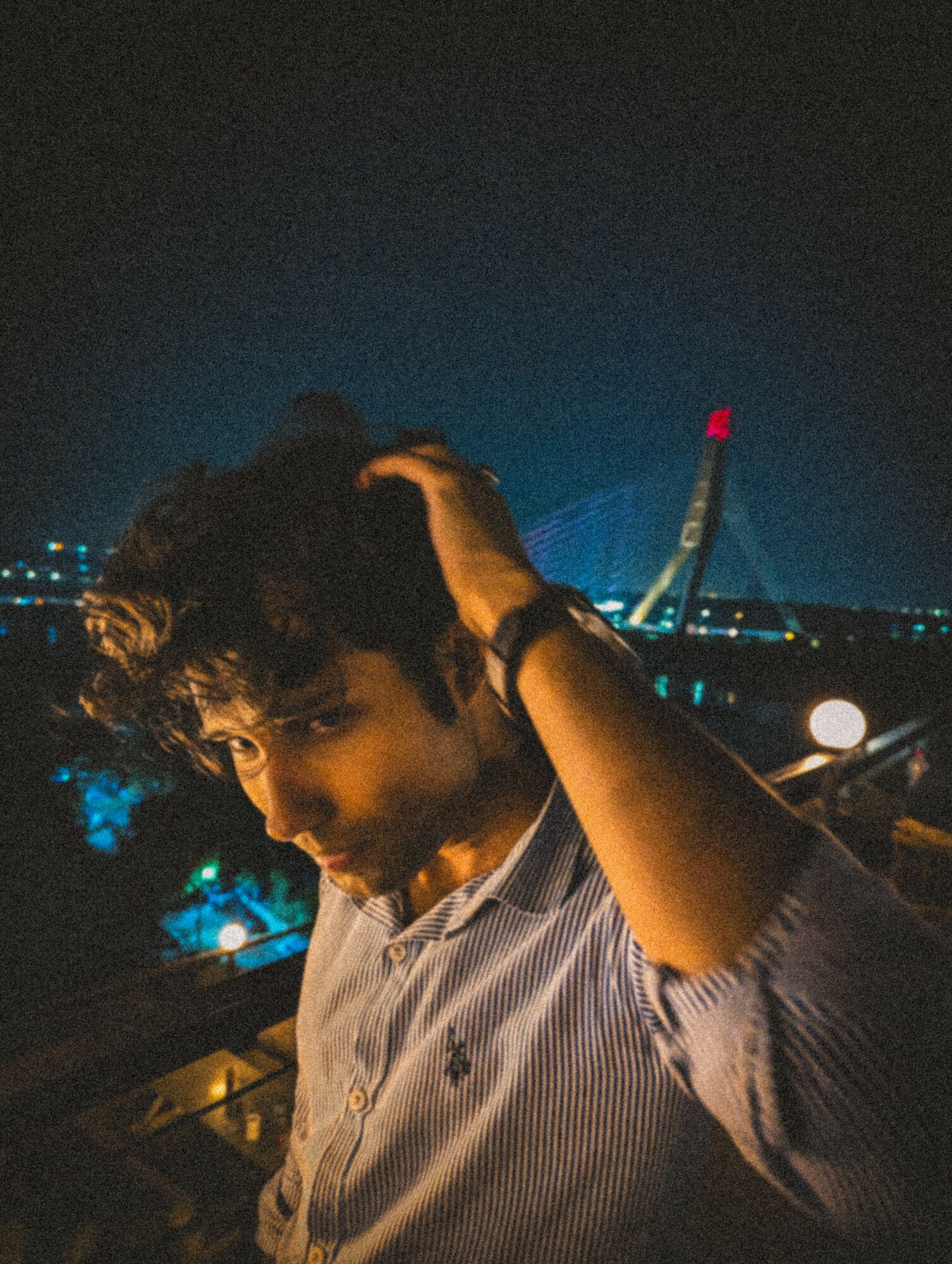
Today we’d like to introduce you to Tanuj Samaddar.
Hi Tanuj, please kick things off for us with an introduction to yourself and your story.
My story starts in 2004 in the quaint township of Rangia in Assam (India). My childhood has been marked with colours and canvases as I took interest in fine arts at a delicate age of 2 years. What started with simple sketches, soon found its way to international galleries. By the time I was 14 my artworks were already being displayed in renowned locations like the Luxembourg Palace (France), Colorado State Art Gallery, JQA Headquarters (Japan), Sofia National Art Gallery (Bulgaria) etc. I was awarded India’s highest civilian award for the youths in 2021 when I was 16 years old. By 19 I had clinched some of the highest awards for the youths around the world.
By the time I made it to Delhi University, I already had the habit of asking questions that didn’t have clean answers which made me either a good student or a mildly exhausting one, depending on who you asked. People sometimes ask me how I balance it all. I’m not sure balance is quite the right word. I think I’m just genuinely interested in too many things to settle into only one of them.
Moving forward, I have found my calling in the space of policy research and social impact. To this end, I have worked with some of the most premier institutions of the country like the Indian Institute of Guwahati and the Indian National Science Academy (INSA), Institute for Educational and Developmental Studies under the Ministry of Education in addition to shadowing multiple Members of Parliament and bureaucrats. On the social front I have very own social impact initiative christened, ‘Action for a Resilient Tomorrow’ (ART). This was made possible through a grant I received from the Peace Jam Foundation (USA) under the Billion Acts Peace Fellowship. We are not catering to over 500 children and 60+ faculty members across three different schools of the rural town of Rangia. Our efforts have also been recognised by the local administration and the national media.
I intend to scale up the initiative from a local to a national campaign with branches in almost all states of the country over the next few decades. I also wish to publish the progress of my developmental work to inspire change across the world. My long term vision is to kindle upward mobility for the under-resourced in my community through the very lanes where many policy aspirations often go uncashed.
Looking ahead, I don’t see a single, defined path. If anything, I hope to continue resisting that kind of clarity. Whether through art, academia, or entirely new ventures, what matters to me is the ability to keep engaging with complexity, with ambiguity, with the unfamiliar Looking ahead, I don’t see a single, defined path. If anything, I hope to continue resisting that kind of clarity. Whether through art, academia, or entirely new ventures, what matters to me is the ability to keep engaging with complexity, with ambiguity, with the unfamiliar.
Would you say it’s been a smooth road, and if not what are some of the biggest challenges you’ve faced along the way?
Every step toward progress naturally invites its own set of challenges, but I’ve come to realise that overcoming that friction is exactly what defines your character. From the intricacies of building a cohesive team to the iterative and often gruelling process of securing funding and negotiating with stakeholders, I’ve encountered more hurdles than I can count. However, I don’t view those moments as failures. To me, every obstacle was a necessary redirection that sharpened my focus and strengthened the foundation of my work.
By viewing every setback as a pivot point, we have built ‘Action for a Resilient Tomorrow (A.R.T.)’ to be as adaptable as the communities we serve. We aren’t just building classrooms in Rangia; we are demonstrating to these young minds that while we cannot always control the ‘luck’ of our circumstances, we can absolutely control our capacity to adapt and persevere. That, to me, is the true intersection of policy, art, and impact. I feel that success is rarely a straight line; it is a mosaic of hard work, a touch of luck, and a relentless willingness to be redirected toward something better than what we originally imagined.
Because the truth is, we do not always get to choose the conditions we begin with. Some inherit stability, others inherit uncertainty. Some begin with opportunity, others with absence. But within all of that, there remains something deeply personal and profoundly powerful, the ability to respond. To adapt. To persist, even when the outcome is unclear.
And that is what we try to embody and pass on. Not a promise that the path will be easy, but a quiet assurance that it is possible. That meaning can be created even in constraint. That direction can emerge even from disruption. Success, then, is rarely linear. It is cumulative and textured: a mosaic shaped by sustained effort, informed risk, occasional serendipity, and an openness to redirection. In many ways, the outcomes we achieve are not despite the obstacles, but because of them.
Can you tell our readers more about what you do and what you think sets you apart from others?
I am an artist, public policy enthusiast and a social activist. I am a recipient of the Pradhan Mantri Bal Puraskar, conferred by the President of India, and the Karmaveer Chakra Award awarded by UNDP in recognition of social impact leadership.
As an artist, youth leader, and public policy enthusiast, I have been associated with IIT Guwahati, the Indian National Science Academy (INSA), Government of India, Ministry of Education among other organisations. Previously, I served as a Global Youth Advisor to the Global Youth Advisory Council, Zimbabwe, in collaboration with the London School of Hygiene & Tropical Medicine.
I am an active member of the Action for Climate Empowerment (ACE) Working Group of YOUNGO–UNFCCC, UNESCO’s Inclusive Policy Lab, Commonwealth Youth Climate Change Network (CYCN) and Commission on Environmental, Economic and Social Policy (CEESP) of IUCN. My work has also received international recognition through my nomination for the International Children’s Peace Prize, and I am a Fellow of the Royal Society of Arts (RSA). In 2023, I was appointed a Kentucky Colonel by the Governor of Kentucky for exceptional achievements and service. Some of my other achievements include : a nomination for the ‘Assam Gaurav’ award – the third highest civillian award of my homestate of Assam, Global Kids Achievers Award, a nomination for the International Children’s Peace Prize, listed as one of the top 10 visionary personalities of India in 2026 by Mid-Day among others
I also serve as a Member of the Board of Directors for One Air Media News and my research interests lie at the intersection of developmental policy and governance frameworks, particularly examining how institutional structures enable or constrain upward social mobility. Hailing from Assam, one of India’s most geographically and socio-economically marginalized regions, I am deeply committed to amplifying the voices of youth from the Northeast and representing their aspirations on global platforms.
Can you talk to us a bit about the role of luck?
I realize this may sit at odds with the conventional ‘meritocracy’ narrative, but I firmly believe that luck plays a far more significant role than we care to admit. We often credit success entirely to grit, but how do we account for the student who misses a qualification by a fraction of a percentage point? Or the nominee who loses a scholarship due to a budget shift they couldn’t control? In those instances, it isn’t a failure of hard work; it’s simply a moment where circumstances didn’t align. Acknowledging the role of luck doesn’t diminish effort it adds a necessary layer of humility to how we view achievement.
I’ve faced those ‘near-miss’ scenarios more times than I’d like to admit, and they can be devastating. But those experiences taught me a vital lesson: Hard work creates the surface area for success, but luck often dictates the strike point. We have to be honest about the fact that beyond a certain level of excellence, the margins are so thin that effort plays a secondary role to circumstance. Recognizing this hasn’t made me work less it has simply made me more resilient and more empathetic toward those who are currently in the ‘shatter’ phase of their journey.
Contact Info:
- Website: https://tanujsamaddar.in
- Instagram: https://www.instagram.com/tanuj.samaddar/
- LinkedIn: https://www.linkedin.com/in/tanuj-samaddar-frsa/
Popular
-

Hidden Gems: Local Businesses & Creatives You Should Know
-

ATL’s Most Inspiring Stories
-

Portraits of Atlanta
-

Satoya Hayes on Turning Beauty 2 Extensions into a Platform for Affordable Confidence and Entrepreneurial Opportunity
-

Asha Ford on Building Krystal Klear Motion and Creating Purpose-Driven Design for Women
-

Truth in Every Verse: Jay Erve on Identity, Experience, and Creating Art That Lasts