Sinclair, you often say founders don’t fail because of lack of talent but because they stall — what are the most common decision points where fear quietly takes over?
Founders rarely fail from lack of talent. They stall at moments that require final decisions.
Fear shows up when it’s time to raise prices, remove underperformers, narrow focus, enforce standards, or say no to misaligned revenue. These aren’t tactical decisions — they’re identity shifts. Growth requires eliminating options, and elimination feels risky.
Most founders don’t lack strategy. They hesitate when long-term positioning demands short-term discomfort. Fear rarely shouts. It delay.
In your work with founders and high-responsibility leaders, how do you define the difference between charisma and disciplined execution, and why does that distinction matter when scaling?
Charisma attracts attention. Disciplined execution produces results.
A founder can inspire a room and still struggle to scale. Communication creates momentum; systems create stability. Execution requires clear standards, decision consistency, accountability, and follow-through, especially when emotions fluctuate.
When execution is weak, growth becomes unpredictable. When execution is disciplined, performance compounds. Scaling exposes the gap between inspiration and structure.
How does fear tend to show up in pricing, hiring, and growth decisions — even when leaders believe they’re being “strategic” or cautious?
In pricing, fear often disguises itself as competitiveness. Leaders underprice to avoid rejection.
In hiring, fear tolerates misalignment too long. Confrontation feels heavier than correction, so standards slide quietly.
In growth decisions, fear keeps too many options open. Leaders call it flexibility, but it’s often hesitation. Over-analysis, excessive consensus-seeking, and constant refinement slow momentum. The strategy isn’t broken – conviction is.
You emphasize protecting standards under pressure — what happens to a company when leaders delay hard conversations or compromise standards too early?
Standards erode incrementally.
The first softened consequence recalibrates expectations. Performance lowers subtly. Accountability weakens. Culture adjusts to what is tolerated.
Organizations rarely decline overnight. They drift because leaders avoid reinforcing the standard when it becomes uncomfortable. Every compromised boundary becomes the new baseline — and restoring it later is far more costly than protecting it early
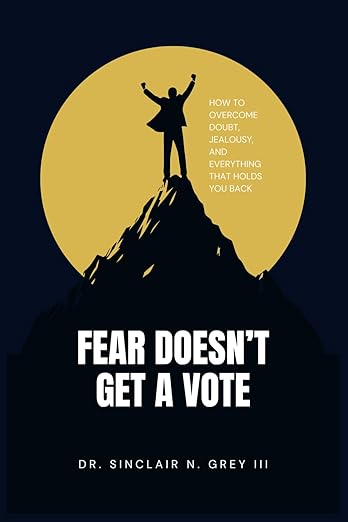
Based on the framework from Fear Doesn’t Get A Vote, what practices help founders build execution discipline that holds up when things get uncomfortable?
Execution discipline is built before pressure arrives.
The framework emphasizes three core practices:
1. Decision Authority – make clean decisions and stop revisiting settled choices.
2. Standard Clarity – define non-negotiables early so emotion doesn’t rewrite policy later.
3. Emotional Regulation – separate discomfort from danger. Growth feels threatening, but it is not the same as risk.
Scaling isn’t about eliminating fear. It’s about removing its vote in critical decisions.
Links: