



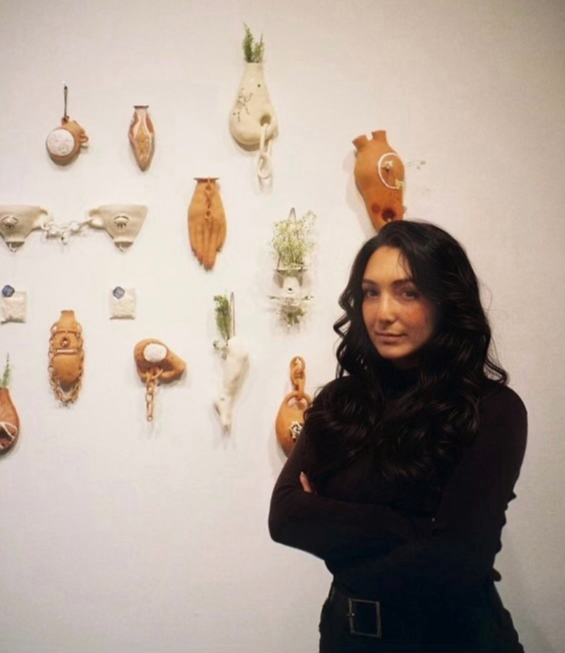
Today we’d like to introduce you to Valerie Laplaca.
Hi valerie, it’s an honor to have you on the platform. Thanks for taking the time to share your story with us – to start maybe you can share some of your backstory with our readers?
I like to call myself a maker of sorts. I’m primarily a ceramic artist, but my relationship with making started long before I ever touched clay. Some of my earliest works of art were mud pies. I spent a lot of my childhood outside, making things out of dirt, leaves, sticks, and whatever else I could find. We had just about every art supply imaginable at home, but I was always drawn back outside.
I was born in Connecticut and spent most of my childhood there before moving to Atlanta when I was eleven. My childhood was filled with fishing, hiking, camping, and generally finding reasons to stay outdoors. I think a lot of my creative identity came from those experiences. Even now, when I’m looking for inspiration, I tend to return to those places and memories. There is something about being outside that makes me pay closer attention.
Art was also very present in my home. My dad is a fine artist, creative director, and graphic designer, so I grew up surrounded by his work. Some of the drawings and paintings hanging in our house were works he had made as a child himself. One of my favorites is a graphite portrait he drew of my mom when they were dating. It still hangs in our home, and in my memory.
I remember standing on my tiptoes at my dad’s drafting table, which seemed impossibly tall to me as a kid, watching him draw. At the time, I didn’t think much about what that experience was teaching me. Art was simply something people did in our house. It was part of everyday life.
It wasn’t until high school that I began to think seriously about art as something I might pursue. I took a 2D art class and fell in love with drawing and painting, but I was intrigued by the ceramics room across the hall. I signed up for an introductory ceramics class, and after the first class, I was hooked.
My teacher, Heather Meyer, had a major influence on me. She pushed me to do more than simply make something that looked good. She encouraged me to research, write, sketch, and understand where my ideas came from. Her projects often became history and research lessons as much as they were studio assignments.
I took every ceramics class I could, including AP Ceramics, and spent as much time in that room as possible. I was there during lunch, before school, and after school. I wanted to learn everything I could from Heather. She was generous with her knowledge, and somehow those lessons always came with a little Pixies or punk music playing in the background.
That classroom became an important place for me; it was sacred. Heather encouraged me to apply for shows, scholarships, and art schools, even when I wasn’t sure I was ready. I applied anyway. As a senior, I received two Scholastic Gold Key Awards at Carnegie Hall, and my work was exhibited at Parsons School of Design, and SCAD. For the first time, pursuing art professionally felt less like a fantasy and more like a possibility.
That eventually led me to Athens at the University of North Georgia. I initially planned to transfer, but I found another community in the ceramics studio at OCAF. I had the opportunity to study under ceramic artist Isabell Daniel, whose work had a significant influence on mine. She opened up her studio and her process to us in a way that made learning feel very personal.
The OCAF studio had its own character. There were cats wandering around, sometimes ending up on your lap while you worked, long conversations, and a lot of time spent simply making alongside other talented people. I stayed for a year, earned my associate degree, and then transferred to UGA’s Lamar Dodd School of Art.
At UGA, ceramics became the center of my daily life. I studied under Sunkoo Yuh and Ted Saupe, both of whom had a lasting influence on me as an artist. Sunkoo made figurative porcelain sculptures that kissed the ceilings, while Ted’s work felt like three-dimensional poetry. Their styles were completely different, but they shared an incredible knowledge and love for clay. They spoke about clay like it was a living thing.
The ceramics building became its own little world. I spent long nights there with my cohort of artists who were just as invested in making as I was. Sometimes we slept in the studio. I brought my cat with me and, at one point, even had a litter box in the building. If the doors were locked, someone usually knew which window was open.
There were plenty of silly moments, too. We baked pizzas in the kilns, and Sunkoo would occasionally make Korean barbecue for us. But underneath all of that was a serious commitment to making. We were constantly talking about our work, looking at each other’s work, solving problems, and figuring out what kind of artists we wanted to become.
It was during this time that I realized I didn’t only want to make art. I wanted to teach it, too. So I added Art Education as a second major.
I had already been teaching painting classes to adults and students as a high school job and loved it. At UGA, I was suddenly balancing studio art and education courses while continuing to make and sell my own work. I took classes in printmaking, bookmaking, jewelry making, welding, sculpture, figure drawing, painting, and drawing. I wanted to learn as many different ways of making as I could.
I also started selling my ceramics at the Athens Farmers Market. I was making hundreds of mugs, plates, bowls, pieces of jewelry, and pretty much whatever else I felt like making, then spending my Saturdays selling them. Because my class schedule was so full, making and selling my work became my job.
While I was balancing two majors, making and selling work, and still trying to have some semblance of a normal college life with my friends, I also had the opportunity to intern at the Georgia Museum of Art as an outreach educator. I taught online art education courses and created lessons that connected directly to what was being shown and exhibited in the museum.
I loved being able to connect what I was learning about education with what was happening inside a museum. It gave me a different perspective on teaching art and showed me how much the museum itself could become part of the learning experience.
Looking back, that period taught me a lot about being a working artist. I had to learn how to make a lot of work, manage my time, work independently, and actually finish things. I had a studio, enormous kilns, a community of artists, and the freedom to experiment. I was fortunate to spend those years making things and figuring out what kind of artist I wanted to be.
I eventually completed my student teaching at both a high school and an elementary school. After graduating from UGA, I got my first full-time teaching job at a middle school in Atlanta.
I was incredibly lucky to work alongside another artist and art teacher, Christine Cliatt. She became a mentor and taught me so much about being an educator, and eventually became one of my really good friends. I loved working with her, and leaving that school was difficult partly because I didn’t want to leave her. But I also knew I wanted something new for myself.
While I was teaching there, I found Callanwolde Fine Arts Center. I had started to realize that I wasn’t making as much art as I used to, and I was really sad about that. I was giving so much of my energy to my students that there wasn’t much left for my own studio practice. I loved teaching, but I missed feeling immersed in the arts for myself.
Callanwolde gave me a way back into that community. I became an assistant and resident artist there and eventually started teaching ceramics as well. I’ve been connected to Callanwolde ever since. I’m no longer a resident or assistant, but I’m still teaching handbuilding classes there, and it has remained an important part of my life.
After leaving college, Callanwolde gave me a ceramics community again; a place where I could continue learning, make, participate in group shows, teach, and surround myself with other artists. Around the same time, I started teaching workshops there and teaching after-school art at an elementary school. Because the elementary position was part-time, I had more room in my life to make my own work.
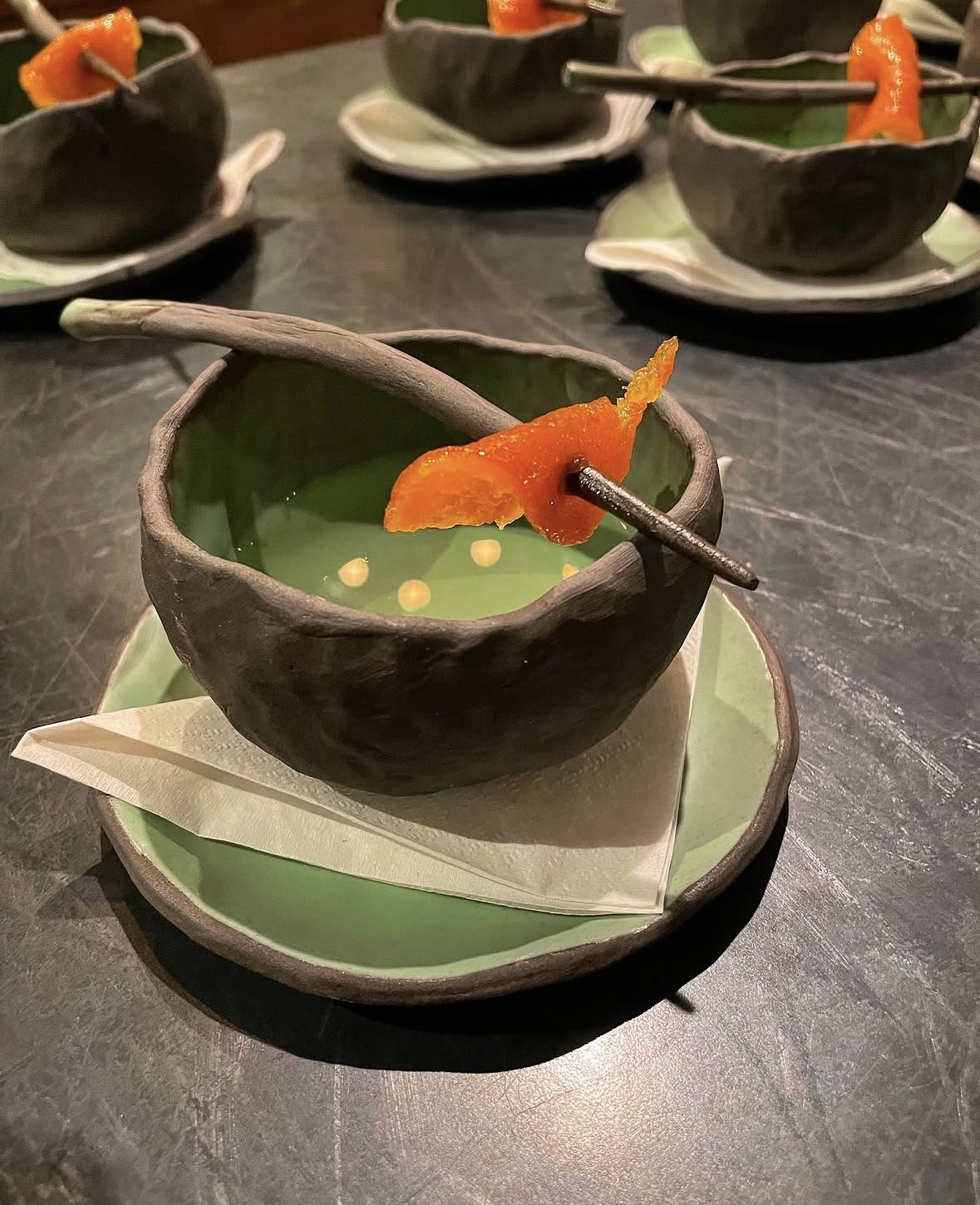
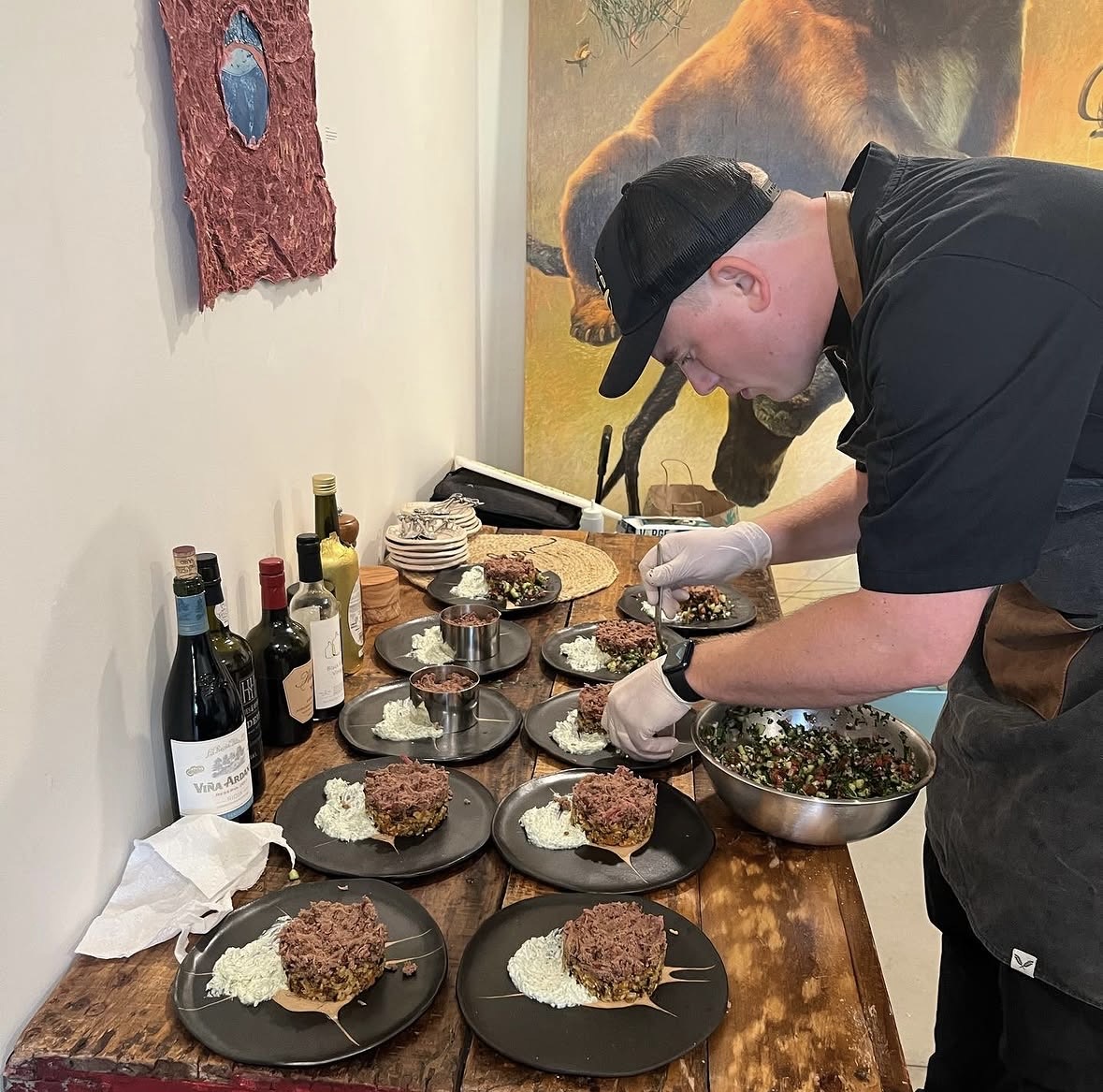
I also started working with my friend Zach Meloy at his business, Dirt Church Ceramics. Zach hosts supper clubs where he creates beautiful, creative multi-course meals for groups of people who often arrive as strangers and leave as friends. We still collaborate, and being part of that studio was a really fun and formative experience for me.
We made all of the ceramic ware that the supper clubs were served on. I loved looking at his menus and thinking about what kinds of plates, bowls, cups, and vessels would make sense for the food. It was a different way of thinking about ceramics. Instead of making something in isolation and figuring out where it belonged later, I was designing objects around an experience that was already being imagined.
There was something really satisfying about seeing our work become part of a meal and watching people interact with it. The ceramics weren’t just objects anymore. They were part of the gathering.
Working with Zach also introduced me to new people and new ways of thinking about art, food, hospitality, and community. It became another creative community for me.
Eventually, Zach moved to Roswell, and I found myself looking for work again. I took another full-time elementary art teaching position, and once again, I found myself in a familiar place.
I loved my students. I loved teaching art. But teaching is hard, and it takes a lot out of you. When you’re responsible for hundreds of students, there is a tremendous amount of planning, emotional labor, and responsibility that comes with it. I was driving about 45 minutes each way, and over time, I became exhausted.
I realized that what I was really missing was myself as an artist.
So this summer, I made the hard decision to leave. It wasn’t because I stopped loving teaching. In fact, teaching has given me so much. It taught me how to communicate, connect with people, adapt quickly, and help someone else find their own creative voice. I still love teaching, and I don’t think that part of me will ever go away. But I also needed to make space for my own creative life.
Now, I’m teaching private lessons, continuing to teach at Callanwolde, selling my work, and spending much more of my time making. I’m finally feeling immersed in the art scene again. I have more freedom and more time in the studio. I’m making things because I want to make them, and I want to participate in more shows around my city, Not because I have a deadline for a class or 700 students waiting for their next project.
For the first time in a while, I feel like myself again.
I think that’s something I’ve learned throughout all of these different chapters: I don’t really know how to separate myself from making. It’s always been there. Sometimes it’s been ceramics, sometimes teaching, sometimes painting or jewelry or sculpture, and sometimes designing something for a specific experience. But I’ve always needed to make things.
That’s probably why “maker” feels like the right word for me. I’m a ceramic artist, but I don’t think ceramics is the only thing that defines me. I’m interested in the entire process of making. The problem-solving, the experimentation, the physicality, the community, and the way an object can bring people together.
I’ve spent most of my life learning how to make things. I’m still figuring out what I want to make next.
Would you say it’s been a smooth road, and if not what are some of the biggest challenges you’ve faced along the way?
It definitely hasn’t been a smooth road, but I don’t necessarily think that’s a bad thing. A lot of my struggles have come from trying to figure out what kind of work and environment actually feel right for me.
For a long time, I was balancing being an artist with being an educator. I was teaching, making my own work, taking on studio opportunities, selling ceramics, and finding ways to stay connected to the arts. I’ve always been someone who likes to stay busy, so I know the work itself has never been the problem. The harder part has been making sure I don’t lose my own creative practice in the process.
Teaching has taught me an incredible amount. It taught me how to love harder, communicate with all kinds of people, manage a room, think on my feet, plan and organize, solve problems quickly, and help people feel comfortable being creative. But classroom teaching also comes with a lot of emotional responsibility that exists outside of actually teaching art. After several years of it, I realized I was ready to use those skills in a different environment.
Leaving my most recent teaching position was probably one of the more difficult decisions I’ve made. I loved my students and I still love teaching, so it wasn’t a decision I made because I wanted to walk away from education entirely. I just knew I wanted to spend more of my time immersed in the arts and working in an environment where I could contribute in a different way.
That’s part of what has drawn me toward museums, galleries, and arts organizations. I love the combination of art, people, education, programming, and community that exists in those spaces. I don’t want to stop teaching or connecting with people; I just want to do it in a way that feels more sustainable and allows me to bring more of my experience as an artist into the work.
I think the biggest thing I’ve learned from the less-than-smooth parts of my path is that changing direction doesn’t mean you’ve failed at what you were doing before. Sometimes it just means you’ve learned more about yourself and what you want to do more of, or less of, and carrying both along with you.
Can you tell our readers more about what you do and what you think sets you apart from others?
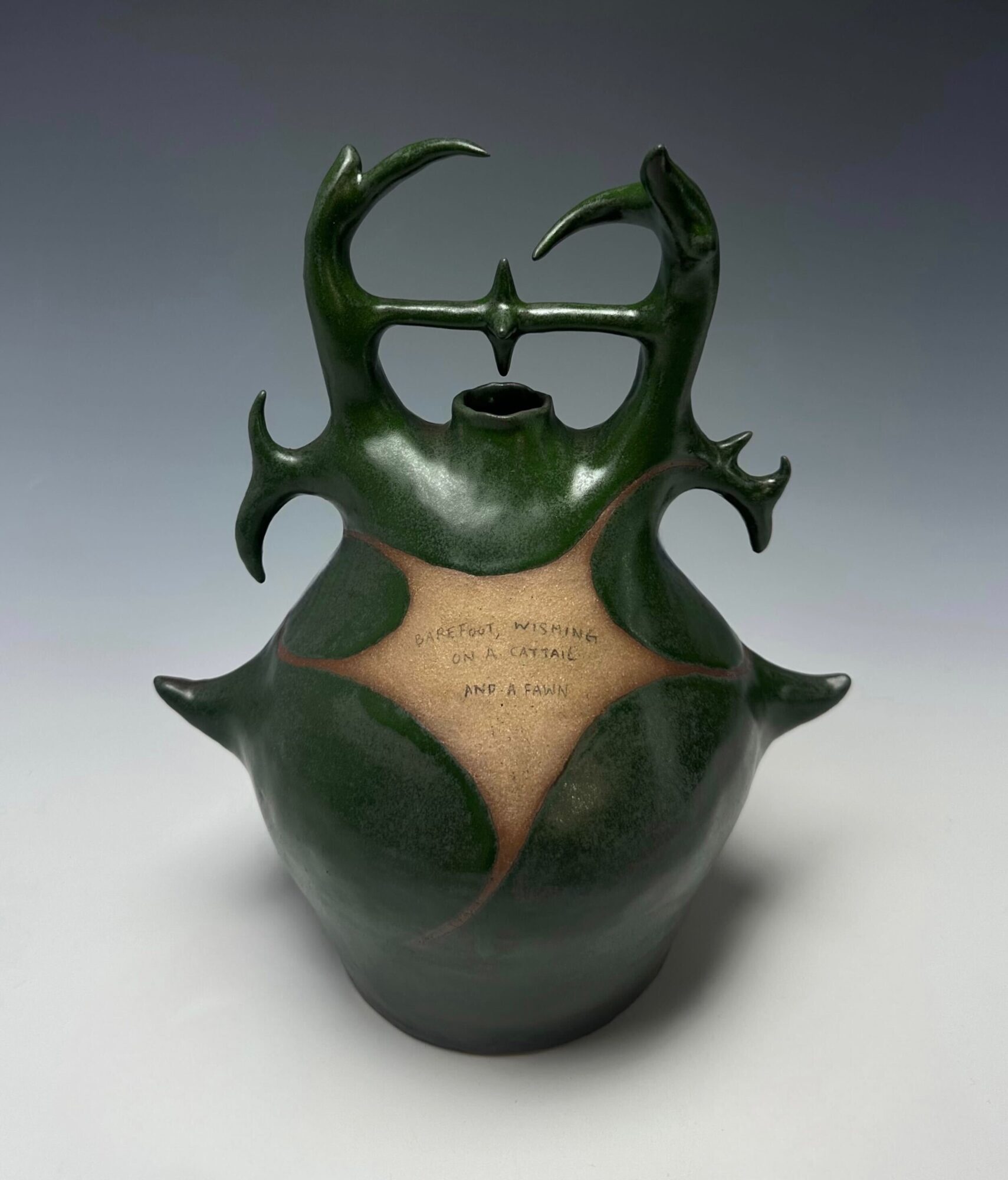
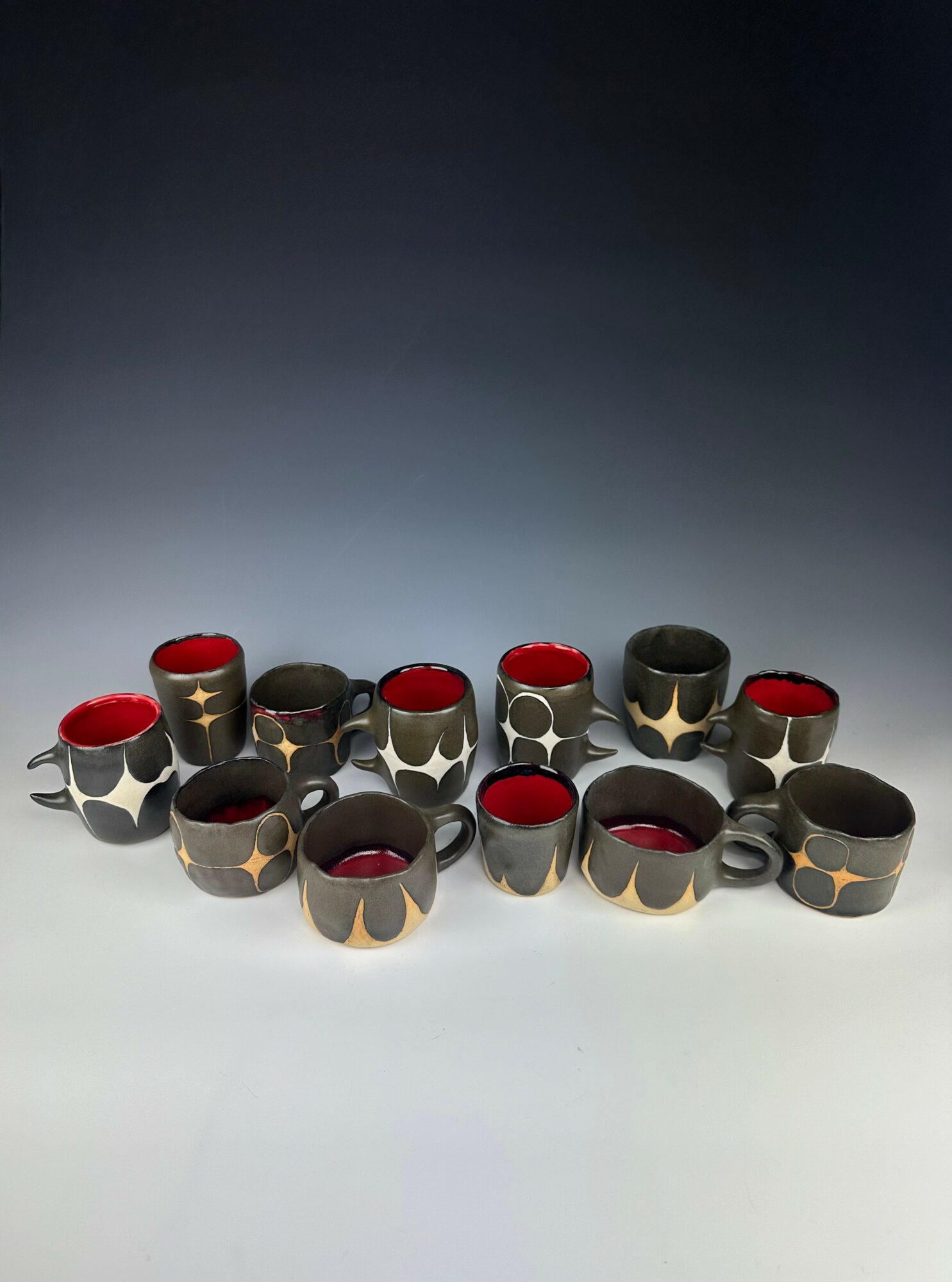
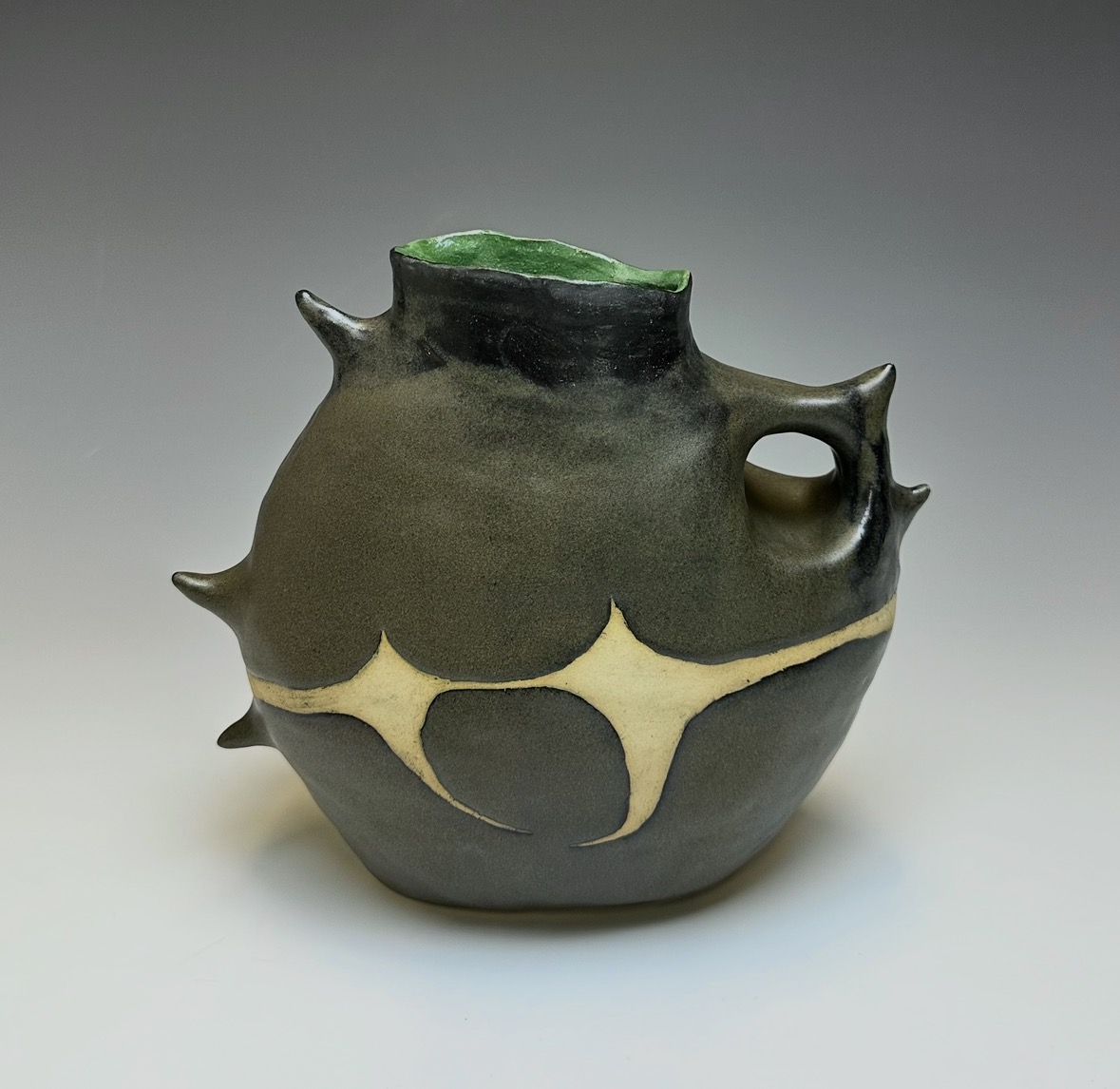
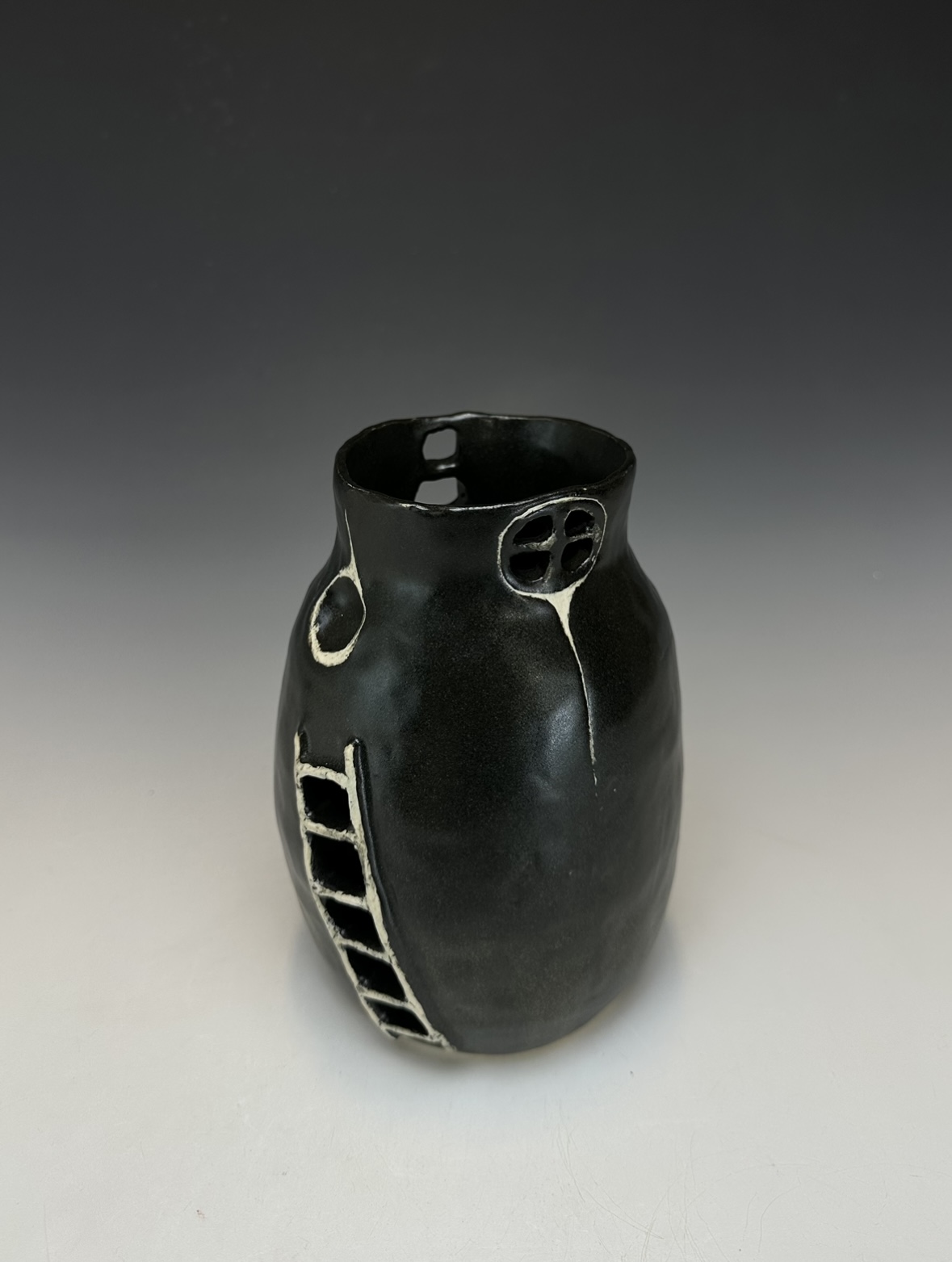
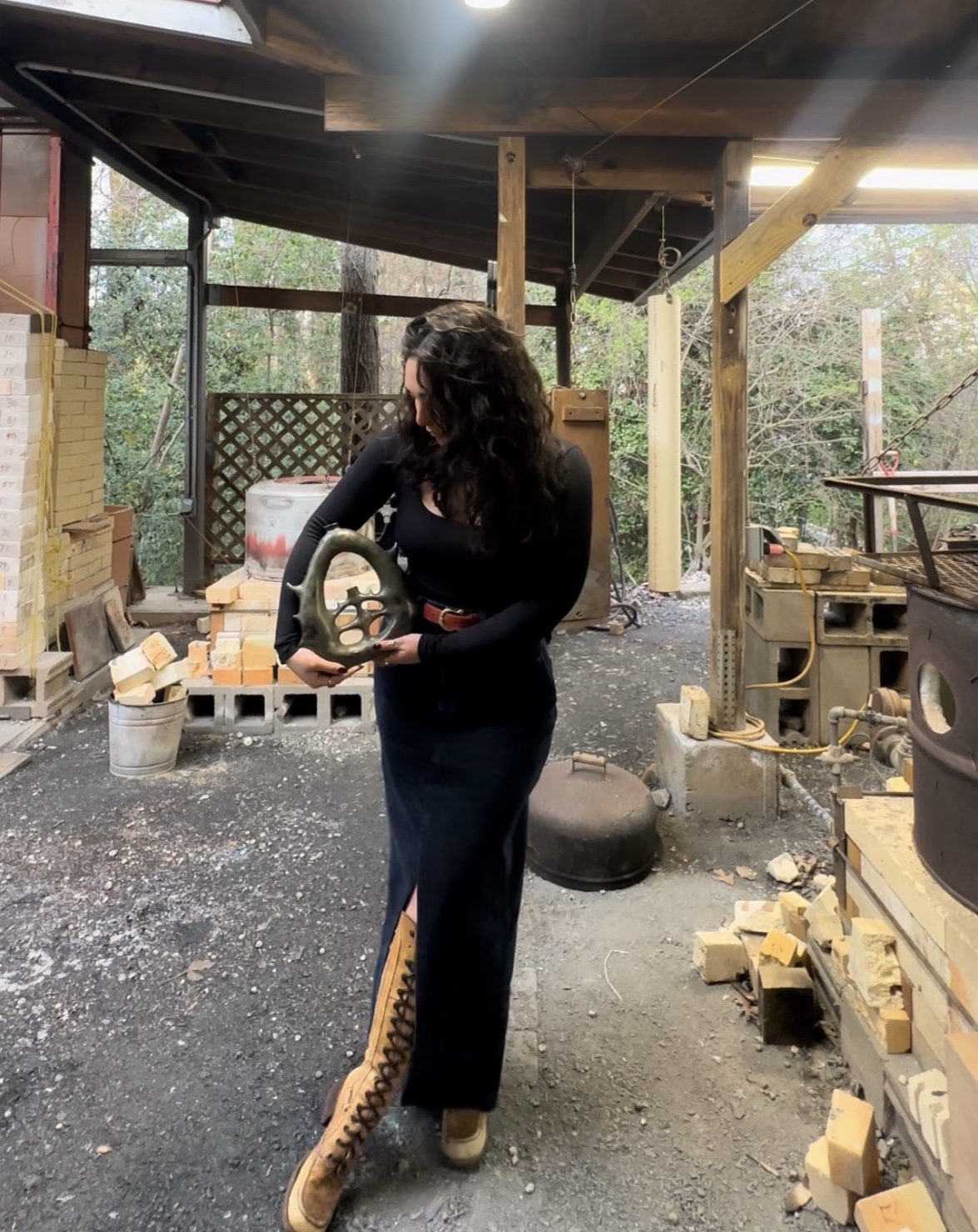
My work is primarily rooted in ceramics. While some of my work is sculptural, I have a deep love for functional ceramics, pieces that are made with the intention of being touched, held, and used. I don’t really use the pottery wheel anymore; my work is mostly hand-built. I value the imperfections that handbuilding invites as much as the process.
I spent much of my childhood outside, and I think the way I learned to pay attention to the natural world still shows up in my work. I’m drawn to the contrast between softness and sharpness that exists in nature, and within the nature of us. I’m delighted by the experience of getting pricked by a thorn or a sharp leaf, just as much as I love the feeling of holding a perfectly smooth stone that has been softened by the water it lives in or lived in. Nature can nurture and invite us in while also creating this organic push and pull, and that tension is something I’m interested in exploring through my work.
But I’m also inspired by everyday life. I walk a lot, and I’m constantly noticing things that I might want to translate into a piece of pottery. I can walk past a bright orange, plastic construction fence bound by diamond-shaped stars and immediately think, “That’s a nice idea for a surface design.” I have an album on my phone called “Mug Walk” that is filled with photographs of things I see while walking that spark an idea for a mug or some other piece of work. It might be a shadow, a pattern, a texture, a color combination, a shape, or something completely unexpected. I like that my inspiration can come from somewhere as ordinary as a construction fence.
I’m also very interested in memory, both the earliest memories we hold and the impressions we leave on other people. Clay feels especially meaningful to me in that way because it carries memory of its own. It preserves traces of touch, pressure, movement, and time. You can make something with your hands and, in a sense, leave a record of yourself behind.
I’ve always been someone who archives the small treasures of life. I’ll pick up a leaf or a rock on a walk and want to keep it. I hold onto cards and handwritten notes, and I have a deep appreciation for little trinkets and objects that might seem insignificant to someone else but hold a particular memory for me. I often write poems as a way of processing my thoughts, and sometimes those words find their way onto my pots.
I want my functional work to evoke that same feeling of discovery and meaning. I like the idea that someone might pick up one of my pieces and notice something they didn’t see at first. A texture, a word, an unusual shape, or some small detail that makes them want to keep looking. I want my work to feel personal without telling the viewer exactly what to feel.
What I’m most proud of is that my practice has continued to evolve without feeling like I have to fit myself into one category. I’ve worked across ceramics, painting, jewelry, sculpture, and other forms of making, but I’ve always come back to the same thing: paying attention. I’m curious about the things I encounter, how they make me feel, and how I might translate them into something someone else can experience.
I think that curiosity is probably what sets me apart. I don’t have to be standing in a studio to be working. I’m always looking, collecting, noticing, photographing, writing things down, and storing ideas away for later. Sometimes inspiration comes from a landscape or a childhood memory. Sometimes it comes from a rock in my pocket or a construction fence on my walk home. I like not knowing where the next idea will come from.
What quality or characteristic do you feel is most important to your success?
I think the quality that has been most important to my success is persistence. I don’t necessarily mean that I’ve always known exactly what I was doing or that everything has gone according to plan. I think I’ve just been willing to keep moving forward, even when the path has changed.
I’ve had a lot of different chapters in my life. Student, teacher, studio artist, museum educator, resident artist, ceramic instructor, maker, collaborator. Each one has led me somewhere I couldn’t have necessarily predicted. I’ve had to be willing to try things, make mistakes, learn from them, and sometimes start over.
Making art has taught me a lot about persistence because ceramics rarely goes exactly the way you want it to. Things crack, collapse, warp, explode in the kiln, or simply don’t work. You make another one. You figure out what happened. You try again. I think I’ve carried that mindset into the rest of my life.
I’m also persistent about the things that matter to me. Even when I haven’t had as much time for my own work as I wanted, I’ve always found a way back to the studio. Even when my career has taken me in a different direction, I’ve kept looking for ways to stay connected to art and to making.
I think that willingness to keep going, keep learning, and keep finding my way back to the things that are important to me has probably had more to do with where I am today than having a perfectly clear plan ever could.
Pricing:
- Mugs: $45-100
- Sculptural work: $200–500+
- Custom work: Starting at $100+
Contact Info:
- Website: under construction ):
- Instagram: https://www.instagram.com/staryouare.ceramics/?hl=en
Popular
-

Hidden Gems: Local Businesses & Creatives You Should Know
-

ATL’s Most Inspiring Stories
-

Portraits of Atlanta
-
Peyten Williams Is Helping Parents Trade the Pressure of Perfect Parenting for Better Judgment
-

Dr. Hildiah Martin-Suggs Is Building Second Chances for Youth Who Were Almost Lost in the System
-
From Showing Up to Seeing His Face on a Billboard: Anthony Green Is Just Getting Started