







Today we’d like to introduce you to Brittany McLeod.
Alright, so thank you so much for sharing your story and insight with our readers. To kick things off, can you tell us a bit about how you got started?
My journey into the aviation industry began when I became a flight attendant. Over the course of eight years, I experienced the parts of the lifestyle that people rarely see on social media: moving to another city for work, sitting on reserve, adjusting to unpredictable schedules, managing inconsistent income, and trying to find safe, affordable housing near the airport.
That is how I was introduced to crashpads.
For those unfamiliar with the term, a crashpad is shared housing designed primarily for flight attendants and pilots who need a place to rest between trips but do not permanently live in the city where they are based. Crashpads can be an incredible resource, but finding a clean, safe, well-managed one is not always easy. There is no universal system, and many crew members are left searching through social media groups, relying on word of mouth, or arriving in a new city without knowing where they will stay.
After living the experience myself, I eventually became a crashpad owner and operator. For approximately three years, I managed the everyday realities of the business, from interviewing potential tenants and creating house rules to maintaining a peaceful environment for people working demanding and irregular schedules. That experience allowed me to see the industry from both sides: as the flight attendant searching for housing and as the homeowner responsible for providing it.
I realized the problem was much bigger than simply finding an available bed. Flight crew members needed trusted information, better housing options, financial education, and honest guidance about what it truly takes to survive their first year at a new airline or base. At the same time, homeowners near major airports needed help understanding how to operate profitable crashpads without sacrificing the comfort of their homes or the quality of the experience.
That realization became the foundation for Crashpad Mastery.
Through Crashpad Mastery, I help aviation professionals make smarter housing and financial decisions, while also educating aspiring crashpad owners on how to build safe, structured, and sustainable housing businesses. I have also been developing CrashpadLocator.com, a platform designed to make it easier for flight attendants and pilots to search for crew housing, compare options, and eventually access tools that support other areas of their financial lives.
I am forever building, learning, and refining the vision, but I am proud of how far it has come. What began as a personal need has grown into a larger mission: helping aviation professionals protect their peace, make informed decisions, and feel less alone while navigating an industry that often requires tremendous sacrifice behind the scenes.
Would you say it’s been a smooth road, and if not what are some of the biggest challenges you’ve faced along the way?
Absolutely not! But I think every challenge taught me something I needed to know about running a sustainable business.
During my second year in business, COVID-19 struck, and nearly half of the flight attendants living in my crashpad were laid off from their respective airlines. Aviation came to an abrupt stop, and the uncertainty affected everyone. It was one of those moments when I realized that being profitable and being financially prepared are two very different things.
Fortunately, I had made the decision not to spend any of the profits from the business, which, at the time, consisted largely of late fees. Clearly, people paying late ended up contributing to my emergency fund! Because I had saved that money, I was able to keep the business afloat comfortably during a period that could have easily forced me to shut everything down. That experience reinforced the importance of building reserves, preparing for circumstances beyond your control, and never assuming that today’s income is guaranteed tomorrow.
Outside of navigating a global pandemic, many of my challenges involved the human-relations side of operating shared housing. When several adults live under one roof, something as simple as leaving dishes in the sink can quickly become a major household discussion. There were issues with people not cleaning the common areas properly, excessive noise, and different interpretations of what it meant to clean up after yourself.
I quickly learned that expectations cannot simply be assumed. They have to be clearly communicated, documented, and consistently enforced.
To create more structure, I developed a crashpad agreement that every resident was required to review and sign before their stay. It outlined the expectations, responsibilities, and boundaries of living in the home. I also placed house rules throughout the common areas as friendly reminders, especially for the repeat offenders who somehow forgot the rules between reading them and walking into the kitchen.
Whenever an issue arose, I could refer residents back to the agreement rather than making decisions based on emotions or personal disagreements. That helped me protect the peace of the home while treating everyone fairly.
Those experiences taught me that running a crashpad is not simply about filling beds and collecting payments. You are managing a household, a business, and several different personalities at the same time. The difficult seasons helped me become more proactive, financially disciplined, and intentional about creating systems that allow both the business and the people inside it to function well.
Thanks – so what else should our readers know about Crashpad Mastery?
Through Crashpad Mastery, I specialize in helping people understand the business and lifestyle behind crashpads. For aspiring owners, that means teaching them how to create a safe, organized, and sustainable operation rather than simply placing several beds inside a house and calling it a business. We discuss pricing, resident screening, house agreements, property management, communication, expectations, cleanliness, and how to create an environment that respects the unique needs of aviation professionals.
For flight attendants and pilots, my work focuses on helping them make informed decisions about housing, commuting, budgeting, reserve life, and the financial realities of beginning again at a new airline or base. I understand that choosing a crashpad is not only about finding the cheapest bed. It is about safety, rest, reliability, proximity to the airport, and protecting your peace while working an already unpredictable schedule.
What sets my brand apart is that everything is built from lived experience. I have been the flight attendant searching for housing, the commuter trying to manage expenses, the crashpad resident sharing space with other adults, and the owner responsible for maintaining the property and resolving issues. I understand both sides of the experience, including the parts that are not always discussed publicly.
I am also honest about the fact that operating a crashpad is not passive income. You are working with real people who have different schedules, personalities, habits, and definitions of what it means to leave a kitchen clean. It requires structure, boundaries, communication, and systems. My goal is not to sell people a fantasy. It is to give them the practical information they need to decide whether the business is right for them and, if it is, help them operate it responsibly.
The next evolution of the brand is CrashpadLocator.com, a centralized platform that allows flight attendants and pilots to search for crew housing while giving crashpad hosts a dedicated place to list and manage their properties. My goal is to create a more transparent, organized, and trustworthy alternative to searching through scattered posts online. The platform is currently in its beta stage, and I am working directly with both crashpad owners and users to improve the experience based on their real feedback.
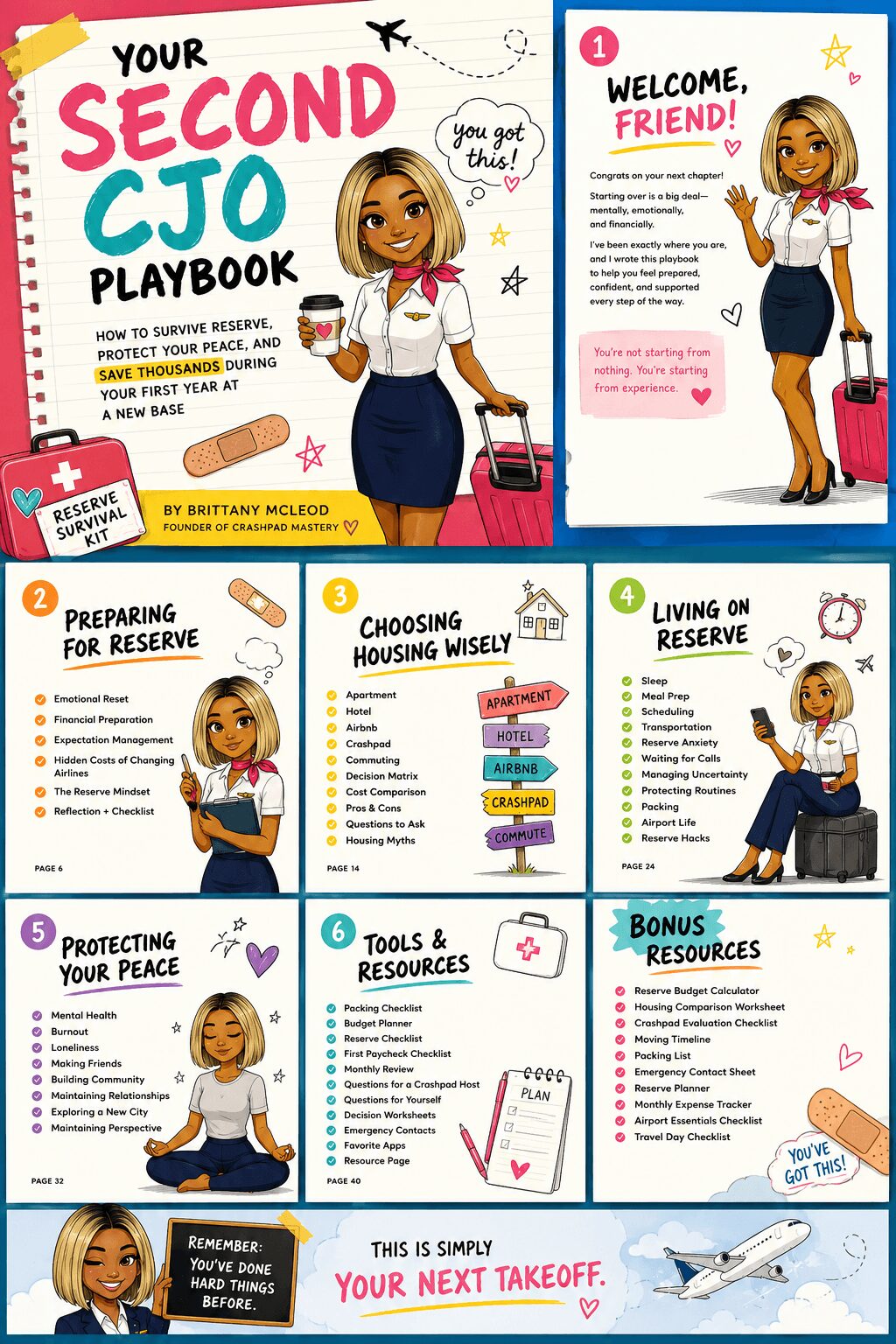
I am also developing resources that address other challenges within the aviation lifestyle, including Your Second CJO Playbook, which is designed for experienced flight attendants who are starting over at a new airline. It covers topics such as reserve, commuting, housing, budgeting, protecting your mental health, and adjusting to the reality of losing seniority while still carrying years of professional experience.
Brand-wise, I am most proud that Crashpad Mastery has grown beyond one property or one service. It is becoming an ecosystem of education, housing resources, financial tools, and community support created specifically for aviation professionals. Every offering is connected by the same question: How can I make this transition easier for the person coming behind me?
At its core, Crashpad Mastery is about more than beds or buildings. It is about helping people create stability within an industry built around constant movement. I want readers to know that this brand was created by someone who understands the lifestyle personally, listens to the community, and is committed to building solutions that are practical, transparent, and genuinely useful.
We all have a different way of looking at and defining success. How do you define success?
Peace.
There was a time when I may have measured success by a title, a certain income, or how much I was able to accomplish. Today, I measure it by how much ownership I have over my life.
Working in aviation means that parts of my life will always be defined by an airline. My schedule, where I am based, and even when I can take a vacation may depend on seniority and operational needs. Because of that, I deeply value the freedom I have outside of work.
Success, to me, is being able to spend my free time doing whatever feels right for me. It is having the flexibility to build my businesses, be present with the people I love, rest without guilt, travel for enjoyment, or simply have a slow morning.
I am ambitious, and I still have goals I want to reach, but I no longer believe success should come at the expense of my peace. As long as I have flexibility, freedom of choice, and the ability to create a life that feels good to live, I consider myself successful.
Contact Info:
- Website: https://Www.crashpadmastery.com
- Instagram: https://Www.instagram.com/_bstandsforboss
- Youtube: https://youtube.com/@bstandsforboss
- Other: https://www.crashpadlocator.com

Popular
-

Hidden Gems: Local Businesses & Creatives You Should Know
-

ATL’s Most Inspiring Stories
-
From Showing Up to Seeing His Face on a Billboard: Anthony Green Is Just Getting Started
-

Portraits of Atlanta
-

Wayne Smith Jr on Survival, Psychological Thrillers, and the Cost of Staying Alive
-

Meet Laya Hoffman | Award-Winning Voice Actor, Live Announcer & Champion for Authentic Storytelling