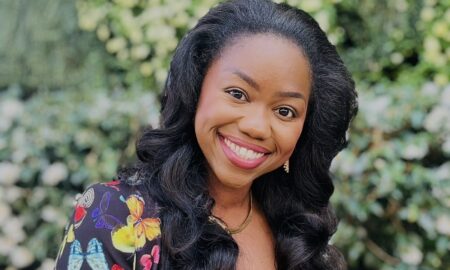
Over the past year, Lerae Funderburg has embraced a transformative new chapter, relocating her family to Costa Rica while continuing to lead a successful U.S.-based law practice built around intentional living rather than constant hustle. As a business and entertainment attorney, Lerae has shifted her perspective on success, moving away from productivity-driven achievement and toward a model centered on alignment, freedom, sustainability, and presence. This personal evolution has deepened the way she serves entrepreneurs and creatives, helping clients think beyond contracts and compliance to build businesses that protect not only profits, but long-term freedom, scalability, and legacy. Through her own journey of balancing motherhood, remote leadership, and a location-independent business, she has become a strong advocate for designing businesses that support life rather than consume it. Today, Lerae continues empowering entrepreneurs to recognize that true success is not measured by how much they can carry, but by the freedom, stability, and intentional life they are able to create for themselves and future generations.
Lerae, over the last year you’ve made some significant changes, moving to Costa Rica, raising your children abroad, and intentionally shifting away from hustle culture while continuing to run a successful law practice. What prompted this transition, and what have you learned about success through the process?
For a long time, I did what many high-achieving women are taught to do, I optimized. I built the career, pursued excellence, achieved milestones, stayed productive, stayed useful. And I’m deeply grateful for everything that version of me created.
But at some point, I realized I had become incredibly skilled at producing results and less practiced at simply experiencing my own life.
Moving to Costa Rica wasn’t about escaping work or abandoning ambition. It was about creating enough space to ask a different question… What if success isn’t measured by how much I can carry?
I wanted my children to experience a life that felt expansive, connected, and intentional. I wanted to know who I was outside of urgency, obligation, and achievement. And I wanted to prove to myself that I could build a meaningful life and business without centering exhaustion.
What I’ve learned is that success feels very different than I imagined. It’s less about accumulation and more about alignment. Less proving and more choosing. I still care deeply about excellence and impact, but now I care equally about energy, relationships, freedom, presence, and creating a life I don’t need a vacation from.
As a business and entertainment attorney, you help clients build businesses, protect brands, and create legacies. How has your own journey influenced the advice you give entrepreneurs and creatives today?
My own journey has made me a more holistic advisor.
Earlier in my career, I focused heavily on helping clients secure opportunities, contracts, intellectual property, business structures, negotiations. Those things still matter tremendously.
But now I ask different questions too.
What kind of life is this business creating? Does your legal structure support your actual goals? Are you building something sustainable or something that depends entirely on your constant output?
I work with a lot of entrepreneurs and creatives who are talented enough to generate opportunity but haven’t paused to build systems that preserve it.
Legal protection isn’t just risk management. It’s capacity. It’s creating containers that allow people to grow without becoming trapped by their own success.
I’ve become more interested in helping clients build businesses that are not only profitable but transferable, scalable, and supportive of the lives they actually want.
You’ve spoken about choosing a slower, more sustainable approach to life and work. What does that look like in practice, and how has it changed the way you lead your business?
For me, slower doesn’t mean smaller. It means more intentional.
Practically, it looks like fewer priorities at one time. More spacious scheduling. More rest. More saying no. More designing my business around seasons instead of treating every season like launch season.
I no longer believe every opportunity deserves an immediate yes.
I’ve become more selective about the clients I serve and the projects I take on. I create more margin in my calendar. I trust that meaningful work doesn’t require constant urgency.
As a leader, I’ve also become less attached to appearing busy.
There was a season where productivity felt synonymous with value. Today, I think clarity, presence, discernment, and consistency create better outcomes than intensity ever did.
Ironically, slowing down has made me more effective.
Running a U.S.-based law firm remotely while raising children abroad is a unique path. What challenges and opportunities have come with building a location-independent business?
It has stretched me in ways I didn’t expect.
There are obvious logistics, such as time zones, technology, boundaries, homeschooling, creating structure while also allowing flexibility.
But the bigger challenge has been releasing the idea that professionalism has to look one specific way.
For so long, success was tied to being physically present, constantly available, and operating within traditional models.
Building remotely has forced me to become more systems-oriented, communicate more clearly, and trust my processes.
The opportunity has been realizing that proximity isn’t the same thing as impact.
I can still serve clients at a high level while creating a richer day-to-day experience for myself and my children. It’s shown me that business can support life, not just consume it.
You often talk about the connection between legal protection, freedom, and legacy. Why do you believe protecting a business is about much more than contracts and compliance?
Because protection creates possibility.
People often think of legal work as defensive, as paperwork you do after success arrives. I see it differently. Protection creates options.
A trademark protects identity. Contracts protect relationships. Business structures protect assets. Estate planning protects continuity.
When those pieces are in place, people operate differently. They negotiate differently. They expand differently. They rest differently.
To me, legacy isn’t simply what you leave behind; it’s what continues working even when you step away.
The goal isn’t to build something that requires you forever.
The goal is to build something strong enough to support your freedom while you’re here and meaningful enough to outlive you when you’re gone.
Link: