

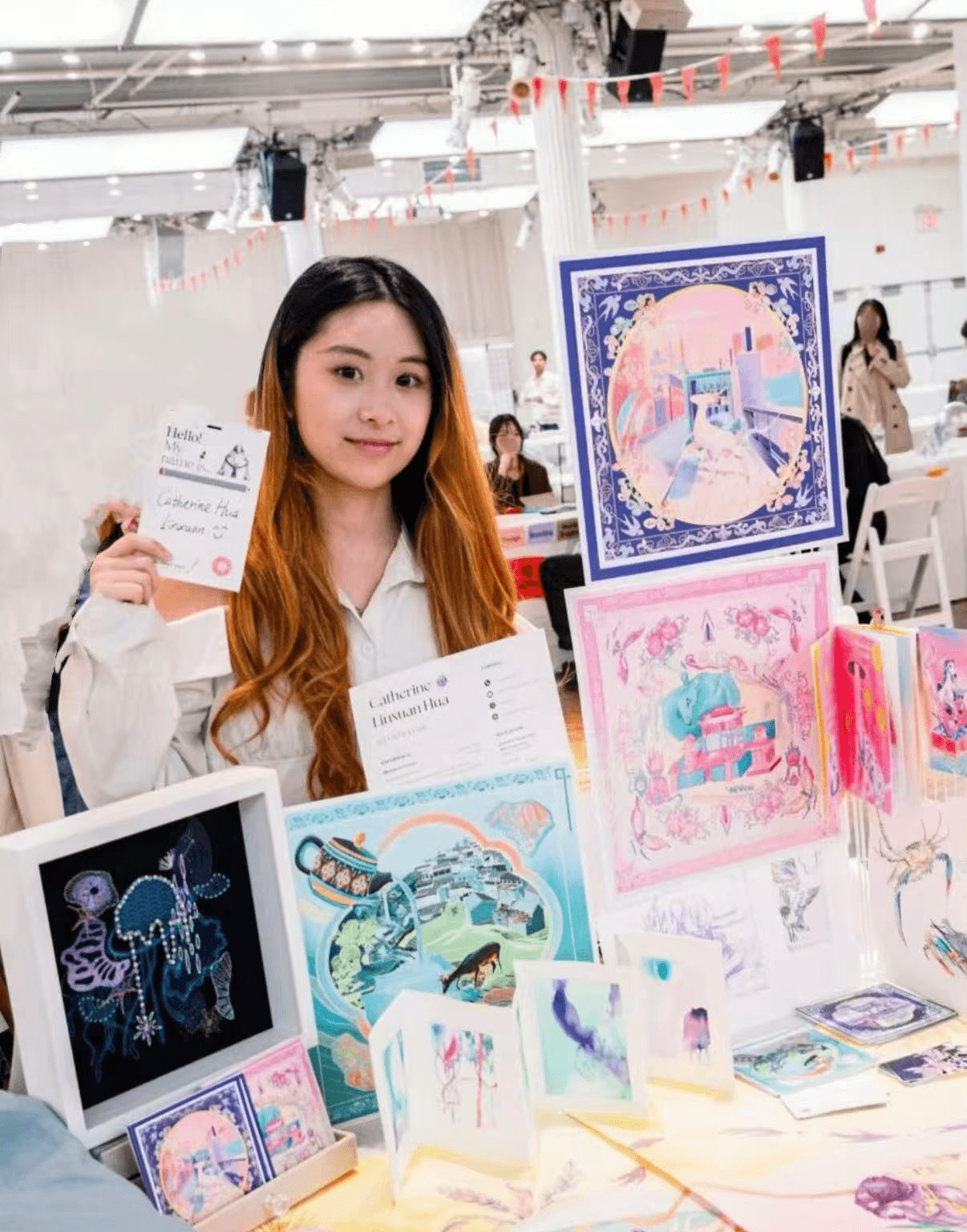
Today we’d like to introduce you to Catherine Linxuan Hua.
Hi Catherine, so excited to have you on the platform. So before we get into questions about your work-life, maybe you can bring our readers up to speed on your story and how you got to where you are today?
When I think about why I first chose art, I don’t think it began with the thought, “I want to become an artist.” It started much earlier, with a fascination for the way images could carry emotion.
As a child, I loved sitting quietly by myself and looking through picture books. One artist who had a profound influence on me was Taiwanese picture-book artist Jimmy Liao. I still remember When the Moon Forgot: a little boy encounters the moon after it falls from the sky, carries it through the city, shares small and tender moments with it, and eventually watches it return to the sky.
Looking back, that may have been the first time I understood that an image could be more than something beautiful to look at. It could create an entire world, and it could communicate feelings that were difficult to explain in words.
Later, I moved from China to New York to study Illustration at the School of Visual Arts. When I first entered college, I thought my path would be relatively straightforward: learn drawing and visual storytelling, and eventually become an illustrator.
But the more I created, the more I realized that what interested me was not only the image itself. I became increasingly curious about how a work makes someone feel, and whether a real exchange can happen between the viewer and the work.
I have always loved watercolor, especially the way pigment and water move, bleed, and create unexpected moments on paper. But during college, I also explored many things that, at the time, probably looked a little scattered. I worked with metal and jewelry, experimented with silkscreen and RISO printing, and later became interested in moving image, experimental film, installation, and digital media.
At the time, I didn’t know where any of it would lead. I simply had a strong curiosity about making things.
Through that process, I began to realize that a story did not have to remain on a piece of paper. A viewer could enter a space, make a decision, trigger a change, or even become part of the work itself.
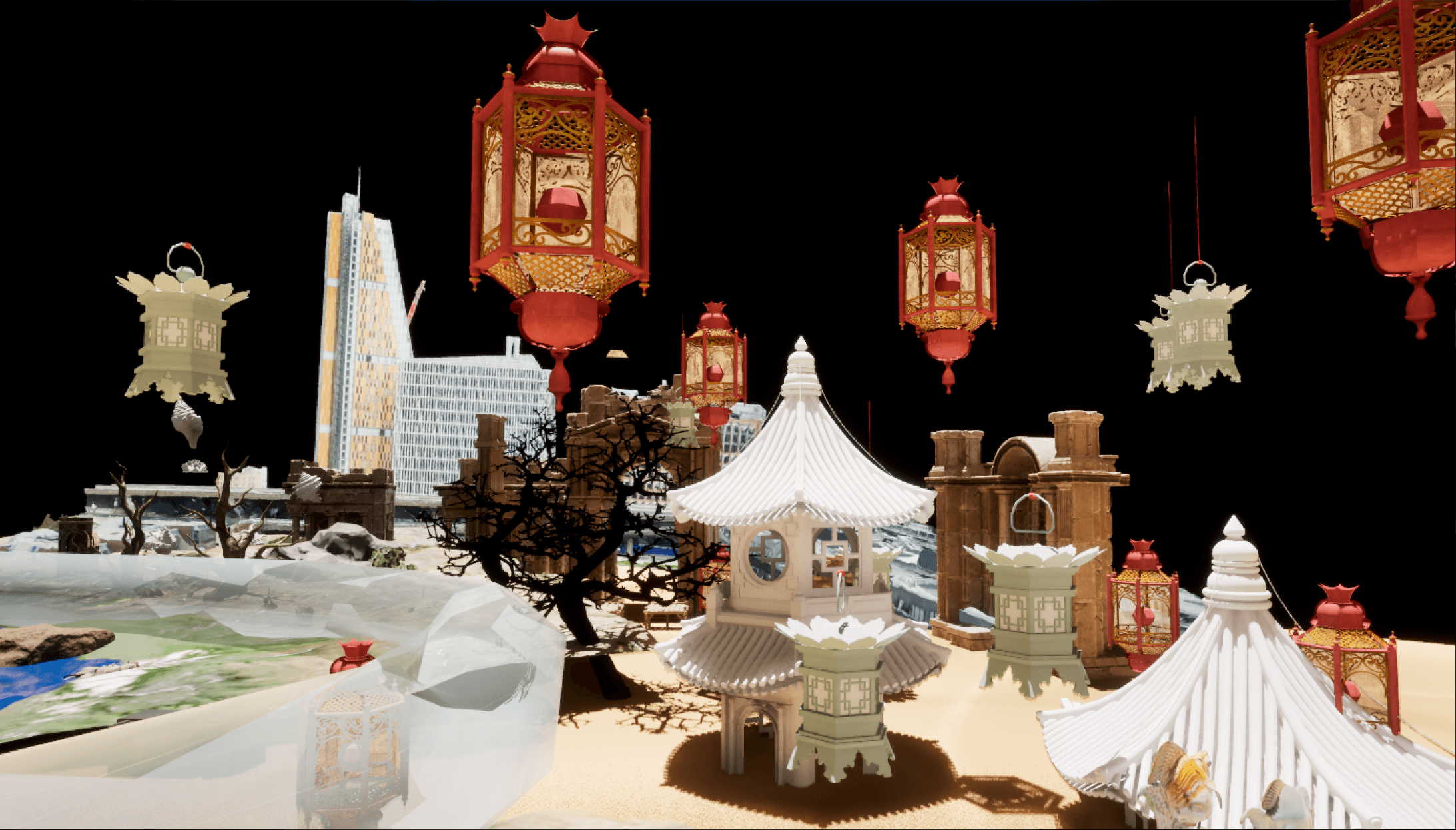
After graduating, I began learning tools such as Blender, Unreal Engine, and TouchDesigner more intentionally, gradually extending my practice into 3D, VR, game engines, experimental film, and interactive installation.
For a while, I questioned what direction I was actually going in.
When one person is making soft, luminous watercolor paintings while also creating interactive works about consumer culture, collective behavior, and social environments, the two bodies of work can look as though they were made by entirely different artists. There were moments when I wondered whether I was supposed to choose one of them and build a more recognizable “style.”
Eventually, I realized that I had never really left illustration, nor had I suddenly become a different kind of artist.
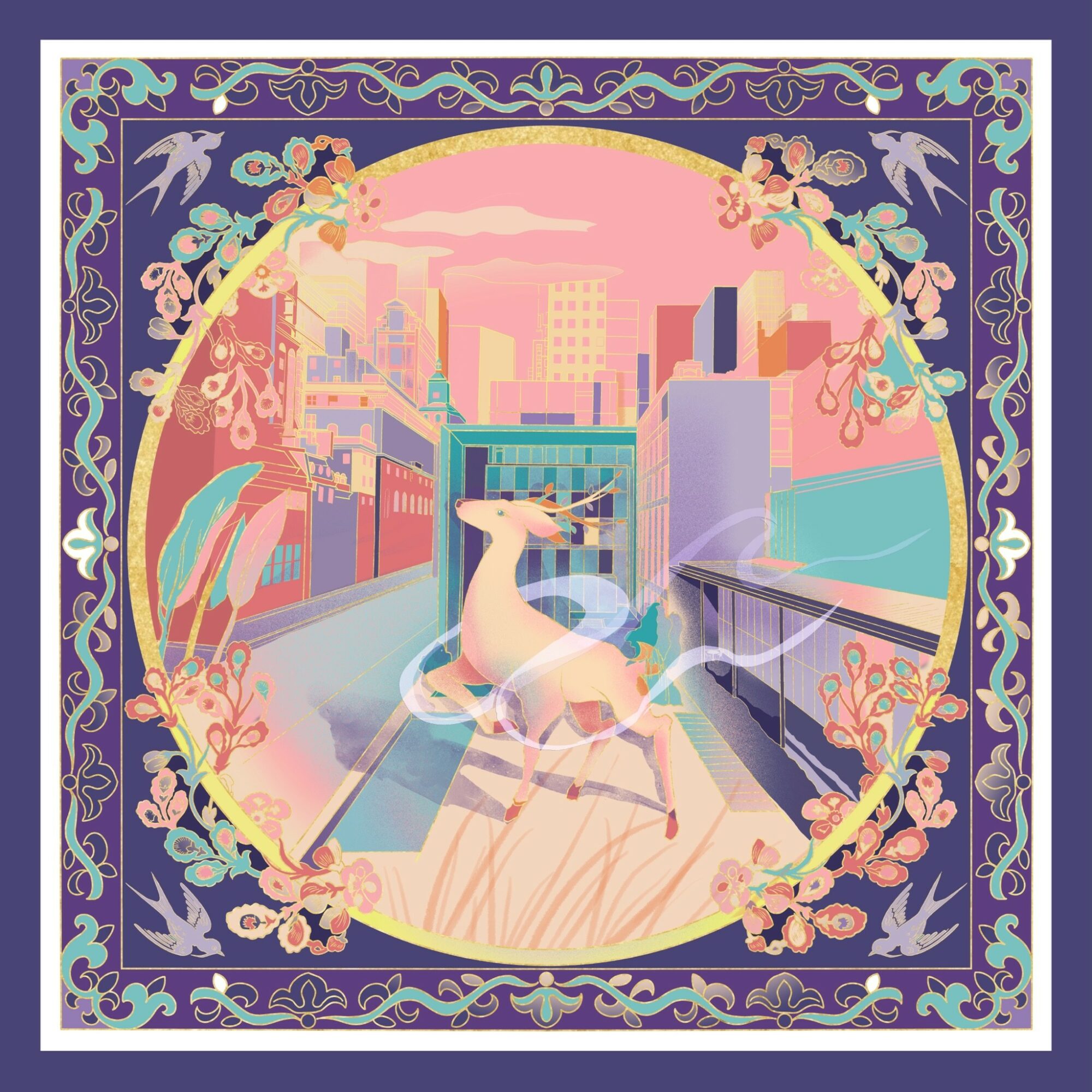
The sense of color, composition, atmosphere, detail, and storytelling that illustration taught me is still present in everything I make. What changed was simply the space in which those things could exist.
My stories used to live primarily on a piece of paper. Now, they might unfold inside a virtual world, a room, a moving image, or an interaction between a person and a work.
Today, I think of myself as an illustrator and interdisciplinary artist—someone who continues to learn new mediums while always returning to the same question: how can visual language and experience be used to tell a story?
I’m sure it wasn’t obstacle-free, but would you say the journey has been fairly smooth so far?
Definitely not.
One of the experiences that changed me most happened during my first year of college. I had just moved from China to New York and begun studying at the art school I had dreamed of attending. At the same time, my grandfather passed away unexpectedly.
He had always been the person who believed in my creativity most deeply.
For a while afterward, I struggled to understand why I should continue making art at all. I wrote many journal entries and poems, and I made work that looked completely different from the bright, colorful paintings I had made before. I began thinking about death, memory, and the ways people remain connected to one another. Part of me desperately wanted to find some kind of answer that would allow me to believe that an important relationship did not simply disappear when a person was gone.
For the next few years of college, I dreamed about him often.
There is one dream I still remember very clearly.
At the time, I was learning silversmithing. I had made a piece that I was very unhappy with and felt that it did not even deserve a “good grade.” But in the dream, my grandfather was carrying it around and proudly showing it to everyone, saying, “Look, my precious granddaughter made this. She’s so good with her hands.”
When I woke up, I felt a deep sense of loss for a long time.
But the dream also reminded me of something important.
In art school, we are constantly critiqued, graded, and compared. It can become very easy to hand our sense of worth over to outside judgment. But in my grandfather’s eyes, I never had to prove that I was good enough before I deserved to be appreciated.
That realization changed my relationship with art in a significant way.
Slowly, I stopped thinking of art only as something through which I had to prove myself. I began to understand it instead as a way of processing emotion, making sense of experience, and creating connections with other people.
I also learned to accept that some things never arrive at a complete answer.
But they leave traces behind, and sometimes making art is simply a way of preserving those traces.
As you know, we’re big fans of you and your work. For our readers who might not be as familiar what can you tell them about what you do?
I am an illustrator, visual designer, and interdisciplinary artist.
My practice moves across traditional illustration, watercolor, 3D modeling, VR, game engines, experimental film, and interactive installation. I think of a medium as a language rather than an endpoint. I usually don’t begin by deciding, “I want to make a VR project,” or, “I want to make an installation.” I begin by asking what form would allow a particular story or question to be felt most clearly.
My work often begins with very ordinary behaviors.
Why do people want to shop or order food when they are anxious? Why do we instinctively stop and take a photograph when we see other people doing the same thing in a public space? Why do choices that feel completely personal often turn out to be shaped by consumer environments, spatial design, social habits, and the behavior of people around us?
I like to begin with observation, interviews, and research, slowly unpacking the systems behind these seemingly small behaviors, and then translating that research into something the audience can experience.
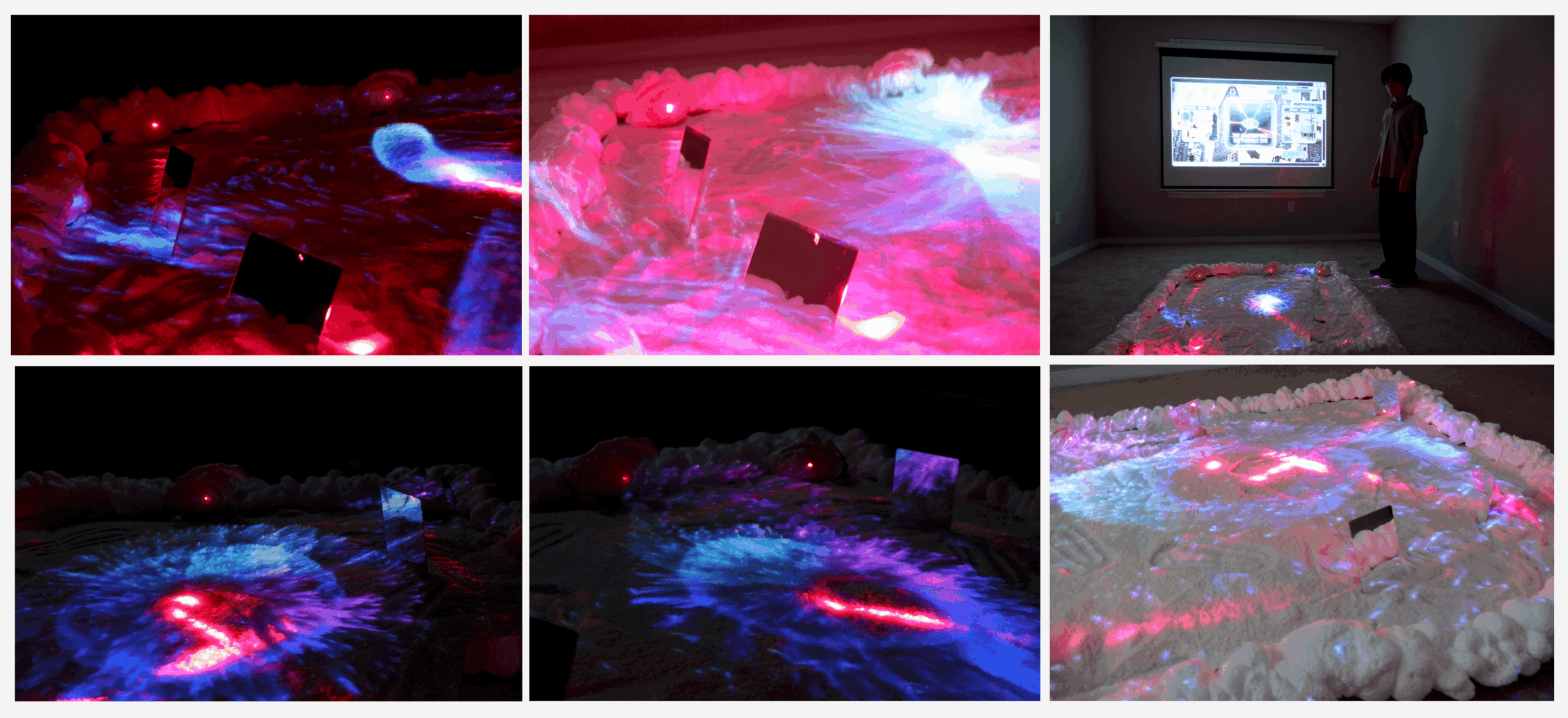
In one of my VR projects, for example, I explore why consumption can become a way for people to relieve stress, regain a sense of control, or construct identity. In another project about public sculpture and urban space, I use game-based storytelling, physical installation, and real-time interaction to examine how space influences the way people look, behave, and follow one another.
Sometimes, people who encounter my work for the first time are surprised.
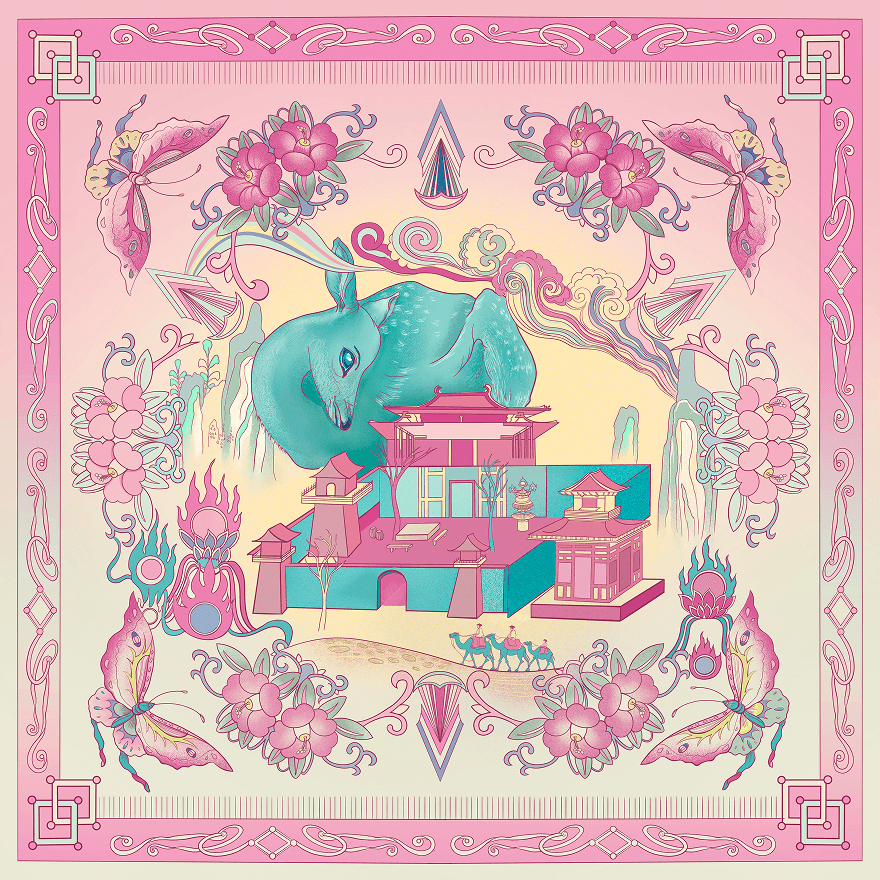
A new client might first see my illustration and watercolor work, which is often delicate, tactile, bright, and soft, filled with plants, figures, textures, and quiet details. Then they might encounter one of my installations or interactive works: large-scale environments, red light, bodies being consumed, surveillance-like gazes, repetitive crowd behavior, or scenes that are intentionally absurd or slightly unsettling.
People sometimes ask me, “Did the same person really make all of this?”
I have asked myself the same question.
Which version is really me?
Am I the person sitting quietly at a desk, slowly painting with watercolor and noticing the smallest shift in the color of a leaf? Or am I the person building enormous virtual structures and making work about consumerism, collective behavior, and social systems?
For a long time, I thought a mature artist was supposed to have one stable and instantly recognizable visual style. So when my work kept growing in different directions, I wondered whether that meant I had not yet found myself.
Eventually, I realized that consistency does not necessarily mean that everything has to look the same.
What remains consistent is the way I look at the world.
I have always been extremely sensitive to small emotional shifts and to the environments around me. I remember the texture of a wooden chair, the way a color spreads across paper, but I also notice why someone slows down when they enter a space, why people begin taking photographs when they see others pull out their phones, or why anxiety can make someone instinctively open a shopping app.
Some things make me feel tenderness. Some make me curious. Others make me uncomfortable.
But they all create the same impulse in me:
I want to move a little closer and understand why it is happening.
So I no longer see my watercolor paintings and my installations as two contradictory versions of myself.
If anything, they may come from the same sensitivity.
When that sensitivity encounters something gentle, it may become water, color, and small brushstrokes. When it encounters a complicated social structure, it may become an enormous virtual environment, a repetitive loop, a harsh beam of light, or an experience designed to make the viewer feel slightly uneasy.
I no longer feel that I need to force everything I create into the same visual appearance in order to prove that it comes from the same artist.
Style can change. The way a person sees the world does not change so easily.
That has been an important form of reconciliation for me.
What sets my practice apart is not simply that I work with both traditional drawing and digital technology. It is that I allow very different mediums to serve the same way of observing.
Even when I am working with game engines, VR, or real-time interactive technology, I still care deeply about color, composition, light, atmosphere, and narrative rhythm. Technology, for me, should serve the experience rather than become the subject of the work itself.
I hope people leave remembering not, “What software did she use?” but instead:
“Why did that moment make me feel something?”
If there is one thing I am most proud of right now, it is not a single project. It is that I have gradually accepted and developed a way of working that feels genuinely my own.
I can sit quietly and make a watercolor painting, and I can also step into a completely different medium and build a virtual world, a game, or an interactive environment.
They do not have to look the same.
Because what keeps bringing me back to art has always been the same thing:
staying curious about how people feel, remaining sensitive to the moments that are easy to overlook, and trying to turn those moments into something another person can feel too.
We’d love to hear about any fond memories you have from when you were growing up?
My favorite childhood memories are probably the ordinary afternoons when my grandfather and I made things together.
He had worked as a carpenter when he was younger. Many of the tables and chairs in our home when I was little had been made by him, and he once built a tiny wooden stool especially for me. It was only about thirty or forty centimeters tall, with a round seat, dark brown wood, and a smooth, glossy layer of wax.
Because he was worried I might hurt myself, he carefully rounded and polished every edge.
I used to sit on that little stool while he told me stories, while I drew, or while the two of us made all kinds of strange little things together.
I remember one very ordinary afternoon when I was about five years old. I was eating cookies and snacks and kept asking him to make something fun with me. Eventually, we built a castle out of cookies and chocolate sauce.
We took it very seriously, almost as though we were constructing a real building.
Later, I brought the cookie castle to kindergarten, and my teacher gave me a little award for being “clever with my hands.” I was so proud of it that I couldn’t bring myself to eat the castle afterward. I kept it for so long that the cookies eventually absorbed moisture, softened, and began to fall apart before I finally agreed to throw it away.
Nearly twenty years later, that little stool is still in my family home in Suzhou.
It has scratches and signs of wear now, but whenever I go home, I sometimes still sit on it.
And every time, I have the same strange realization: the chair that felt so important and substantial in my memory is actually incredibly small.
But it is still steady.
When I was little, I would often sit alone in my room drawing. My grandfather would politely knock on the door before coming in, smile, and ask:
“Linlin, what are you drawing?”
What I make now is not always a drawing anymore.
Sometimes it is watercolor. Sometimes it is a virtual world, a moving image, a game, or an interactive space.
But if he could ask me that same question today, I think I would still want to show him whatever I had made.
Contact Info:
- Website: https://www.catherinehua.com/
- Youtube: https://www.youtube.com/@LinxuanHua
Popular
-

Hidden Gems: Local Businesses & Creatives You Should Know
-
ATL’s Most Inspiring Stories
-

Portraits of Atlanta
-
Peyten Williams Is Helping Parents Trade the Pressure of Perfect Parenting for Better Judgment
-
Dr. Hildiah Martin-Suggs Is Building Second Chances for Youth Who Were Almost Lost in the System
-
From Showing Up to Seeing His Face on a Billboard: Anthony Green Is Just Getting Started