


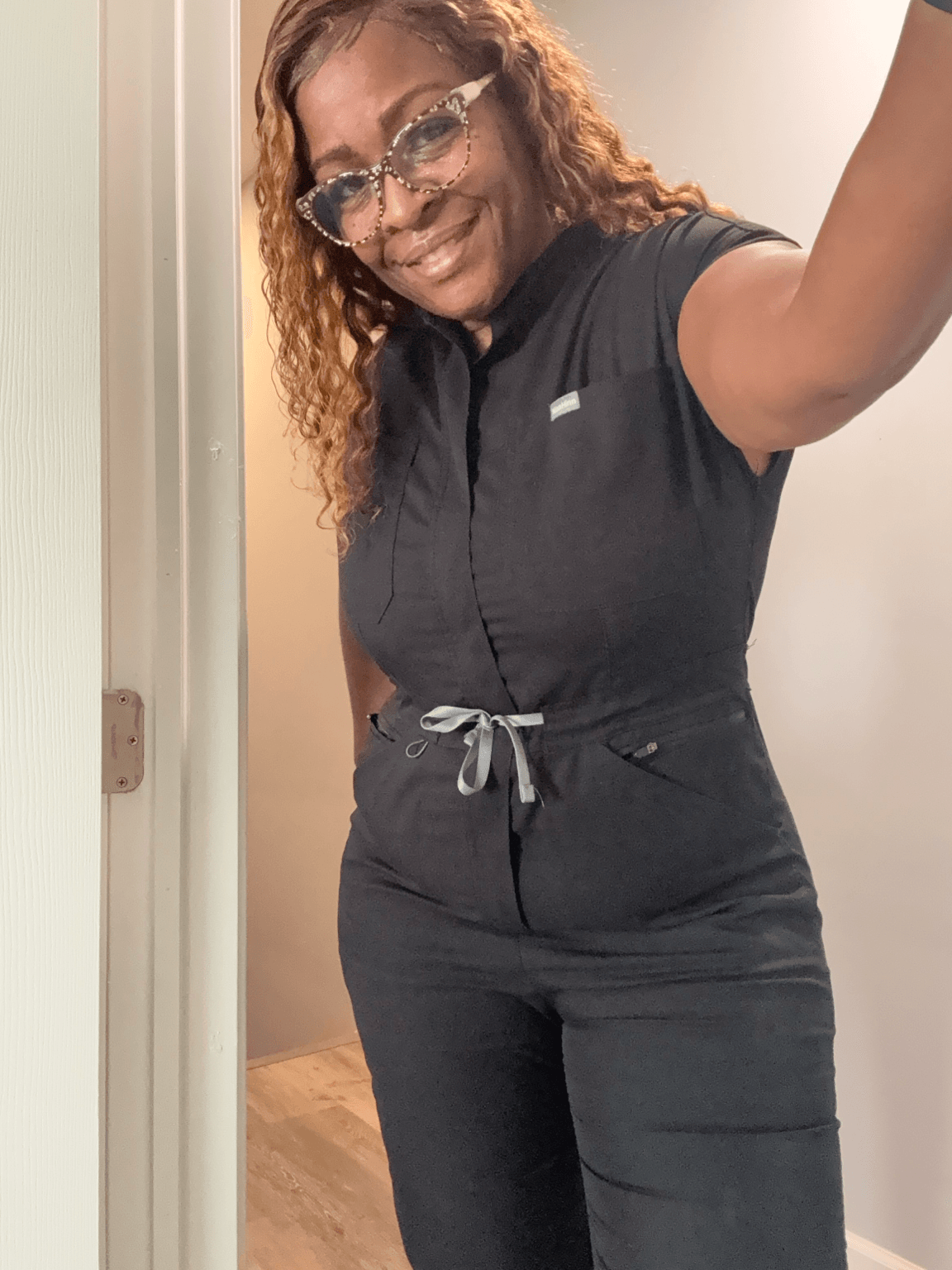
Today we’d like to introduce you to Cheryl Partlow.
Hi Cheryl, thanks for joining us today. We’d love for you to start by introducing yourself.
I don’t think my story started when I became a creator. I think I’m only now beginning to recognize how many parts of my life were preparing me to become one.
For more than 30 years, I worked in customer service. At the time, I thought of it simply as work, but looking back, those years taught me how to read people, listen closely, communicate, build relationships and understand what someone is really trying to say. I didn’t know those skills would eventually become part of the way I tell stories.
Later in life, I entered healthcare. I worked as a home health aide before deciding to become a nurse. I went back to school in my late 40s and became an LPN during the COVID era. I was 49 years old, sitting in nursing school with an entirely different life behind me and no guarantee that starting over would be easy. During my final term, I lost my mother. My father had already passed years earlier. Finishing school while grieving was one of the hardest things I have ever done, but I finished.
That experience taught me something I understand even more clearly now: starting over does not have an expiration date.
Today, I still work as an LPN, but at 55 another part of my life has begun unfolding in a way I never expected.
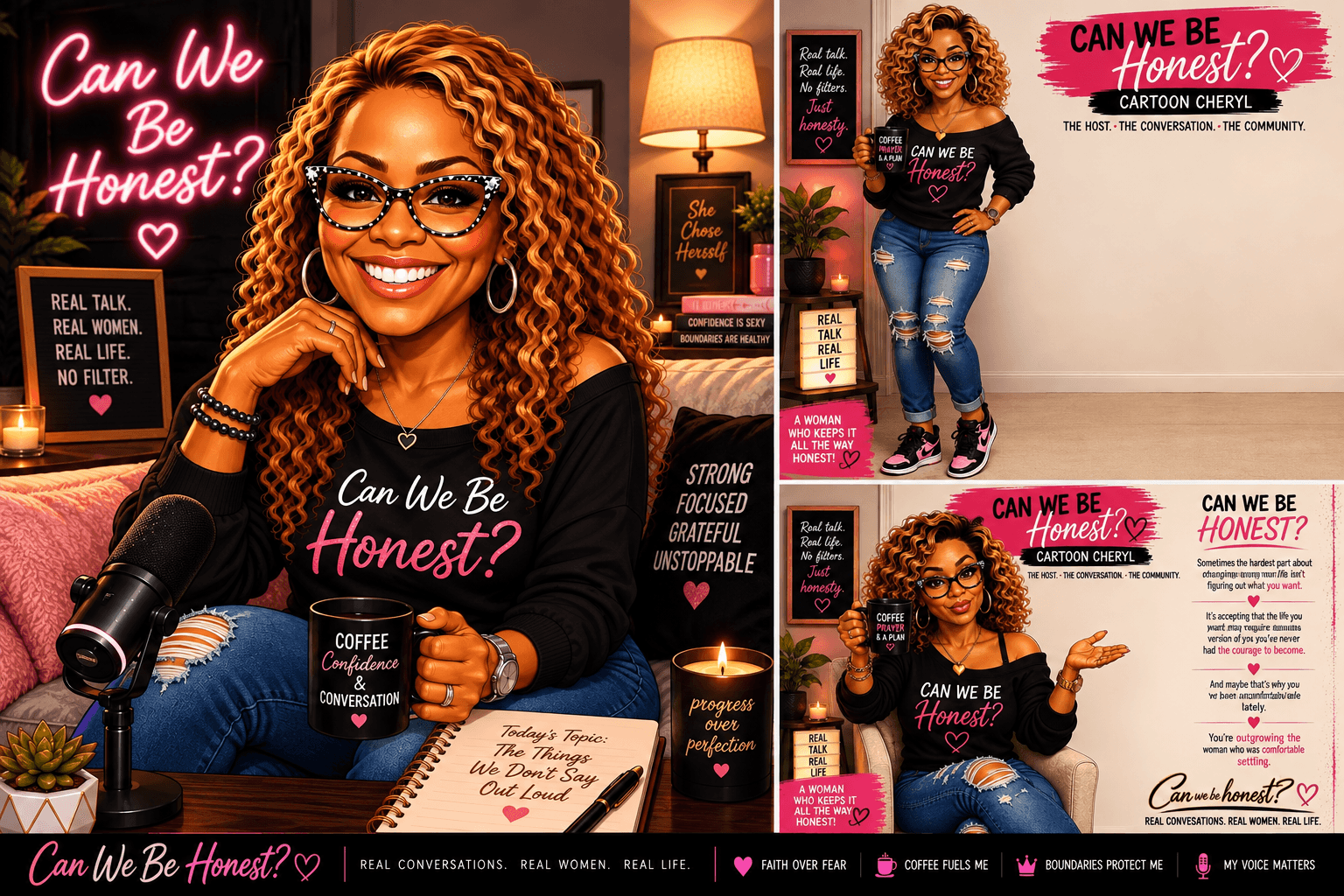
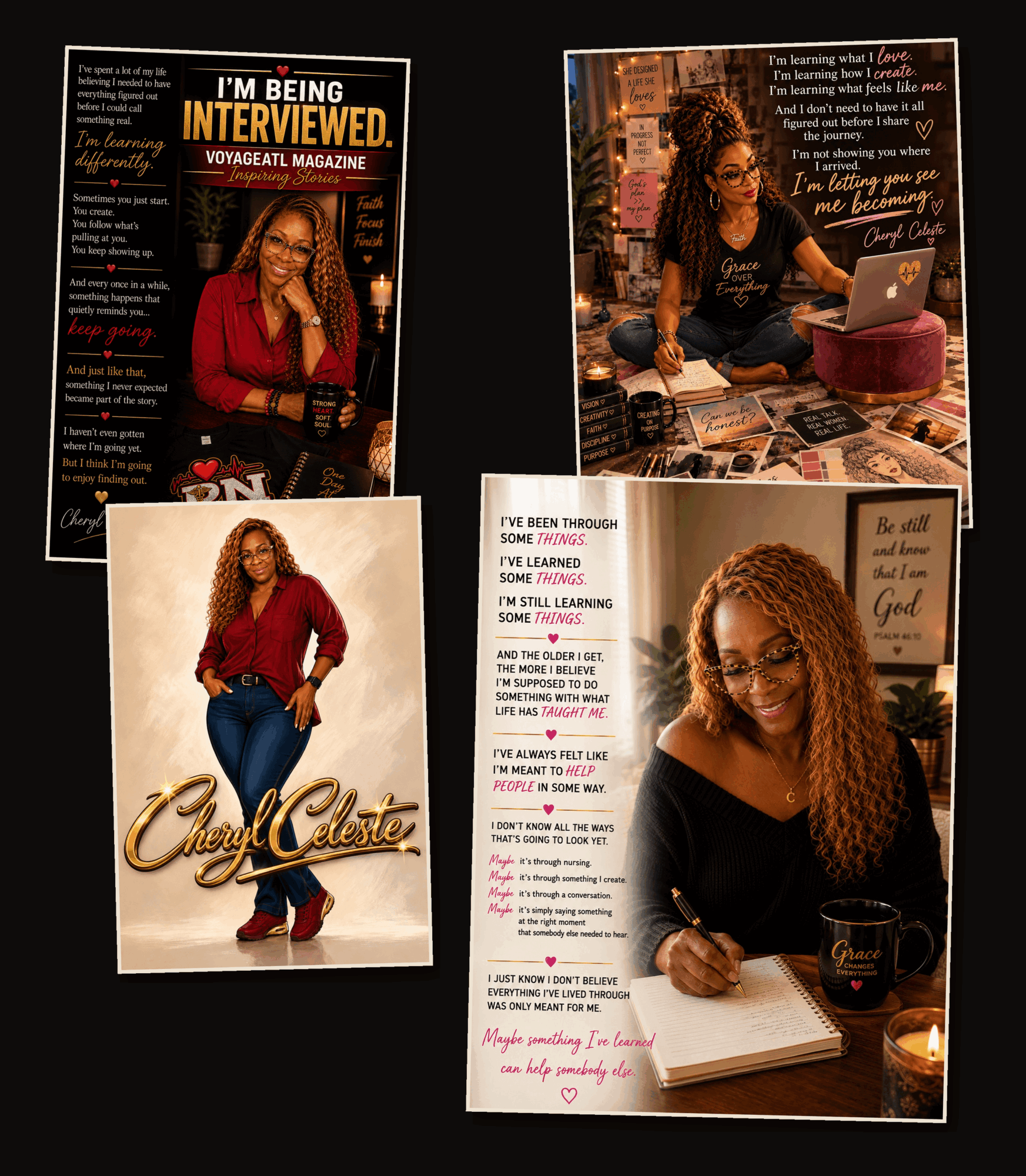
I started experimenting with AI-assisted visual creation and social media because I had ideas I wanted to bring to life. One of those ideas became Can We Be Honest?, a space built around the real conversations people, especially women, often think about but don’t always say out loud. I began creating around life, relationships, aging, faith, grief, love, starting over and the ordinary experiences that connect us.
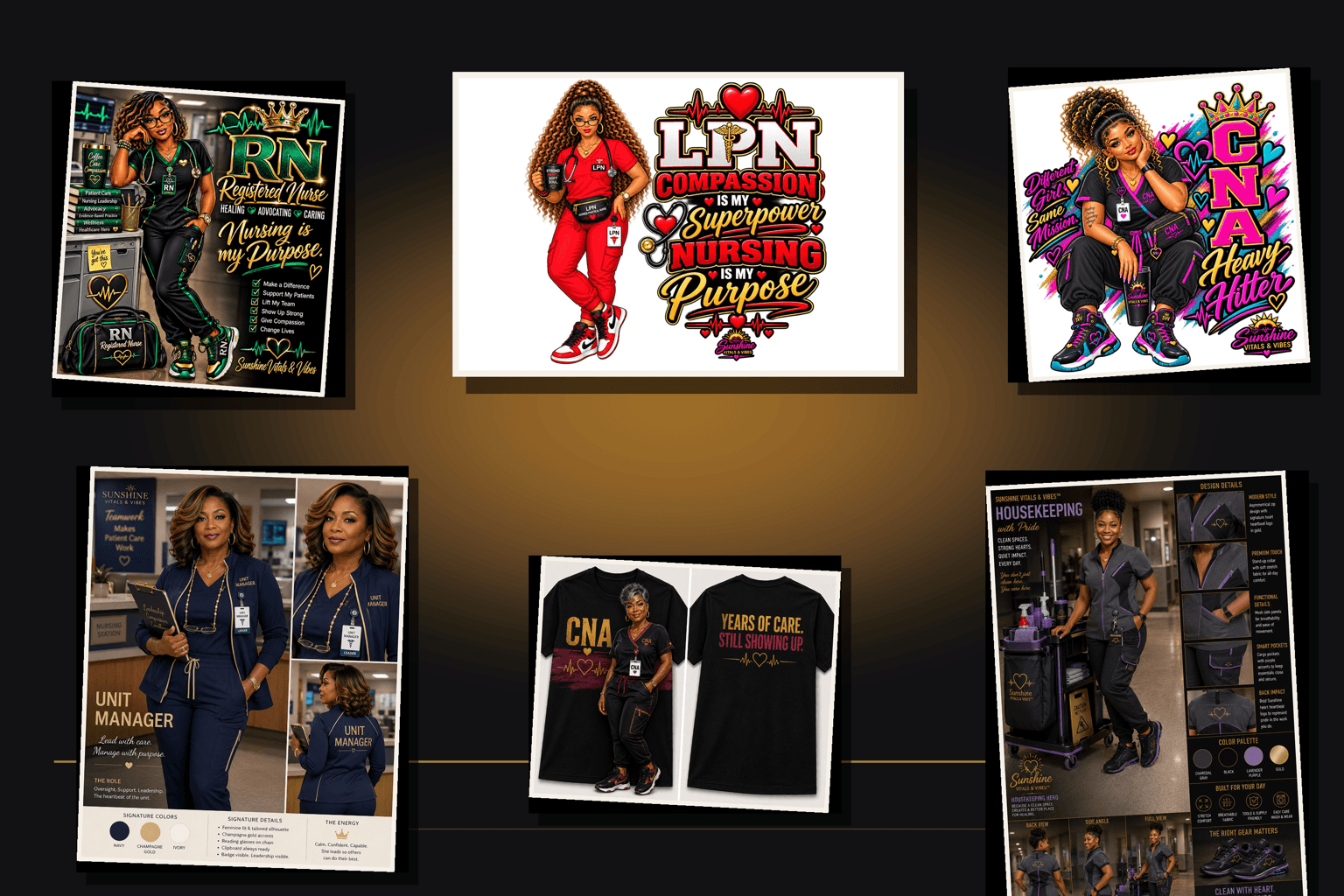
That creativity also led me to develop Sunshine Vitals & Vibes, a healthcare-inspired brand that grew from my own experience in nursing. I began creating original healthcare characters, apparel and product concepts that reflect the people and personalities I see in healthcare every day. It gave me another way to combine something I already knew, nursing, with something I was just beginning to recognize in myself, creativity.
At first, I thought I was simply learning how to make content.
Then I started seeing something else.
The more I created, the more I realized I wasn’t just making pictures or social media posts. I was taking thoughts, emotions, experiences and sometimes even half-formed ideas and turning them into visual stories. I became fascinated by the way an image, a few carefully chosen words and the right piece of music could work together to make someone stop, feel something and recognize a piece of their own life.
That realization changed the way I saw myself.
I didn’t suddenly become creative at 55. I finally recognized myself as a creator at 55.
And I’m still discovering what that means.
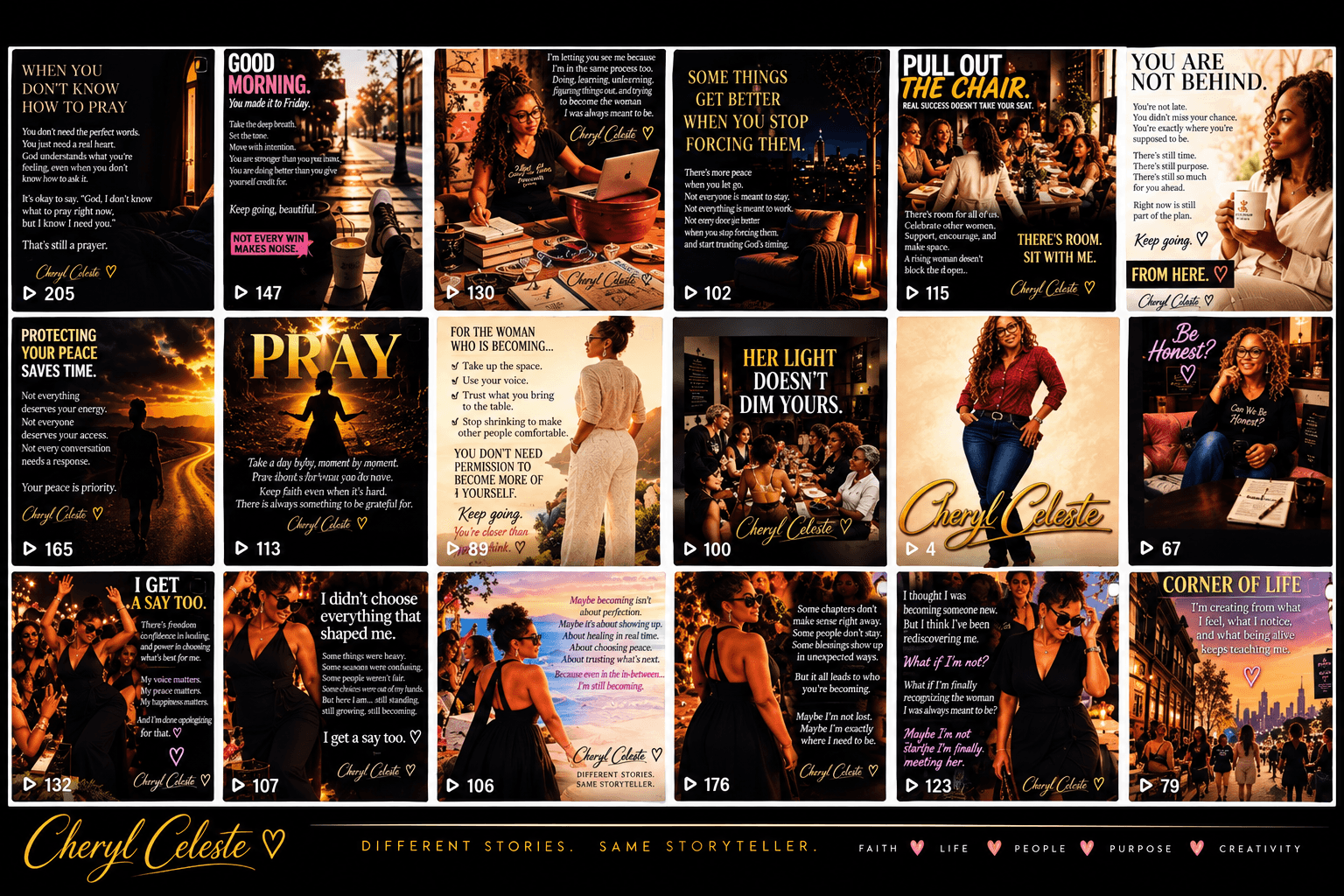
What began with Can We Be Honest?has grown into a larger body of work under Cheryl Celeste. I’m exploring visual storytelling, social content creation and creative concept development, and I recently began opening the door to creating for others as well. My approach is simple: you don’t have to come to me with everything figured out. Bring me the idea, the message, the feeling or even the half-formed thought, and I want to help find the story inside it.
One of the most surprising parts of this chapter is that I didn’t sit down one day and strategically decide what my “brand” was going to be. I created first. The creating started revealing the brand.
My faith has been present throughout my life, and it remains part of how I understand this season. I don’t know exactly where every opportunity will lead, and I’m learning to be comfortable with that. I’m not presenting myself as someone who has mastered any of this. I’m learning, experimenting, building and allowing myself to discover abilities that may have been there much longer than I realized.
That is probably the best description of where I am today:
I’m not claiming mastery. I’m documenting discovery.
And at 55, I’m discovering that sometimes a new chapter isn’t about becoming somebody completely new. Sometimes it’s about finally recognizing the woman who has been becoming all along.
Can you talk to us a bit about the challenges and lessons you’ve learned along the way. Looking back would you say it’s been easy or smooth in retrospect?
It has not always been a smooth road, although I also want to be careful not to describe my life only through struggle. I have been blessed in many ways. I have always been able to work, adapt, figure things out and keep moving. But being capable does not mean the road has been easy.
One of the biggest challenges throughout my adult life has been learning how easy it is to put yourself on hold when you are constantly responsible for other people.
I raised my son as a single mother, and for much of my life my decisions were made around what needed to be done for my family rather than what I might have wanted for myself. There was also a period when I was married and trying to continue my education. At the time, I was working two jobs, attending school part-time with the goal of becoming an RN, and still carrying most of the responsibilities at home. Eventually, something had to give, and once again, it was something that belonged to me.
That became a pattern in different forms over the years. I would have an idea, a goal or something I wanted to pursue, but there was always a practical reason it had to wait. There were bills to pay, people who needed me and financial limitations that made certain possibilities feel out of reach.
Financial struggle has probably been one of the most consistent obstacles for me. It was never that I was unwilling to work. I have worked most of my life. But when you are carrying responsibilities without enough support, working hard does not always mean there is enough left over to build the things you dream about. There were times when I looked at my finances, my credit or the resources available to me and thought, “Why even start if I don’t have what I need to get anywhere?”
So I didn’t start.
Or I started later.
Or I put something else ahead of myself again.
For years, there was a question underneath a lot of that: When do I get to have my life?
At 55, my answer has become: now.
That doesn’t mean all of my challenges have suddenly disappeared. They haven’t. I still work. I still have responsibilities. I am still working through financial realities, and I am building this creative chapter with the resources I have rather than the resources I wish I had.
What has changed is that I am no longer willing to make the absence of perfect circumstances a reason not to begin.
I have spent much of my life pouring into other people. I don’t regret loving or caring for the people in my life, but I have reached a point where I understand that I have to pour something back into myself too.
If I have learned anything from the difficult parts of my road, it is that I know how to figure things out. I know how to work. I know how to learn. I know how to begin again.
This time, I am using those things to build something for myself too.
Alright, so let’s switch gears a bit and talk business. What should we know about your work?
What I do is still something I am learning how to name, because for a long time I didn’t think of it as “work.” I was simply creating.
Today, the best way I can describe it is visual storytelling. I take ideas, messages, experiences and sometimes even half-formed thoughts and turn them into visual stories people can see, feel and connect with.
My process usually begins with something that makes me feel or notice something. It might be a thought, a conversation, a piece of music, something I have experienced personally or something I have observed in everyday life. From there, I begin imagining what that feeling or idea could look like visually. I use AI-assisted tools as part of that creative process, but for me the image is only one piece of the story. The words, the visual, the music and sometimes the caption all have a job to do. When they come together the right way, I want someone to do more than look at what I created. I want them to recognize something in it.
That approach is what led me to create Can We Be Honest?, a conversational platform built around the real things people experience, think about and feel but don’t always say out loud. It began especially from my desire to create honest conversations among women about life, relationships, faith, aging, grief, love, starting over and everything that can come with becoming who you are in different chapters of life. I don’t approach those conversations as someone who has all the answers. I’m in the conversation too, sharing what I see and what I’m still learning, then opening the door for other people to bring their own experiences and perspectives. At its heart, Can We Be Honest? is about creating the kind of conversation where someone can recognize themselves, say “me too,” disagree, add another perspective or simply feel less alone in something they thought they were the only one thinking about.
It also led me to develop Sunshine Vitals & Vibes, where I bring my healthcare experience into the creative process through original healthcare characters, apparel and product concepts inspired by the people and personalities I have encountered in that world.
What I am most proud of is that I allowed myself to begin before I completely understood what I was beginning.
I didn’t start with a business plan, a perfectly defined niche or even the language to explain what I was doing. I followed the ideas. I experimented. I learned new tools. I created things that worked and things that taught me what I wanted to do differently. Somewhere in that process, individual pieces began becoming a body of work, and I began recognizing my own creative voice.
I am also learning that not every story needs to look the same in order to belong to the same storyteller. One day I may create something about faith. Another piece may be about love, grief, confidence, relationships, healthcare or starting over. What connects the work is not necessarily the subject. It is the way I look for the human story inside it.
That is where my phrase, “Different Stories. Same Storyteller.” comes from.
I think what sets my approach apart is that I don’t usually begin by asking, “What should I post?” I begin by asking, even if only instinctively, “What is here? What am I feeling or noticing, and what is the story inside it?”
Sometimes one image tells that story. Sometimes it becomes several moments. Sometimes it becomes a conversation. I let the idea tell me what it needs rather than forcing every idea into the same format.
I am still early in this creative chapter, so I would never pretend that I have mastered it or that I already know exactly what it will become. Recently, I have started opening the door to creating for other people as well through custom visual storytelling, social content creation and creative concept development.
The idea behind that work is something I have come to believe strongly:
You don’t have to come to me with everything figured out. Bring me the idea, the message, the feeling or even the half-formed thought.
We’ll find the story inside it.
Can you talk to us about how you think about risk?
For much of my life, risk felt like something I couldn’t afford.
When you are responsible for other people, especially as a single mother, risk can feel very different. There were bills that had to be paid, a child who depended on me and responsibilities that did not disappear because I had a dream or wanted to try something new. For many years, security had to come first. I learned how to work, survive, adapt and make practical decisions because I had to.
Looking back, though, I realize I have taken risks throughout my life. Going back to school later in life was a risk. Entering healthcare after spending decades in other kinds of work was a risk. Becoming an LPN in my late 40s required me to believe that starting over was still possible, even when there was no guarantee that the road would be easy.
This creative chapter has required a different kind of risk.
When I first began exploring visual storytelling and content creation, I was already financially stretched. I did not have a comfortable amount of extra money set aside to invest in a new creative venture. But I reached a point where I realized that if I wanted to find out what I was capable of creating, I had to give myself the tools and the opportunity to begin.
So I took a chance on myself.
I invested in creative tools and technology before I had any evidence that the investment would ever pay me back. There was no guarantee that I would make money from it. There was no audience waiting for me, no established business and no roadmap telling me exactly where it would lead.
I just knew I had to start.
That may not sound like a major financial investment to everyone, but for me, the significance was not really the amount of money. It was what the decision represented. After spending so many years making decisions based on what other people needed and what I could realistically afford, I was choosing to invest in a possibility that belonged to me.
There is also risk in allowing people to see you while you are still becoming. I am sharing my creative work publicly while I am still learning. I am calling myself a creator without waiting for some large accomplishment to give me permission to use the word. I am exploring whether something I only recently recognized in myself could eventually become part of how I earn a living.
None of that comes with guarantees.
My relationship with risk has changed because I have started thinking about its opposite differently too. For years, I thought mostly about what could happen if I tried something and it didn’t work.
At 55, I also think about what could happen if I never try.
There is risk in starting, but there is also a cost to continually waiting. There is a cost to putting yourself on hold. There is a cost to looking back years later and wondering what might have happened if you had given yourself a chance.
So today, I still think carefully about risk. I am not reckless, and I don’t believe faith means ignoring reality. But I am learning that sometimes stepping out on faith means doing what you can with what you have, even when you cannot see the entire road ahead.
I don’t know what will come from every risk I am taking in this chapter.
But I know what comes from never starting.
Nothing.
So I decided to start.
Contact Info:
- Instagram: sunshine_2971_lpn
- Facebook: Cheryl Celeste
- Youtube: @cherylceleste
Popular
-

Hidden Gems: Local Businesses & Creatives You Should Know
-
ATL’s Most Inspiring Stories
-

Portraits of Atlanta
-
Peyten Williams Is Helping Parents Trade the Pressure of Perfect Parenting for Better Judgment
-
Dr. Hildiah Martin-Suggs Is Building Second Chances for Youth Who Were Almost Lost in the System
-
From Showing Up to Seeing His Face on a Billboard: Anthony Green Is Just Getting Started