





Today we’d like to introduce you to Terrance Asante-Doyle.
Terrance , we appreciate you taking the time to share your story with us today. Where does your story begin?
I like to say I didn’t choose the Asante Art Institute—I grew up inside of it.
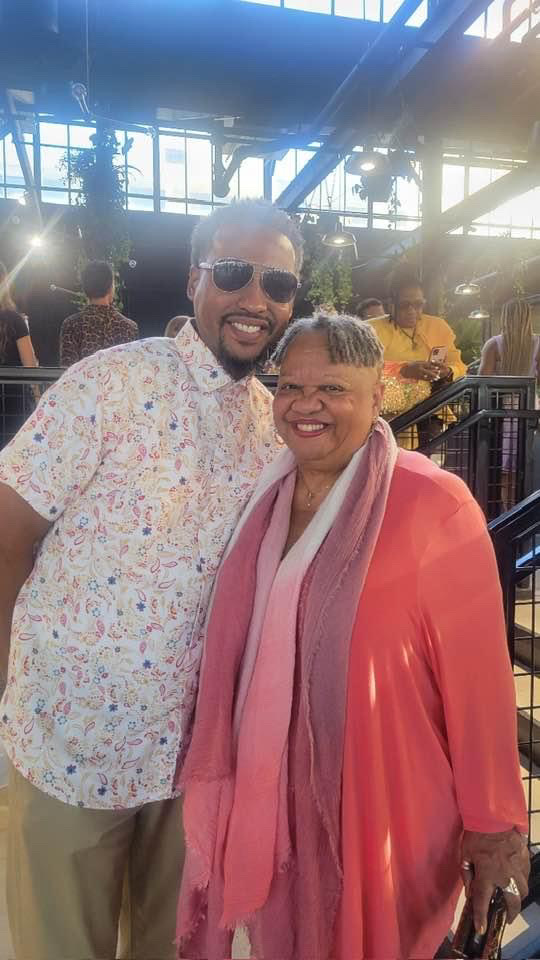
My mother, Deborah Asante, founded AAI with a vision that was ahead of its time: that art wasn’t a luxury or an extracurricular, but a vital tool for building identity, confidence, and community, especially for Black youth and families who too often saw themselves left out of traditional art spaces. I was there from the beginning, which means my childhood memories are tangled up with the organization’s earliest days—setting up for events, watching rehearsals from the back of a room, absorbing the energy of artists and educators who believed deeply in what they were building.
Growing up as “Deborah’s son” inside of AAI gave me a front-row seat to something most people only get to study from the outside: what it actually takes to build an institution rooted in culture and community. I watched my mother and her colleagues navigate the highs of transformative programming and the very real challenges of sustaining a mission-driven organization—funding gaps, growing pains, the constant work of proving that art for our community deserved real investment and respect.
For a while, I explored paths outside of AAI, wanting to test my own footing and bring back skills that weren’t just inherited but earned. But every road kept leading back to this work, because I understood something early on: AAI was never just my mother’s project. It was a living, breathing extension of our family’s belief in the power of creativity to change lives. I wanted to be part of carrying that forward, not out of obligation, but because I’ve seen firsthand what happens when a young person walks into our space unsure of themselves and walks out understanding they have something valuable to offer the world.
Today, as Operations Director, my role is to take that founding vision and build the infrastructure that lets it scale, endure, and reach even more families. I think of myself as a bridge between generations, honoring what my mother built while making sure AAI is positioned not just to survive, but to thrive as a true institution: one that activates creativity, develops cultural confidence, and convenes and connects our community for generations to come. This isn’t just my job. It’s my inheritance, and my responsibility to build on it.
I’m sure it wasn’t obstacle-free, but would you say the journey has been fairly smooth so far?
No, it hasn’t been a smooth road—and I don’t think any organization built on purpose rather than profit ever has that luxury.
One of the earliest and most personal challenges was proving myself as more than “Deborah’s son.” Coming into a leadership role in an organization my mother founded meant I had to work twice as hard to show that I brought value beyond my last name—to staff, to board members, to the community we serve. I had to earn trust and respect through my own decisions, my own follow-through, my own understanding of the mission, not just by inheriting a title.
Funding has been a constant and honest struggle. Arts organizations centered on cultural and community-based work often find themselves fighting for resources that flow more easily to institutions with different histories and different audiences in mind. We’ve had to be resourceful, creative, and relentless just to keep programming consistent, let alone to grow. There were seasons where the question wasn’t “how do we expand” but “how do we make it to next quarter.”
There’s also been the challenge of balancing legacy with evolution. My mother built AAI on a specific vision, rooted in a specific moment and community need. Part of my role has been figuring out how to honor that foundation while also pushing the organization to evolve—updating our operations, our technology, our approach to partnerships and funding, without losing the soul of what she built. That tension between “this is how we’ve always done it” and “this is what we need to do now” has required a lot of hard, sometimes uncomfortable conversations, including within my own family.
And honestly, there’s the ongoing challenge every nonprofit faces: convincing people that this work is not charity, it’s investment. That when we talk about using art to build cultural confidence in young people, we’re talking about long-term community transformation, not just a nice extracurricular activity. Getting funders, city leaders, and even some community members to see the depth of that impact has taken years of consistent, intentional storytelling and results.
None of it has been easy. But every obstacle has clarified the mission further and made our team more resourceful, more intentional, and more committed to building something that lasts.
Alright, so let’s switch gears a bit and talk business. What should we know about your work?
Before I took on the role of Operations Director at the Asante Art Institute, my career was built on the intersection of high-stakes public safety and the complex, human-centered work of justice reform. While it might seem like a departure from the arts, it was actually the perfect training ground for the work I do now.
For over a decade, I worked within the Marion County Superior Court Juvenile Detention system. I started as a Shift Supervisor and eventually became the Superintendent. In those environments, you aren’t just managing policies or budgets—you are managing high-stress environments where people’s lives, dignity, and futures are on the line every single day.
I became known for being a leader who didn’t just enforce rules, but who understood that compliance and compassion aren’t mutually exclusive. My specialty became institutional reform—specifically, navigating federal compliance mandates (like the Prison Rape Elimination Act) not just as a paperwork exercise, but as a cultural overhaul. I was known for being the person who could walk into a volatile, high-pressure environment, calm the chaos, and implement systems that actually prioritized human dignity and safety for both staff and the youth we served.
What I am most proud of:
My proudest achievement from that time was the operational turnaround of that major municipal juvenile detention center. We were dealing with a vulnerable population and a staff that needed a renewed sense of purpose. By shifting our institutional culture toward trauma-informed care—moving away from a strictly punitive mindset toward one that acknowledged the humanity and potential of the youth—we significantly reduced incident rates and improved safety outcomes for everyone. I proved to myself and to the system that you can manage a large-scale, complex operation with both rigorous discipline and deep empathy.
What sets me apart:
What sets me apart is this specific “bridge-building” ability. I bring the high-stakes compliance discipline and operational rigor of public safety into the resource-lean, creative world of arts administration.
Most people in the arts haven’t had to manage a facility where a crisis happens in real-time, every day. And most people in public safety aren’t trained to see the world through the lens of community storytelling and creative agency. I am able to bridge those two worlds. I understand the “ROI” of community investment not just as a buzzword, but as a survival necessity. I learned how to “steady the ship” during storms long before I entered the nonprofit world, and that perspective allows me to look at the challenges AAI faces today with a calm, analytical, and highly resilient mindset. I don’t just see the problems; I see the systems we need to build to solve them.
What sort of changes are you expecting over the next 5-10 years?
The future of the nonprofit arts sector is shifting away from being a “programming provider” toward becoming a “community anchor.” Over the next 5–10 years, I see several major trends defining this evolution, and they are central to the work we are prioritizing at the Asante Art Institute.
1. Moving from “Pop-Up” to Permanent Infrastructure
For too long, community-based arts organizations have been stuck in a cycle of “pop-up” service—hosting an event, delivering a service, and then packing up until the next grant cycle. That model is unsustainable for long-term community health. The next decade will be defined by the creation of permanent Art & Resource Hubs. These spaces will function as the “living room” of the neighborhood—physical, hyper-local anchors where residents can engage with art, but also easily access essential services like housing assistance, workforce development, and food programs. We are moving from providing “events” to providing “infrastructure.”
2. The Integration of “Clinical” and “Creative” Spaces
One of the most exciting shifts I see is the de-stigmatization of support services through the arts. We are moving toward a model where mental health resources and trauma-informed care are co-located within creative spaces. By embedding welfare providers inside an arts-driven environment, we remove the clinical stigma that often prevents families from seeking the help they need. The arts become the “front door,” a welcoming, celebratory environment that makes it easier for people to engage with complex systems of support.
3. Intentional Focus on the “Pipeline” Over the “Moment”
We are seeing a necessary pivot from one-off engagement toward generational pipelines. At AAI, we call this our “School-to-Theater Pipeline.” It’s not enough to offer a field trip once a year; the industry needs to build dedicated rehearsal and performance spaces that authentically reflect the culture and history of the people in the community. The goal is to ensure that a young person’s first experience with the arts is not just a moment of entertainment, but a building block for their self-worth that lasts into adulthood.
4. Leadership as “Architecture,” Not Just Administration
Finally, the role of the nonprofit leader is evolving. We can no longer just be administrators; we have to be “Servant Leader-Architects.” The industry will demand leaders who don’t just run an organization, but who build frameworks that allow others to lead. My goal is to use this operational mindset to help the city move toward a “village” mentality—where we aren’t just delivering solutions to a community, but activating the agency of the community to solve problems from within.
The next decade isn’t about doing more of the same. It’s about building differently—designing systems that are resilient, hyper-local, and fundamentally rooted in the humanity of the families we serve.
Contact Info:
- Website: https://asanteartinstitute.org/
- Instagram: @act_1990
- Facebook: Asante Art Institute of Indianapolis
- Youtube: @asanteartinstituteofindian8692


Popular
-

Hidden Gems: Local Businesses & Creatives You Should Know
-

ATL’s Most Inspiring Stories
-

How Cameron Zabko Is Helping Families Build Financial Confidence Through Trust, Planning, and Meaningful Conversations
-

Portraits of Atlanta
-

Nury Crawford is Helping Writers Discover That Their Voice Already Matters
-

Why Tiyonna Griffin Believes Confidence Is the Most Beautiful Thing You Can Create