
Today we’d like to introduce you to Daryl Weaver.
Hi Daryl, thanks for joining us today. We’d love for you to start by introducing yourself.
I’ve always been a creative person. I’m originally from Rocky Mount, North Carolina, and I studied Graphic Design at North Carolina A&T State University. After graduating, I knew I wanted to take my creativity beyond traditional design, so I continued my education at the Savannah College of Art and Design, where I earned my master’s degree in Broadcast Design.
Atlanta really became the place where my career took shape. I moved there and spent nearly 15 years at CNN as a Broadcast Motion Designer. That experience gave me the opportunity to work on everything from breaking news and live television to motion graphics, branding, animation, and major network projects. I was fortunate to be part of work that received recognition, including a Peabody Award for CNN’s coverage of the Gulf Oil Spill and a PromaxBDA award for Art Direction.
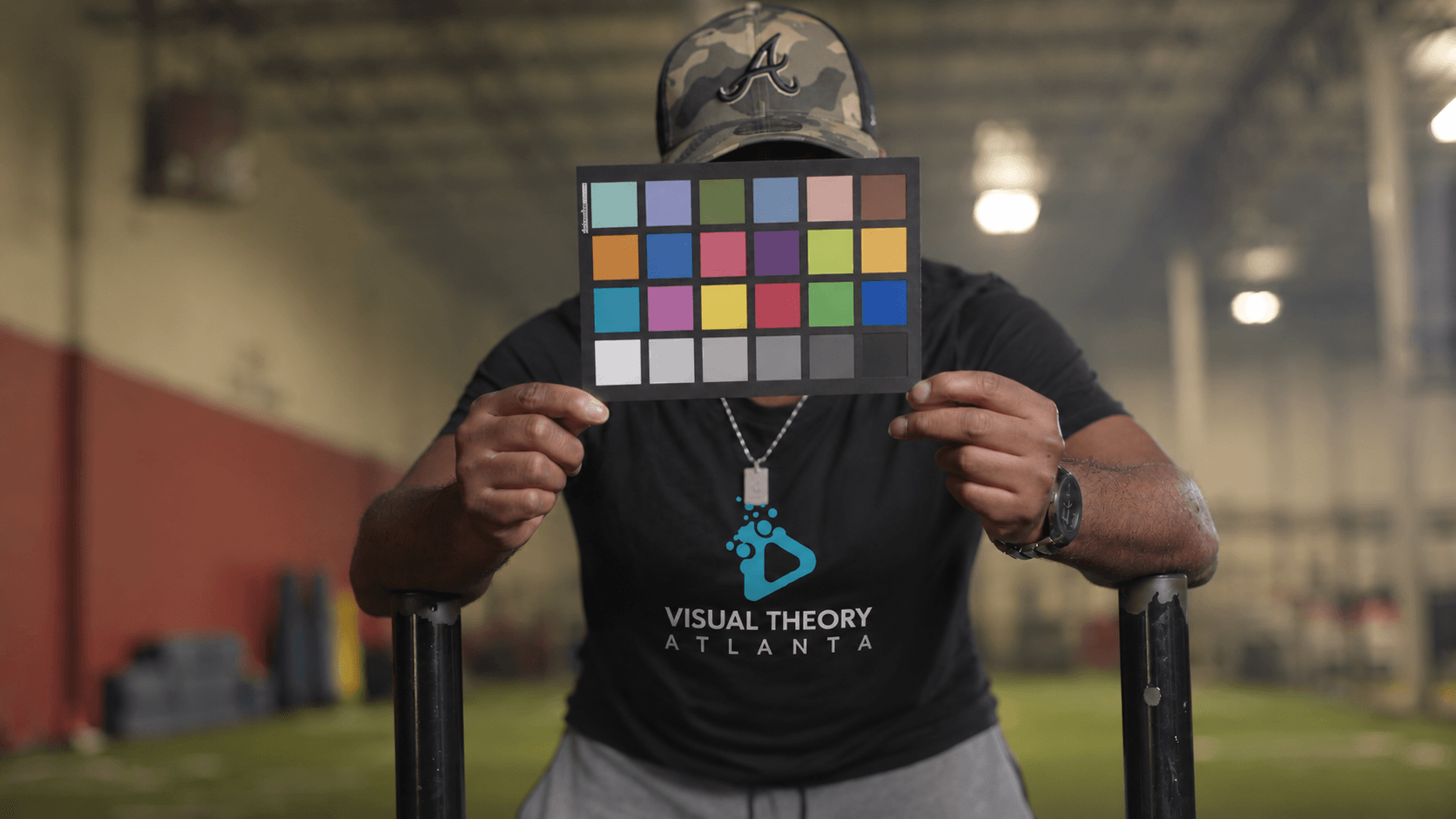
But I’ve never wanted to limit myself to just one area of creativity. Over the years, I expanded into video production, editing, color grading, 3D, visual effects, directing and producing. I also started Visual Theory Atlanta as a way to create outside of my everyday work and build something of my own. Through Visual Theory, I’ve been able to work with different clients and take projects from an idea all the way through the finished product.
Today, I work as a Multimedia Motion Graphic Artist and Video Editor, while continuing to grow Visual Theory Atlanta and take on independent creative projects. I’m also working on a documentary called Enhancements, which explores the world of cosmetic enhancement and BBL culture through the personal stories of the people involved. That project has pushed me creatively because I’m not just designing or editing someone else’s vision—I’m shaping the story from beginning to end.
My career has definitely evolved over the years. I started as a graphic designer, moved into broadcast and motion design, and eventually became much more of an all-around visual storyteller. Technology has changed tremendously since I started, and now AI is becoming another part of the creative process. I’ve always tried to keep learning and evolving with it while still believing that the idea, the story and the human creativity behind the work are what make it meaningful.
When I look at where I am today, I think the common thread through everything has simply been my love for creating. Whether it’s a graphic, a 3D animation, a commercial, a documentary or something I’ve never tried before, I still get excited about taking an idea in my head and figuring out how to bring it to life.
We all face challenges, but looking back would you describe it as a relatively smooth road?
It definitely hasn’t been a smooth road. One of the biggest challenges throughout my life has been my health. I was diagnosed with Type 1 diabetes when I was six years old, so managing my health has really been a part of my life for as long as I can remember.
Eventually, complications from diabetes led to kidney failure. I went through dialysis while still trying to maintain my career, and there were days when I would literally go to work after dialysis. At 34, I was fortunate enough to receive a kidney transplant, but even after the transplant there were still challenges. Kidney disease and the complications surrounding it eventually resulted in the amputation of one of my fingers.
There was a point when I was working with one hand—typing, editing, designing and even filming. I had to learn how to adjust and figure out new ways to do things that I had done naturally for years. But that has probably been one of the biggest lessons throughout my life: I’ve always managed to find a way to work around whatever was in front of me.
I don’t think I ever wanted my health to become the thing that defined me or what I was capable of doing. Of course, there have been difficult days, and there are still things I have to manage, but I’ve always loved my craft. Creating has actually been one of the constants in my life through all of it.
Whether I was coming from dialysis, recovering from surgery, learning how to work differently, or simply having a difficult day, I still wanted to create. I think that passion has carried me through a lot. My circumstances may have changed how I do certain things, but they’ve never changed how much I love what I do.
Alright, so let’s switch gears a bit and talk business. What should we know about your work?
My work really centers around visual storytelling. I’m a motion designer, video editor and multimedia artist, but over the years my skill set has grown to include shooting, directing, producing, color grading, 3D animation, visual effects and compositing. I love being able to take something from an idea or a conversation and help turn it into a finished visual piece.
A large part of my background is in broadcast design. I spent nearly 15 years at CNN, where I worked on everything from breaking news and live television to show opens, animations, branding and special projects. Working in that environment taught me how to be creative under pressure. Sometimes you have plenty of time to develop an idea, and other times something is happening in the world and you have minutes to figure out how to visually tell that story.
Through my company, Visual Theory Atlanta, I’ve been able to take that experience and apply it to a much wider range of work. I’ve created commercials, promotional content, motion graphics, 3D animation, interviews, social content and longer-form projects. I’m also comfortable behind the camera, so I can shoot something, edit it, create the graphics, handle the color and effects, and deliver the finished piece. I think that versatility is probably one of the things that sets me apart.
I’m proud of a lot of the work I’ve done throughout my career. Being part of CNN’s coverage of the Gulf Oil Spill that received a Peabody Award was definitely a highlight, as was receiving a PromaxBDA award for Art Direction. But I’m equally proud of the fact that I’ve continued to grow. The industry I entered is very different from the industry today, and I’ve never stopped learning. I went from traditional graphic design to broadcast, motion design, 3D, advanced editing and VFX, and now I’m incorporating AI into my creative workflow as another tool to help bring ideas to life.
What I think sets me apart most is that I don’t necessarily look at myself as someone who just knows a collection of software. I’m a creative first. The software changes. The technology changes. But understanding composition, movement, timing, emotion and how to tell a story visually is what stays with you.
At the end of the day, I just really enjoy making things. I can still sit in front of a blank screen, start building something and get excited watching it come together. After all these years, I think the fact that I still have that excitement about the work is probably one of the things I’m most proud of.
Can you talk to us about how you think about risk?
I think your relationship with risk is interesting because you don’t strike me as someone who takes risks just for the sake of it. Your bigger risks have been about **betting on yourself creatively**—building Visual Theory while maintaining a career, expanding beyond broadcast, taking on projects where you’re responsible for more of the process, and continuing to learn new technology rather than staying comfortable with what you already know.
Here’s a version that feels consistent with the tone of your other answers:
I don’t know if I’ve ever considered myself a traditional risk-taker. I’m probably more calculated with risk. I think about what could go wrong, but I also think about what could happen if I never try.
One of the biggest risks I’ve taken professionally has been stepping outside of what was comfortable. I spent many years working in broadcast television, and I had built a career and a skill set that I knew very well. It would have been easy to stay in that lane, but creatively I’ve always wanted to do more. Starting Visual Theory Atlanta was part of that. It gave me an opportunity to bet on myself and see what I could create when I wasn’t working within the structure of a larger company.
I’ve also taken risks by constantly pushing myself into areas where I wasn’t necessarily an expert yet. I started as a graphic designer, moved into motion and broadcast design, then expanded into editing, shooting, directing, color, 3D and visual effects. More recently, I’ve been exploring AI and how it can be incorporated into the creative process. Every time you move into something new, there’s a period where you have to be comfortable not knowing everything. I’ve learned not to be afraid of that.
Even creating my documentary, *Enhancements*, has been a risk in a different way. It’s one thing to work on someone else’s project and execute their vision. It’s another thing to put your own time, money and creativity into something where you’re responsible for the vision and whether it succeeds. But projects like that are also where I feel like I grow the most.
I think some of my perspective on risk probably comes from what I’ve experienced personally as well. When life has already forced you to adapt to situations you didn’t choose, you realize that being comfortable doesn’t necessarily mean that things will stay comfortable. Sometimes you just have to adjust, figure things out and keep moving.
So today, I look at risk a little differently. I don’t believe in being reckless, but I do believe in taking a chance on yourself. I would rather try something, learn from it and possibly have to change direction than always wonder what might have happened if I had gone for it.
The line **“being comfortable doesn’t necessarily mean that things will stay comfortable”** feels particularly connected to your story without repeating all the health details from the previous answer.
Contact Info:
- Website: https://www.visualtheoryatl.com/
- Instagram: https://www.instagram.com/visualtheoryatl
- LinkedIn: https://www.instagram.com/visualtheoryatl


Popular
-
Hidden Gems: Local Businesses & Creatives You Should Know
-
ATL’s Most Inspiring Stories
-
Portraits of Atlanta
-
Peyten Williams Is Helping Parents Trade the Pressure of Perfect Parenting for Better Judgment
-
Dr. Hildiah Martin-Suggs Is Building Second Chances for Youth Who Were Almost Lost in the System
-
From Showing Up to Seeing His Face on a Billboard: Anthony Green Is Just Getting Started