



Today we’d like to introduce you to Erica Watson.
Hi Erica, it’s an honor to have you on the platform. Thanks for taking the time to share your story with us – to start maybe you can share some of your backstory with our readers?
I’m a Georgia native through and through. There’s something about this state, its landscape, its people, its creative communities, that has always felt like the right place to make things and to grow.
I studied art education at the University of Georgia, which set the foundation, but it was my first job after graduation that truly shaped me as an art educator. I joined Color Wheel Studio in Decatur under its founder, Cathy Spencer, and I can say without hesitation that those years were transformative. Color Wheel is a special place that takes arts education seriously — not ancillary, as enrichment, but something essential. Working there gave me a teaching philosophy rooted in joy, quality, contemporary art, and the belief that community arts experiences have the power to change people. That belief continues to this day.
From there, my path has had a little rhythm to it — I moved to Hall County as a high school art teacher, returned to Color Wheel as assistant director, then came back to Hall County to teach once more, where I’ve been living, making artwork, and teaching ever since. In the middle of all that back-and-forth, I earned my master’s degree in art education from Piedmont University. I think of that winding path not as indecision but as depth — each experience layered something onto the next, the way a painting builds.
Almost fifteen years into art education and a practicing artist all the while, I feel like I’ve finally stepped into who I am. And yet I also feel very much like a work in progress — which honestly feels right. I’ve always said that an artwork is never truly finished. Neither are we.
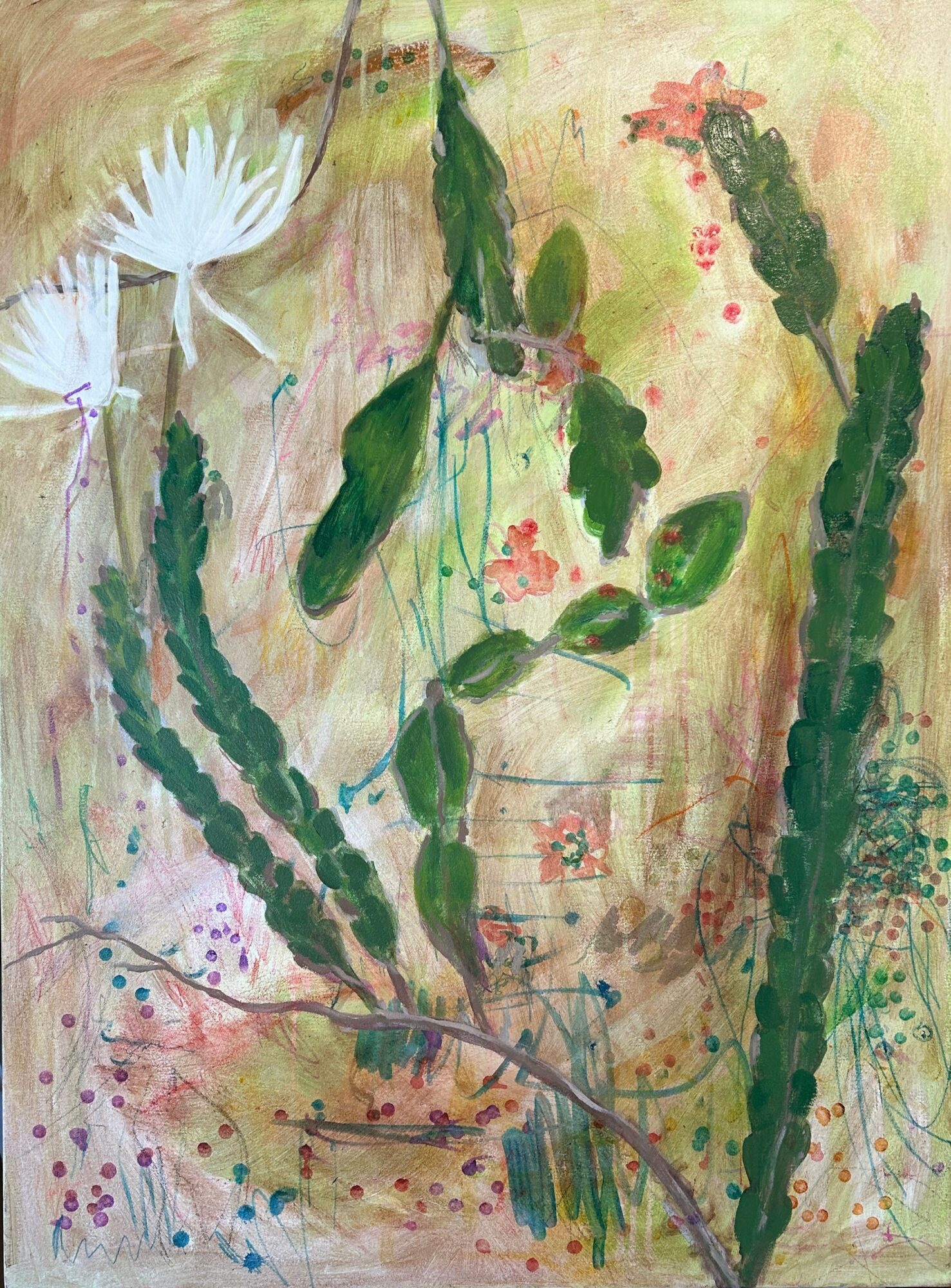
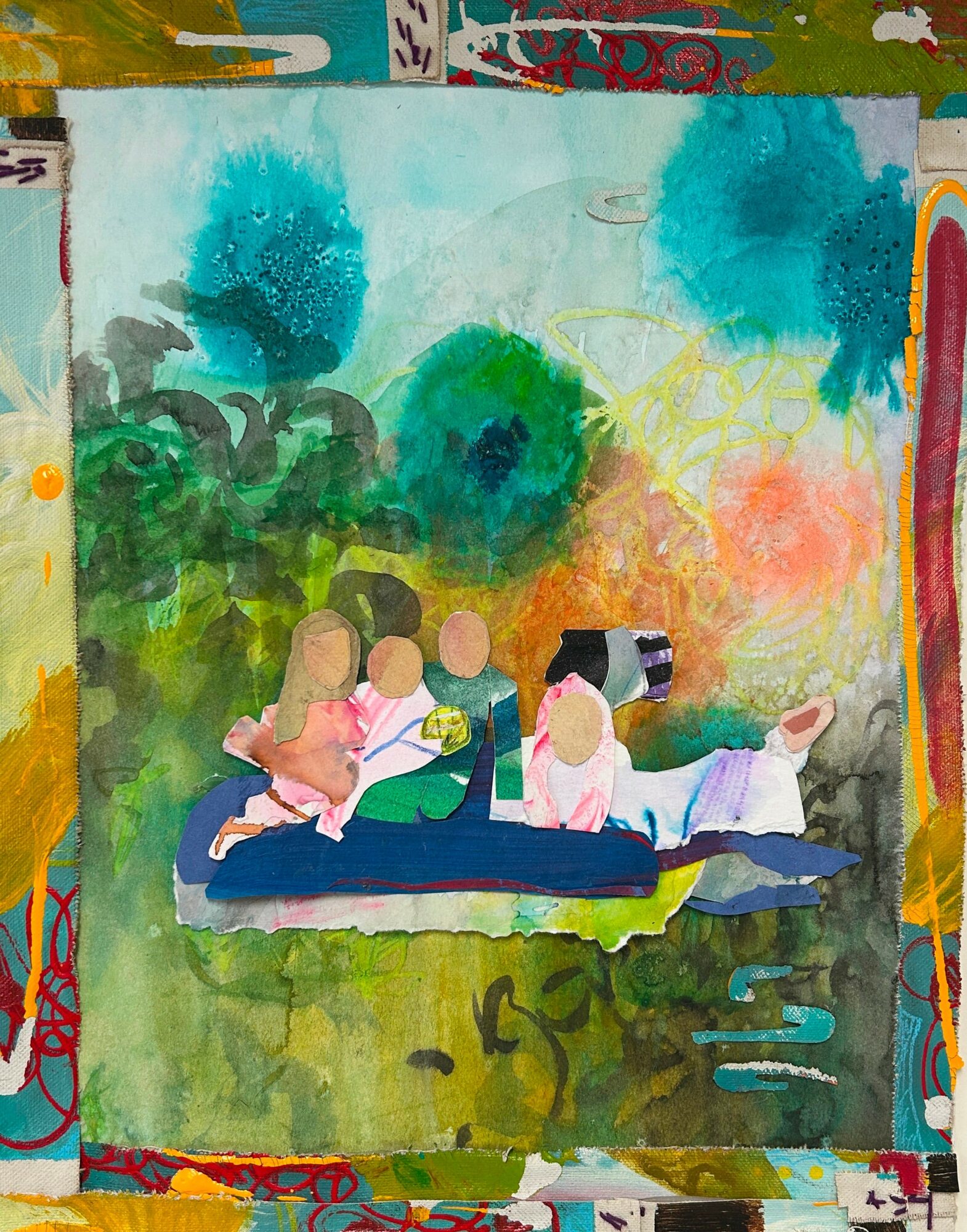
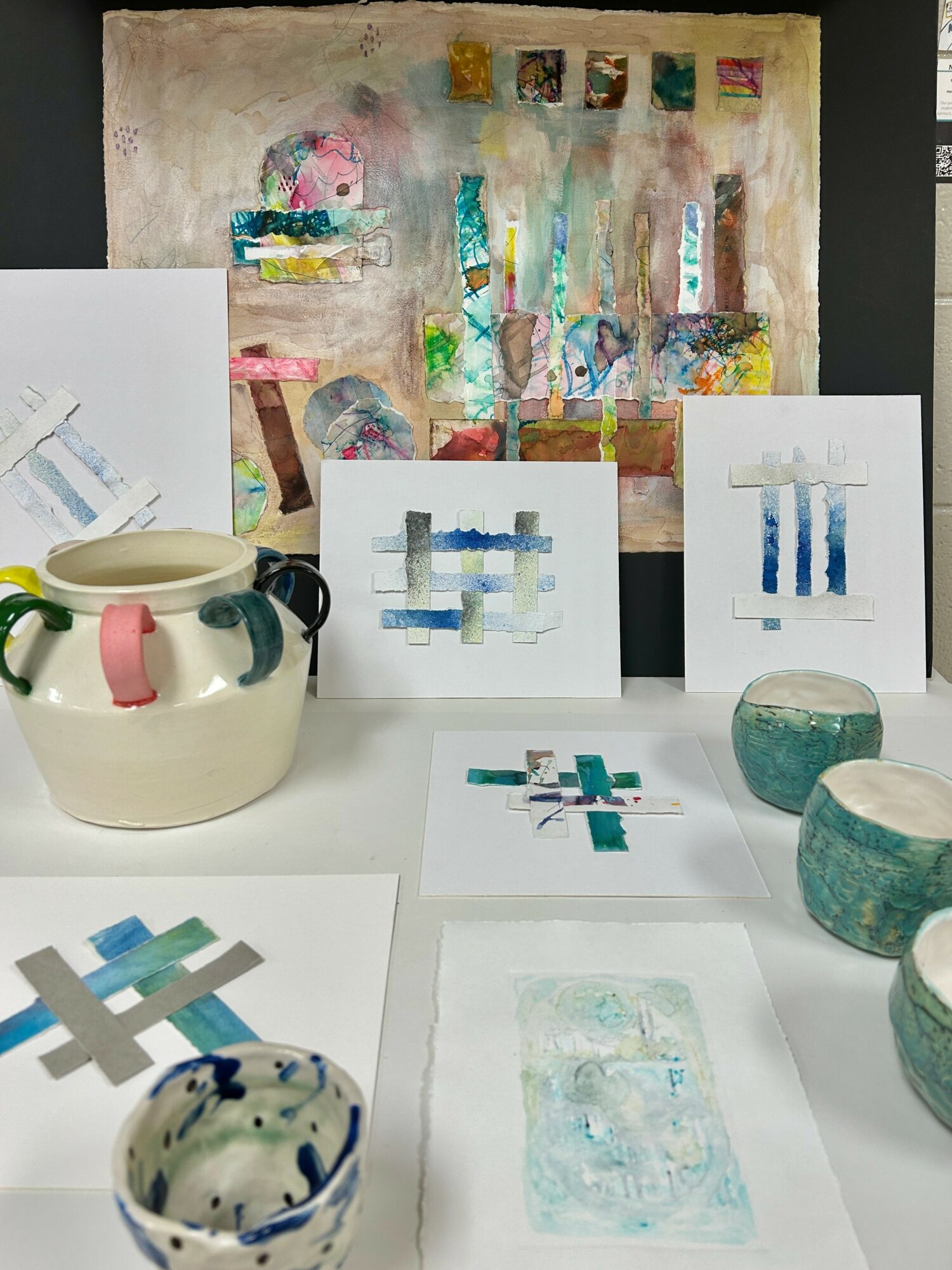
My current body of work lives at the intersection of painting, collage, and ceramics, all circling the concept of motherhood. This season of life — the beauty of it, the exhaustion of it, the way it reshapes your identity and your creative voice simultaneously — has become the most honest subject I’ve ever worked on. My children’s marks exist alongside mine on some of these canvases, literally and intentionally. The work is autobiographical in the truest sense. Loud color, layered surfaces, botanical imagery, and the quiet strength that motherhood asks of you whether you feel ready for it or not.
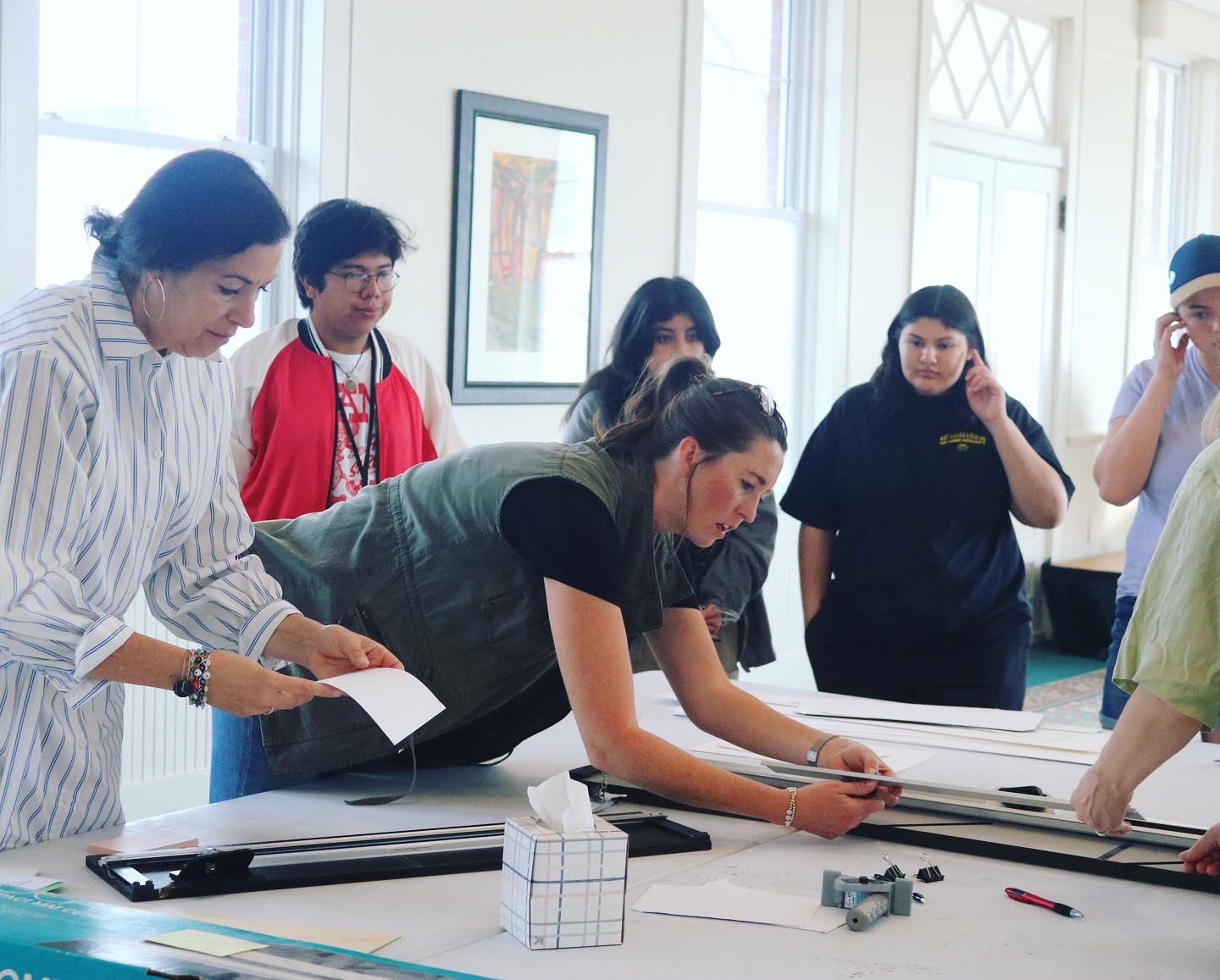
Today I have two wonderful children, a husband, a dog, and a community of friends and family around me that I am deeply grateful for. I enjoy cooking, gardening, and traveling to experience different landscapes and cultures. My biggest purpose in the classroom, in my studio, in my community is to promote and provide meaningful arts experiences. That looks like taking trips to galleries and museums, connecting students with businesses, organizations, and universities doing creative work, and showing them that art is not something that happens in a vacuum. It happens in life. It happens alongside everything else.
I’m sure it wasn’t obstacle-free, but would you say the journey has been fairly smooth so far?
Smooth is not the word I would use. Beautiful, meaningful, purposeful — yes. But smooth? No.
The most constant struggle is one that every teacher knows intimately but rarely says out loud: the emotional weight of the work. Teaching asks so much of you. You wear several hats simultaneously — educator, counselor, advocate, encourager, disciplinarian, cheerleader — and you give so much of yourself to other people’s children every single day that by the time you get home, there is often very little left. For me, that tension runs even deeper as an artist. The same creative energy I pour into my students is the energy I need to come home and make my own work. That becomes a real sacrifice. Some seasons the studio goes quiet because the classroom took everything I had. Learning to hold both — the teacher and the artist — without losing either one is something I am still working through.
Midway through my career, the COVID-19 pandemic arrived and changed everything. I was serving as assistant director at Color Wheel Studio at the time, and the overnight shift to virtual arts education was one of the most significant growing pains of my professional life. But I am genuinely grateful for it now. Failure was not an option, and that reality forced me to develop a level of perseverance, creative problem-solving, and solution-oriented thinking that I had never had to access before. In many ways, the pandemic was responsible for an S-curve in my career path — and I believe everything happens for a reason, even the hard things.
And then there is the reality that teachers are overworked and underpaid in our country, and I say that not as a complaint but as an advocacy statement. The work is powerful. It is passionate. It matters in ways that are difficult to quantify. And yet the financial weight of sustaining a career in education— of providing for your family, of planning for your future — is a constant presence. There are moments when that weight makes you question everything, when you wonder whether the sacrifice is sustainable.
I want to be clear that I feel privileged, supported, and deeply blessed. I have a community around me, a family who believes in me, and a life that is genuinely full. I hold that with tremendous gratitude. But I also can’t pretend the other realities don’t exist — because they do, and because other teachers deserve to hear someone say so. Both things are true at the same time. The beauty and the hard. That tension, honestly, is not so different from the work itself.
Alright, so let’s switch gears a bit and talk business. What should we know about your work?
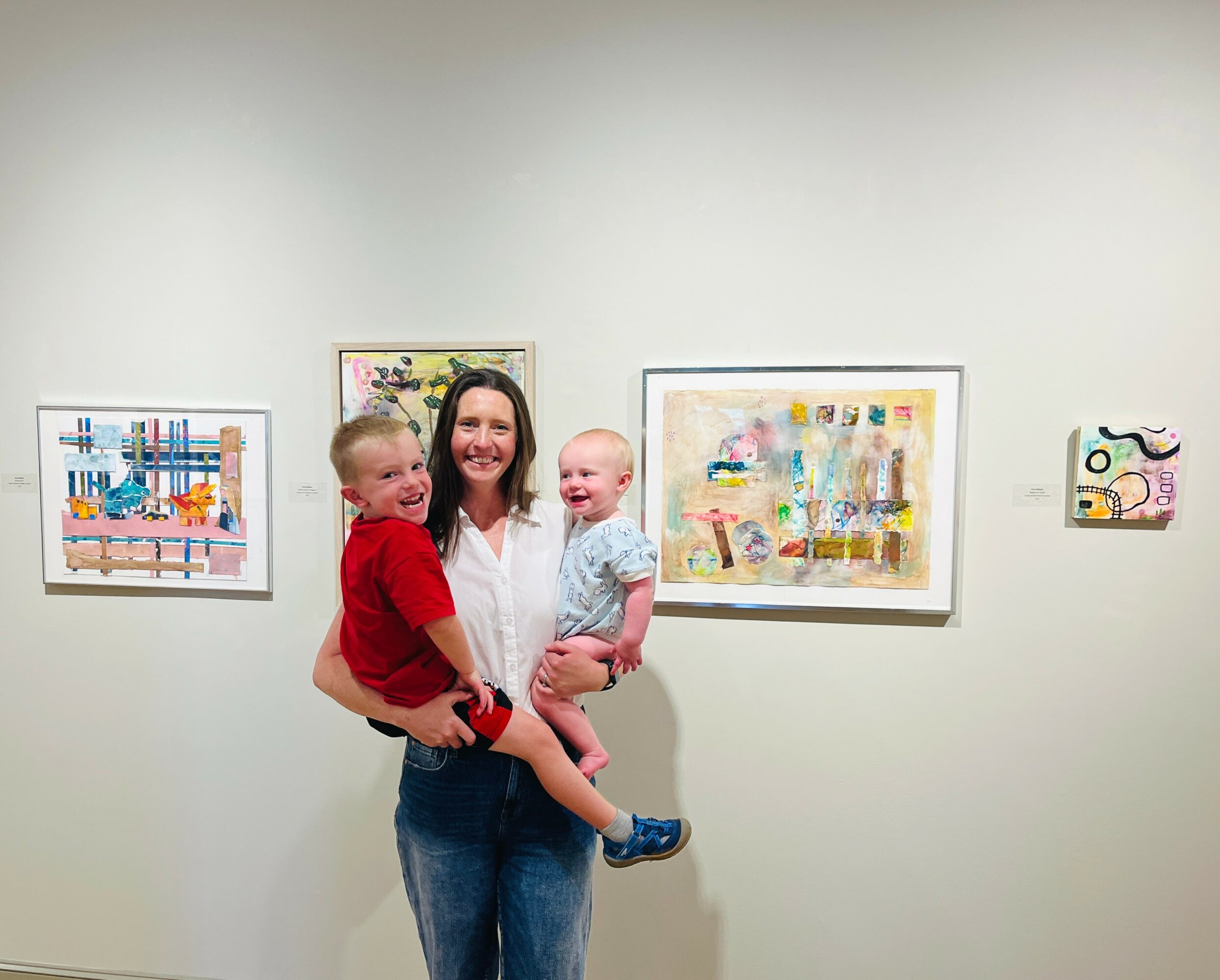
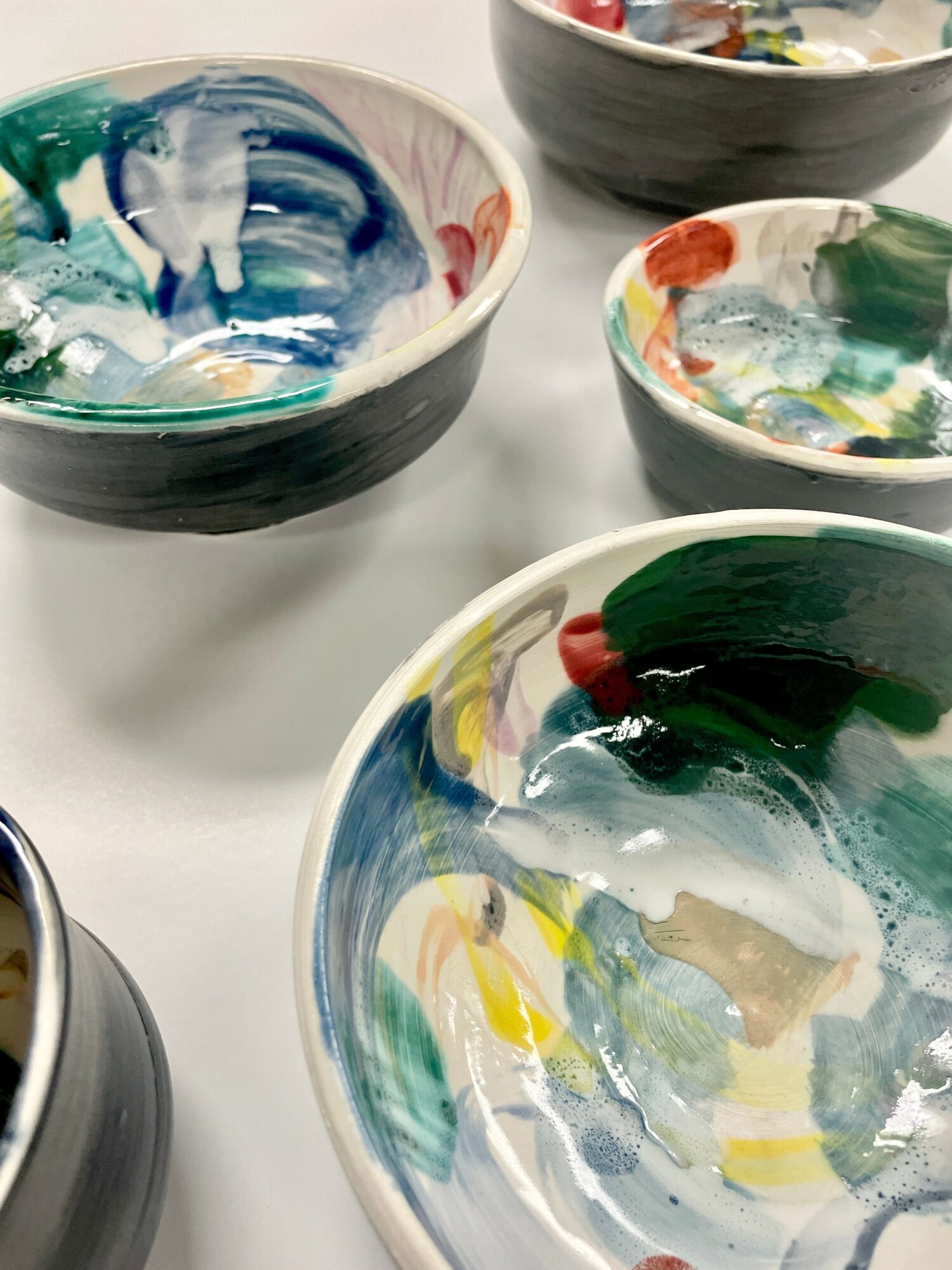
I am a visual artist working primarily in functional pottery, watercolor collage, and acrylic painting. If you asked someone who knows my work to describe it in a few words, they might say whimsical, colorful, layered — and I would take all three as a compliment.
But what I am most known for and most proud of is something that goes beyond aesthetics. It is my meaningful art-making process.
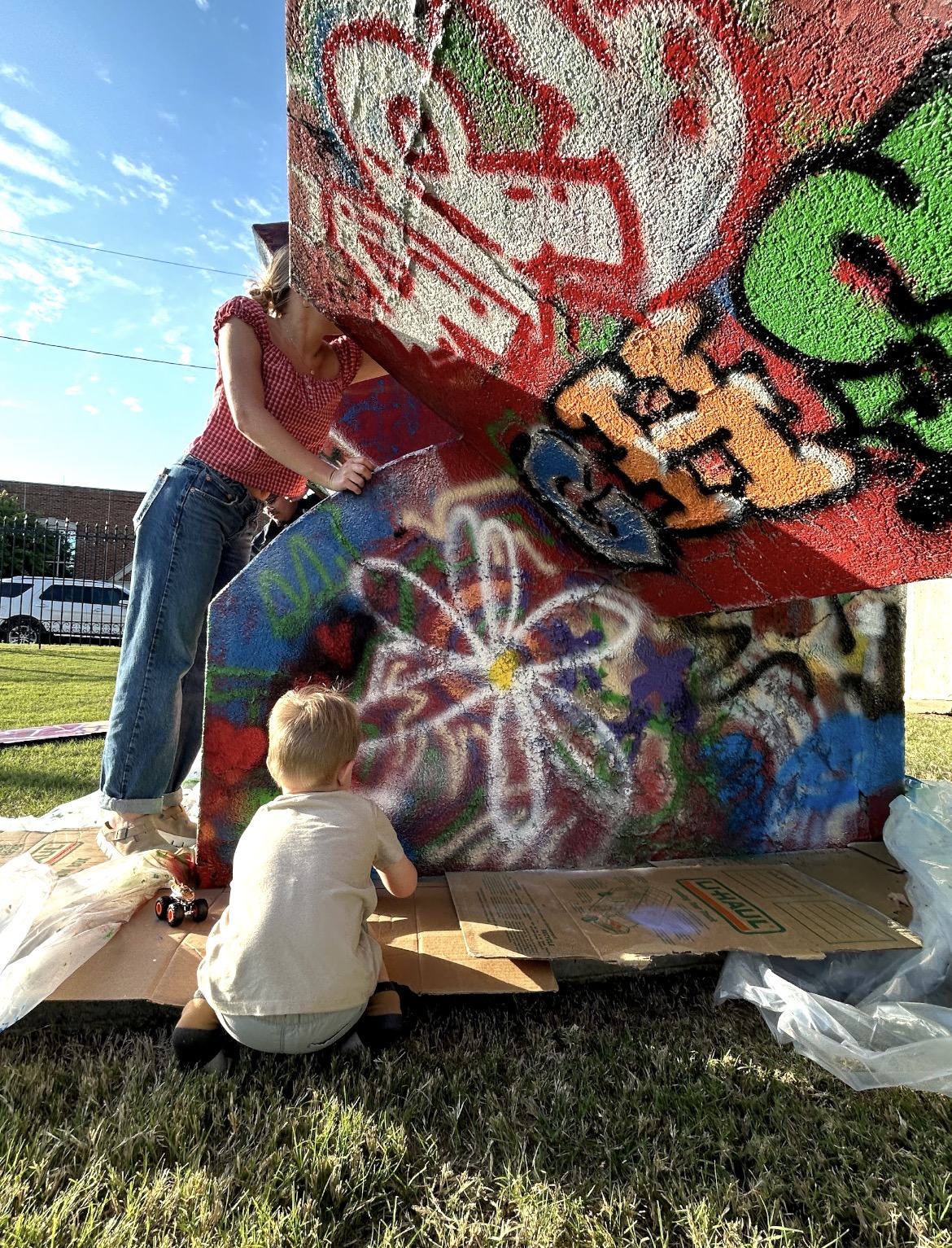
My current body of work is what I call the Motherhood Series — a collection of paintings, collages, and ceramic pieces that are rooted in this season of my life. When I became a mother, I made a decision that I think sets me apart from other artists: I opened the studio door instead of closing it. I invited my children into my process rather than protecting my practice from them. Their marks exist alongside mine — on canvases, on the papers that become my collage materials, on the clay that comes off the wheel. That choice was intentional, and it has changed everything about the way I make art.
I know that some might look at my work and find the composition or the aesthetic unconventional. But the story living inside the marks — that is where I feel the most confident. I have found my own way of making art that feels true and honest to my life, and I believe that is what it means to work like a real artist. My art is not separate from my life. It is a response to it. And in that sense, every piece I make is exactly what it should be.
What were you like growing up?
One of my earliest and most vivid memories is sitting at my grandparents’ kitchen counter with a set of watercolor paints, painting angels. I didn’t know then that I was becoming an artist. My grandmother is a painter, and I think she planted something in me early that my family had the wisdom to water.
Growing up, we were a UGA family. Both of my parents went to Georgia, and Bulldog tradition runs in my blood in the most literal sense — I attended my first football game at around six months old. Athens felt like a second home long before I ever enrolled there. Life on the lake and being outside were also huge parts of my childhood. I also played sports and participated in student council and other clubs — most of it following in the footsteps of my older sister, who is one of the greatest role models of my life. She is the kind of person who makes everyone around her want to be better, and I spent most of my childhood doing exactly what she did. She has pushed me to be the best version of myself for as long as I can remember.
I will also share something a little more vulnerable, because I think it matters. Around third through sixth grade, I was one of the heavier kids in my class, and that came with real insecurity. It built empathy in me, an awareness of what it feels like to not quite fit, that I believe made me a more compassionate teacher and a more thoughtful human being. I had a significant growth spurt not long after, which opened doors athletically and gave me a confidence I hadn’t had before. But I never forgot what it felt like before that. I don’t think you’re supposed to.
Through all of it — the sports, the lake, the football games, the insecurities, the growth spurts — art was always there. Not front and center, not the loudest thing in the room, but present. That quiet persistence revealed itself when I got to college and had to choose a direction. I started in interior design, drawn to the visual and spatial side of it, but something kept pulling me further. It wasn’t long before I realized that art education was the truer fit — that what I actually wanted was to be inside the making of things and to bring other people into that experience alongside me. Once I found that, everything clicked into place.
I attribute that whole journey — the slow simmer of it, the eventual clarity — to my family, mentors, and friends who never once made me feel like art was less important than anything else I was doing. They saw it in me before I had words for it. I am still grateful for that every day.
Contact Info:
- Instagram: https://www.instagram.com/art_ericawatson
- LinkedIn: https://www.linkedin.com/in/erica-watson-a4110740/
- Other: https://shopericawatson.etsy.com
Popular
-

Hidden Gems: Local Businesses & Creatives You Should Know
-

ATL’s Most Inspiring Stories
-

Portraits of Atlanta
-

How Cameron Zabko Is Helping Families Build Financial Confidence Through Trust, Planning, and Meaningful Conversations
-
Nury Crawford is Helping Writers Discover That Their Voice Already Matters
-

Why Tiyonna Griffin Believes Confidence Is the Most Beautiful Thing You Can Create