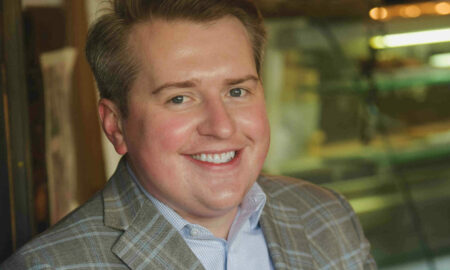







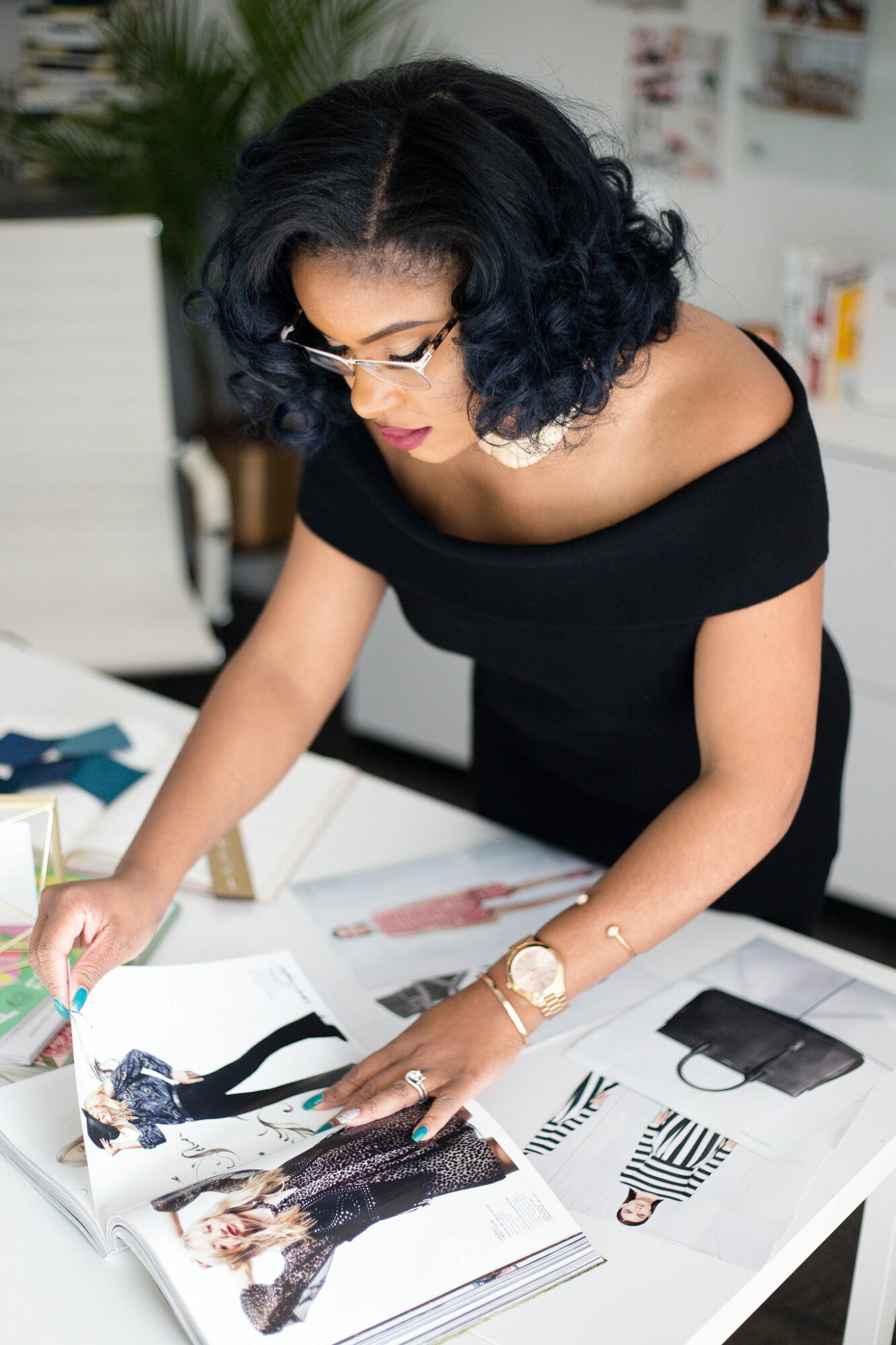
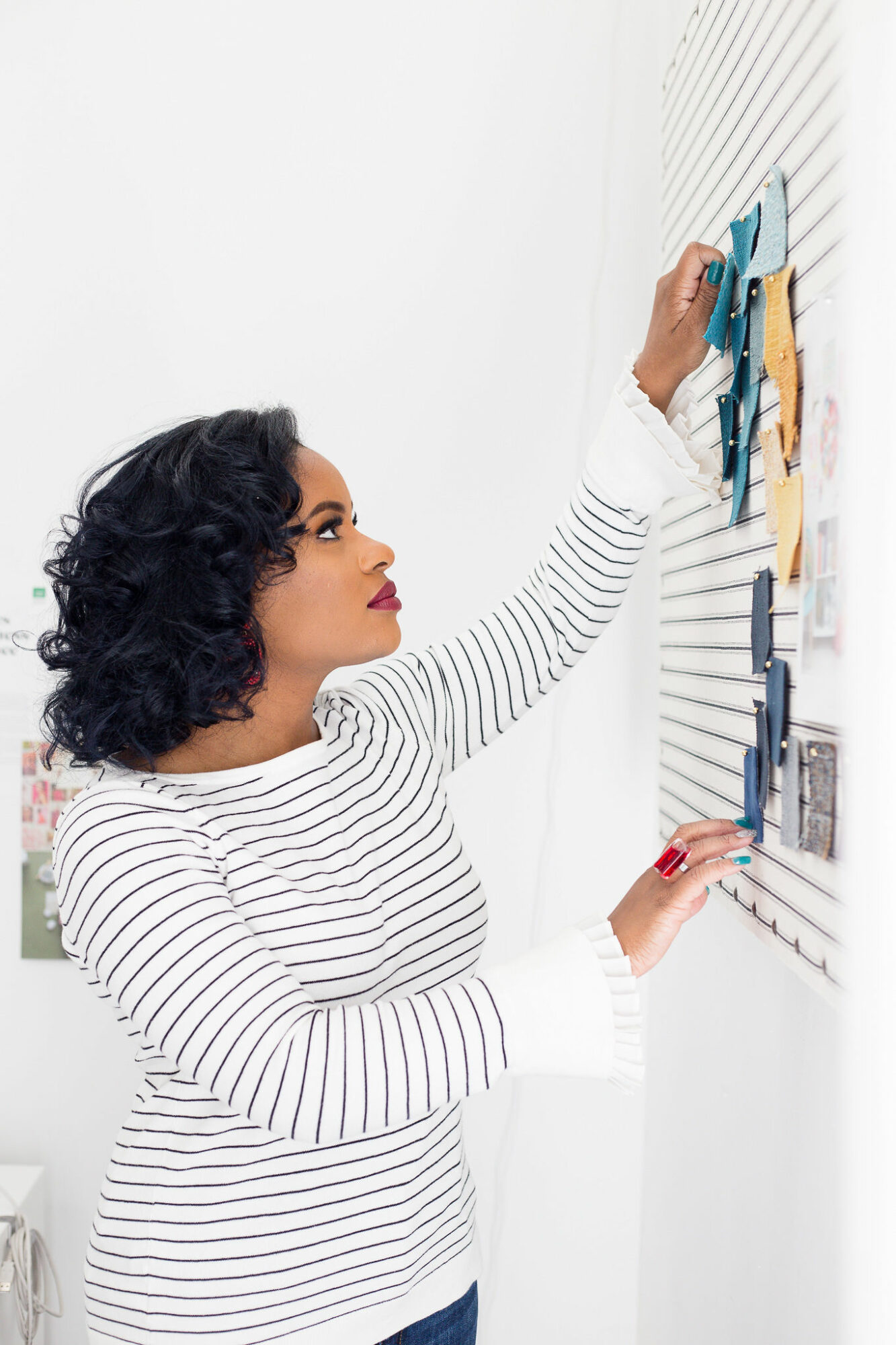
After building an extensive career in retail leadership and consulting, DeAnna McIntosh recognized that her true passion extended far beyond one industry and into helping people bring transformative ideas to life. Through The Visionry, she now works with entrepreneurs, creatives, and visionaries to turn untapped ideas into actionable plans by combining strategy, structure, and execution. Rooted in the belief that meaningful change begins when people stop sitting on their ideas and start building, DeAnna is creating a platform designed to help others transform possibility into tangible impact.
DeAnna, you made a significant shift from retail consulting to founding The Visionry. What was the moment or realization that made you step away and pivot fully into this new path?
I recently saw someone on LinkedIn say that retail had taken all of their 20s and most of their 30s, and they were ready to start over and do something new. I resonated with that deeply because it really reflects my story as well. I’ve been in retail since I was a teenager working in stores. I earned my bachelor’s degree in International Fashion Merchandising Management from the Fashion Institute of Technology, and I also studied fashion and retail in Florence, Italy. Since graduating college, I’ve worked as a logistics analyst, merchant, buyer, product developer, merchandising director, art director, and in several other roles across multiple product categories. I’ve managed billions in merchandise revenue and launched several multi-million-dollar product collections throughout my career. Retail shaped how I think, solve problems, understand customers, and build ideas. And for that, I’m grateful.
However, ever since the pandemic, I started feeling a strong pull away from retail and toward something more expansive.
The pandemic truly had a profound impact on me and my life. I was a new first-time mom, and at the same time, the sales pipeline in my business completely dried up because retailers were forced to close. For the first time in a long time, I had the space and time to think about what I actually wanted for my life and my work. Being a mom changes everything and nothing at the same time. Yes, you are still you, but you become a deeper, more introspective version of yourself. I think a lot of moms would agree that motherhood naturally pushes you into a different kind of soul-searching.
During that season, I started looking back over my life and career and realized I had been feeling stifled. Not necessarily because retail was no longer my strong suit, but because I had allowed it to become the whole container for my creativity.
Throughout my career, I had always been building something outside of my full-time work. In college, I had a jewelry line. After college, I moved into event planning and then bridal show production. Eventually, once I moved to Atlanta, my business shifted into retail consulting because I thought it was a natural fit. It felt like a no-brainer because retail was where I had deep expertise.
Looking back, though, I think that’s where something changed. My full-time career was in retail, and then my business became retail too. I immersed myself so deeply in one industry that I started to feel boxed in.
At some point, people started coming to me for business coaching, strategy, and idea support outside of retail. That was a major aha moment for me: if I took retail away, the root of who I am was still there.
At the root, I am an idea person and an execution person. That has always been my gift. I have the ability to see a creative, big-picture vision, imagine what something could become, and then drill it down into the actual details, decisions, systems, and next steps needed to bring it to life.
When I looked back over my life, I realized that pattern had always been there. Even in my career, I would be hired for one role and somehow end up in an entrepreneurial, project-based role, often one that was created for me and required me to write the playbook as I built it. I didn’t just have ideas. I executed them.
My bridal show business is one example. I went to a mass convention-center bridal show in Florida and could immediately feel that something was missing. People were walking around, but they weren’t engaged. It didn’t feel entertaining, immersive, or memorable. So I started asking the vendors questions. What if the event was smaller? What if only a select group of vendors were invited? What if there were more experiential elements? What if it was hosted at a small, curated venue instead of a convention center?
Nine months later, I produced my first bridal show at the Ancient Spanish Monastery in North Miami Beach. Within the next year, I had expanded that show into three cities, none of which were the city I lived in, all while still working a full-time job.
So when I really asked myself, “Who am I outside of retail?” the answer was clear: I have ideas, and I execute them. And I want to help other people do the same.
Because so many of us have ideas, but few of us actually move on them. When more people execute the ideas they feel called to build, the impact does not just stay with them. It compounds. It affects their life, the people around them, the communities they serve, and ultimately, the world. I believe with everything in me that the solutions to some of the world’s biggest problems live inside of the people closest to them. But we have to bring those ideas (solutions) out of us to see that change in the world realized.
That realization is what led me to go back to school for my master’s in innovation and ultimately launch The Visionry (www.thevisionry.com).
The shift to The Visionry wasn’t about rejecting retail. I still take on select retail clients when the work is aligned with building immersive, experiential concepts. It was about expanding beyond only being known for and working in retail.
I realized I did not just want to help people build and scale retail businesses. The bigger picture is that I wanted to help people build and execute bold ideas, whether those ideas became businesses, programs, communities, experiences, movements, or entirely new ways of working and living.
That was the real pivot.
The Visionry is the place where all of my experience comes together: strategy, innovation, creativity, operations, execution, events, and the core belief that the change we want to see in business, in our lives, and in the world depends on more of us moving our ideas out of our heads and into reality.
You mentioned that many people sit on ideas without executing. Why do you think that happens so often, even for capable and driven individuals?
This is such a great question, and I’m really passionate about the answer because I think there are so many layers to why we sit on our ideas, especially for long periods of time. I dig deep into this in my essay, www.thecreativityessay.com.
The biggest reason we sit on our ideas, in my opinion, is that adulthood conditions us to prioritize the safe default option.
What I mean by that is that after we finish school, we get our first job, start paying bills, and begin learning how to function as adults. And in that process, so much of the creativity, imagination, curiosity, and wonder we had as children starts to get suppressed, because the focus shifts to survival. How do I make money? How do I pay my bills? How can I learn the corporate lingo to fit into this workplace? How do I dress up to par? How do I become taken seriously as an adult now and not a “kid”?
So much of early adulthood becomes about conforming to what is expected of us. And when that happens, the big, bold, imaginative ideas we once saw as possibilities start getting labeled as unrealistic and irresponsible.
That is one of the reasons so many capable and driven people sit on their ideas. It is not because they are not talented. It is because they have been conditioned to choose the path that feels safest, most proven, and would be accepted by their peers.
The second reason is that executing an idea is emotional. In many ways, it is actually a revolutionary act, because it is you consciously choosing to bring something new into the world. You are choosing to do something completely new or at least different than it has been done before.
And that comes with pressure and vulnerability.
As long as the idea stays inside of you, it is protected. No one can judge it, misunderstand it, and the scariest of all, no can reject it. You do not have to figure out how to fund it, market it, build it, or prove that it can work. But the second you move the idea out of your head and into the world, it becomes real. And with real things come questions, opinions, expectations, money decisions, timelines, feedback, and the possibility of failure.
A lot of people think the first barrier to their idea is money. And sometimes money is a real hinderance. But I also think a lot of people use money as the reason before they have actually built out the idea enough to even know what it would require.
You do not really know what you have, what you need, what is possible, or what could be done in phases until you start making a plan. But so many people never get to that point because the “what ifs” stop them first.
What if it costs too much? What if people do not understand it? What if I fail? What if I look foolish? What if I start and cannot finish?
And because those questions feel so big, the idea stays fuzzy and theoretical. But planning is what helps you see what is actually a hinderance or limitation. Sometimes the idea does need funding. Most times it just needs a smaller first version. But you cannot know that until you are willing to look at the idea directly.
The third reason is that ideas need structure.
The ideation part of this process is creative. It is full of possibility. It’s the beautiful and fun part. But execution requires a different kind of energy. It requires decisions, sequencing, priorities, systems, timelines, support, and a way to move from thought into action.
A lot of people have the idea. What they do not have is the structure to hold it.
And without structure, even the best ideas can stay floating in someone’s mind for years – because they have not had a clear way to translate the idea into something they can actually build.
That is why I care so much about this work. I do not believe most people need more motivation. I think they need space, structure, strategy, and someone who can help them move the idea from a someday thought into a tangible next step.
After your own journey of soul-searching, how do you now help clients gain clarity on which ideas are actually worth pursuing?
The first thing I help clients do is come back to vision.
If someone brings me an idea for their business, I want to understand the vision they have for the business. If the idea is connected to their life, I want to understand the vision they have for their life. Everything I do, hence the name The Visionry, is rooted in vision.
If there is no clear vision, we start there.
My perspective is that without vision, an idea is just an experiment. It may be interesting, exciting, or creative, but it is not necessarily connected to a larger destination. And that is how people end up chasing ideas that are not actually aligned with where they want to go.
So the first gut check is: does this idea connect to the vision?
If the client does not yet have a clear vision, I use an exercise I created called the Possibility Explorer (The Possibility Explorer: Nine Views Deep). It includes nine simple but powerful questions that help people dig beneath the surface of what they say they want and start noticing the patterns underneath. When people answer honestly, they usually begin to see the direction they have naturally been moving toward, even if they did not have the words for it yet.
That exercise is what helped me several years ago when I was trying to understand what was next for me after retail. It eventually led me to create The Visionry, so I know firsthand how powerful that kind of reflection can be.
Once the vision is clearer, we can look at the ideas connected to it and start asking better questions. Which idea feels most aligned? Which one has the strongest pull? Which one supports the impact they actually want to make? Which one makes sense for their current life, resources, capacity, and season?
The question is not always, “Is this a good idea?” Sometimes the better question is, “Is this the right idea for this season?”
From there, I often have clients run the idea they feel strongest about through my custom Roadmap GPT, which I built to help turn an idea into a 90-day roadmap (www.90dayidearoadmap.com). As part of that process, they also build what I call a resource bridge, which looks at what they currently have available: their time, energy, money, relationships, skills, tools, and support.
That helps us determine the first viable version of the idea.
A lot of people get stuck because they have their big vision and they want to bring that exact thing to life, but in reality, they need a first version that is aligned, realistic, and strong enough to begin moving.
So for me, clarity comes from tying the idea back to the vision, then looking honestly at capacity, resources, alignment, and next steps. Vision becomes the foundation and the gut check. It gives us a way to ask: is this idea actually moving you toward the impact you said you wanted to create?
What are some of the biggest mindset or practical blocks you see that prevent people from taking action?
One of the biggest mindset blocks I see is that people let the “what ifs” overtake them before they ever really begin.
And those what-ifs usually live on both sides: fear of failure and fear of success.
Fear of failure sounds like: What if this does not work? What if I lose money? What if people judge me? What if I look silly? What if I damage the reputation I worked so hard to build?
But fear of success is just as real, and we do not talk about it enough.
Fear of success sounds like: What if this does work? What if this idea changes the trajectory of my life? What if it grows faster than I expected? What if people start depending on me? What if I do not have the skill set, support, or capacity to sustain what I started?
If we are honest, success can be scary because it asks something new of us. It can require a new identity, new responsibilities, new visibility, and new decisions. So sometimes people do not just fear failure. They fear what will be required of them if the idea actually works.
On the practical side, I think one of the biggest blocks is not having a structure for execution. A lot of people have the idea, but they do not know how to break it down into decisions, priorities, timelines, resources, and next steps. So, the idea stays big, exciting, and meaningful, but also vague. And vague ideas are nearly impossible to move on.
Another practical block is capacity. People are already carrying the load from their real lives: work, family, finances, leadership, caregiving, the list goes on. So even when the idea matters deeply to them, they may not know how to fit it into the life they are already living.
And then there is the perseverance piece. Starting can be exciting because the idea still feels fresh and exciting. But once you get into the thick of building it, the work becomes less glamorous. You hit delays, confusion, decisions, feedback, money questions, and moments where you wonder if you are even doing it right.
That is where a lot of ideas stall – where the person did not have the structure, support, or stamina to keep moving when the idea stopped feeling like inspiration and started requiring execution.
That is why I try to help people make the idea smaller, clearer, and more actionable.
For someone who has been sitting on an idea for years, what’s the first real step they can take today to start moving forward?
The first real step is to write it down. Write down the idea and everything that immediately comes to your mind about it.
That may sound simple, but it is symbolic, because when you write the idea down, you are literally getting it out of your head and putting it somewhere in the world. Even if it is just in your phone notes or a notebook, it is no longer only living inside of you.
And then, I actually think you should give it a little space.
Our first thought is never our most original. Once you write your idea down and step away from it, your brain keeps working. It starts making connections. It pulls from your experiences, your memories, your knowledge, your frustrations, your desires. Then one day, you are in the shower or driving or doing something completely unrelated, and suddenly you get an aha moment and now the idea has another layer of depth added to it.
After that, I would bring it back to vision. Ask yourself: where did this idea come from? Is it connected to my business? My life? My community? My family? My work? And what is the vision I have for that area?
Once you have written it down and connected it back to vision, the next step is to start shaping the first viable version. Again – not the perfect or biggest version. The first version you can realistically begin moving on with your current capacity, resources, and season of life.
I created the 90-Day Idea Roadmap (www.90dayidearoadmap.com) to help with this process. It is a self-guided, on-demand experience with videos, a fillable workbook, a way for you to send me a private note as you work through your idea, and a custom Roadmap GPT that helps you take an idea and map what the next 90 days of building it could look like. You can use the AI-supported version, or you can work through the workbook manually. Either way, the goal is to help you clarify the idea, determine the most viable first version, and create a realistic path forward.
So my answer is: write it down, let it breathe, connect it to your vision, map the first viable version, and then take one step in that direction.


Popular
-

Hidden Gems: Local Businesses & Creatives You Should Know
-

ATL’s Most Inspiring Stories
-

Portraits of Atlanta
-

Dr. Hildiah Martin-Suggs Is Building Second Chances for Youth Who Were Almost Lost in the System
-
From Showing Up to Seeing His Face on a Billboard: Anthony Green Is Just Getting Started
-
Wayne Smith Jr on Survival, Psychological Thrillers, and the Cost of Staying Alive