


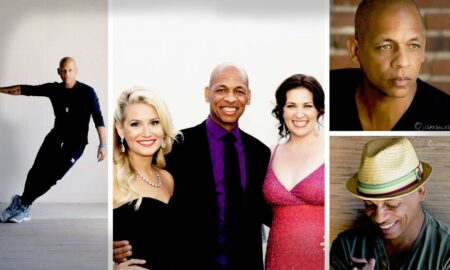



Today we’d like to introduce you to Lacye A. Brown.
Hi Lacye A., so excited to have you on the platform. So before we get into questions about your work-life, maybe you can bring our readers up to speed on your story and how you got to where you are today?
Dr. Apples basically exists because someone asked me a question I wasn’t prepared for.
I was a sculptor and had created a solo exhibition featuring more than 99 pieces of art, including custom dolls and a three-foot-tall sculpture of a wizard. During the show, someone looked at the wizard and asked me his name.
I didn’t have one.
So, off the cuff, I said, “Dr. Apples.”
That could have been the end of it.
Instead, someone suggested I write a novella about him. So I did. I actually displayed the novella as part of the exhibition. Then someone else suggested, “You should make a podcast.”
Apparently, I’m very susceptible to a good creative dare.
I took classes with Hollywood professionals to learn more about storytelling and entertainment. Through those classes, I met people who encouraged me to pursue screenwriting, and one skill began demanding another. Screenwriting led to audio production. Then composing, editing, casting, directing performances and producing. Eventually, I was producing the Dr. Apples fiction podcast myself and building an entire universe around a character whose name I had invented on the spot at an art show.
The podcast found an audience, but there was only so far I could take an increasingly visual world through audio.
So I started looking into animation.
During a film festival, someone suggested that instead of continually looking for someone else to produce my work, I should become my own producer. That stuck with me.
I had also begun having conversations with executives about my work. Those conversations were valuable, but I kept running into versions of the same problem: by the time everyone finished suggesting what should be changed, removed or reshaped, the thing I had created was becoming less and less recognizable to me.
Eventually I made a decision: if I was going to take the risk of creating these stories, I wanted to take the risk of producing them my way, too.
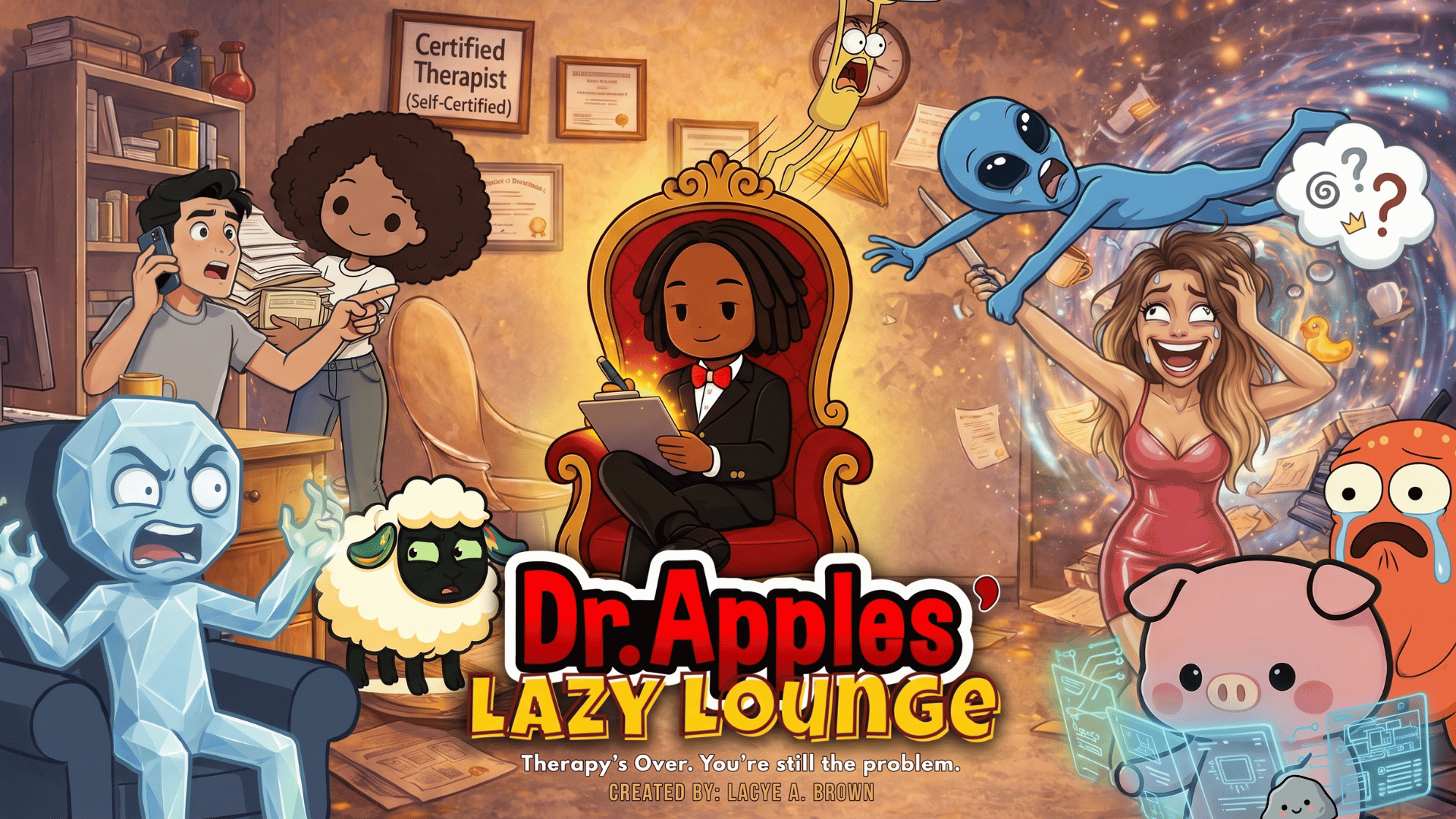
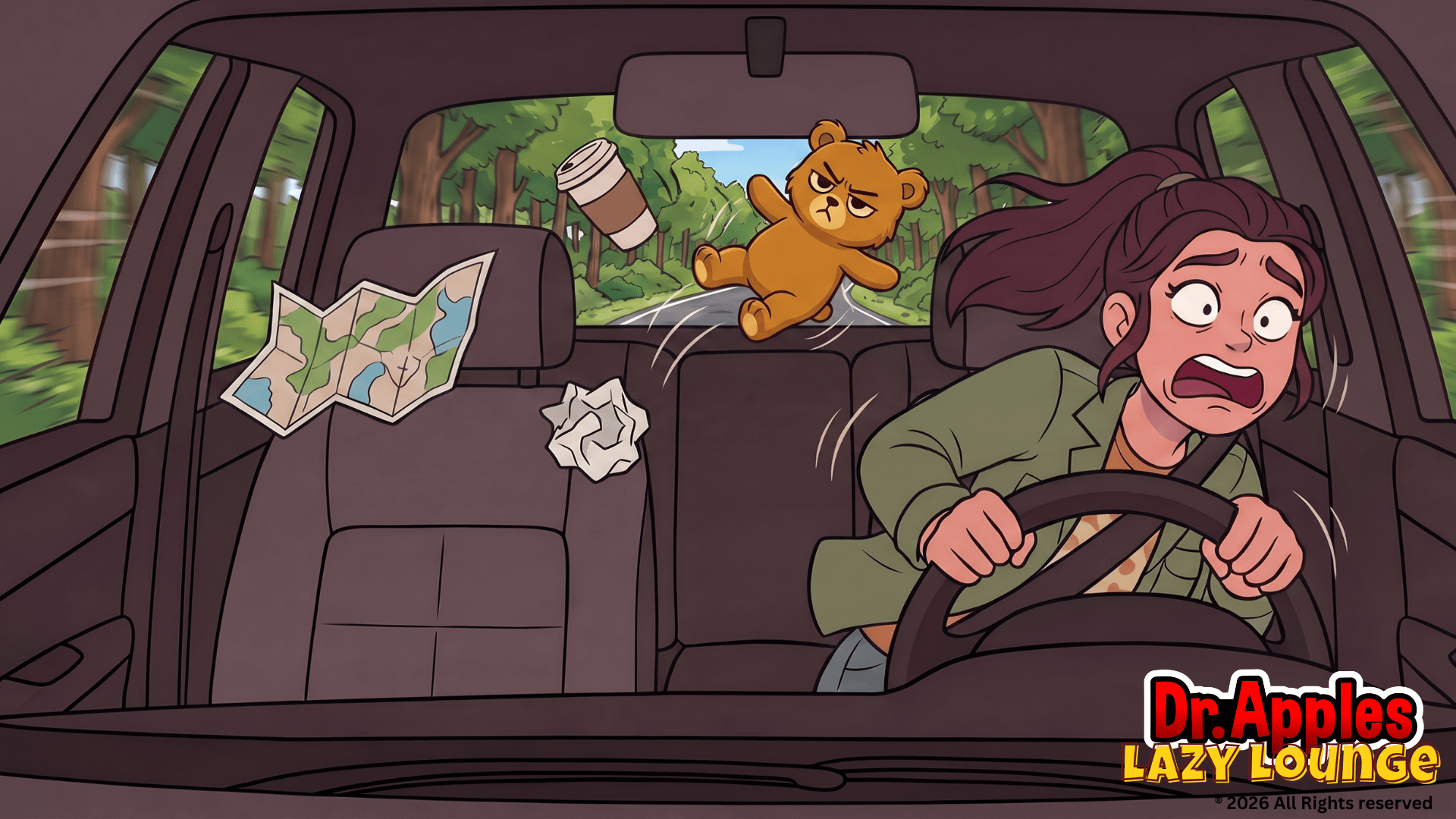
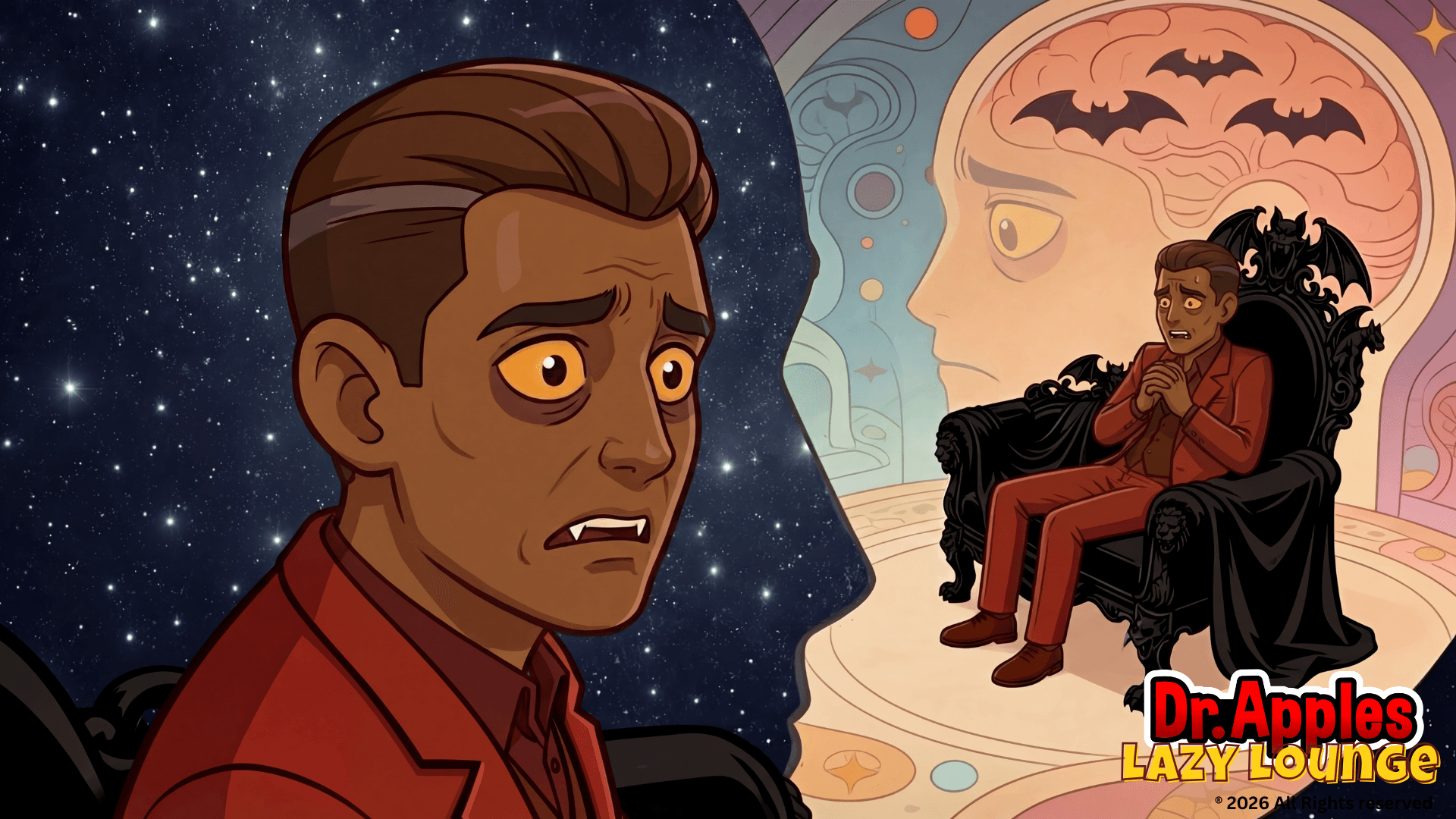
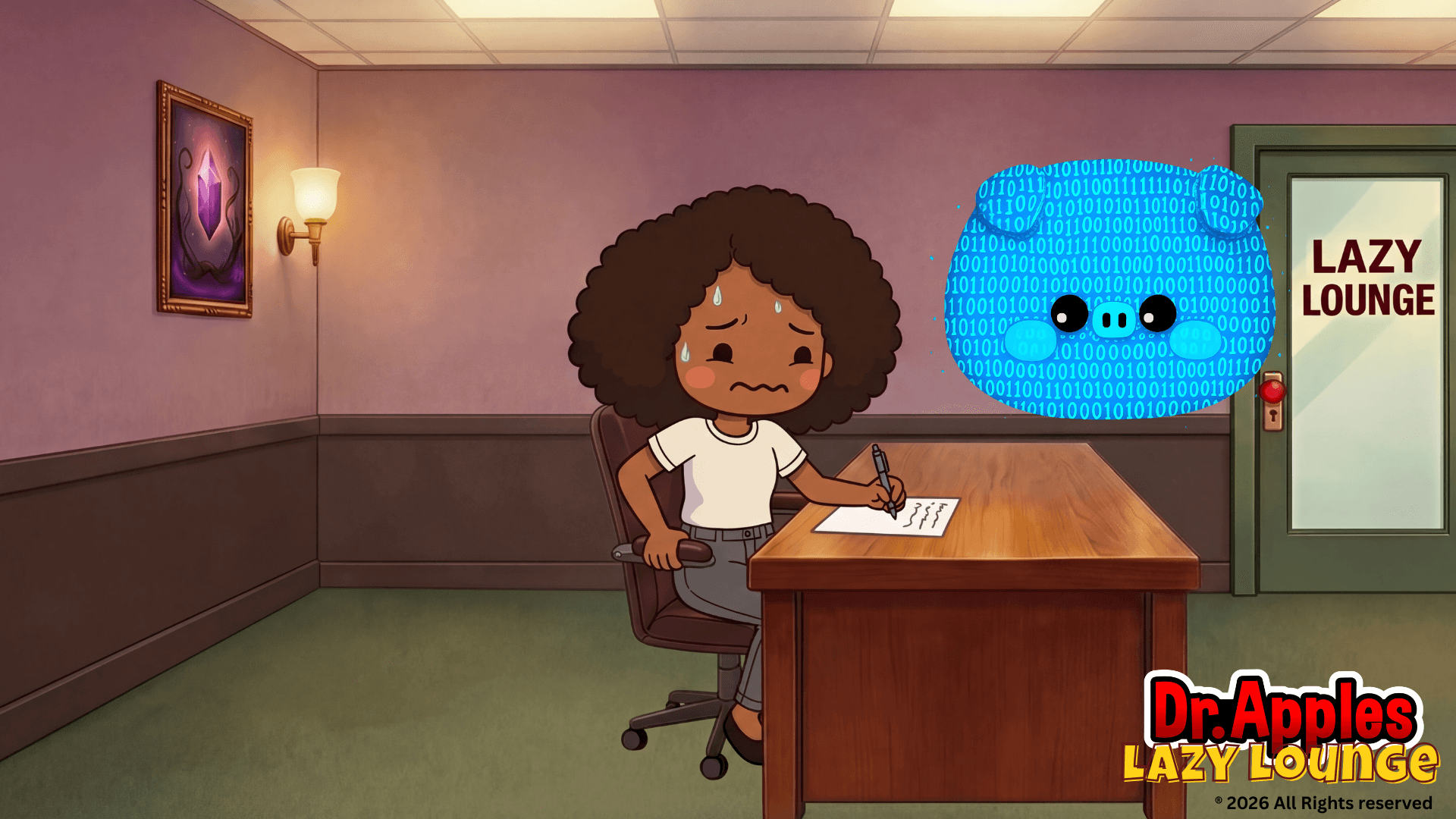
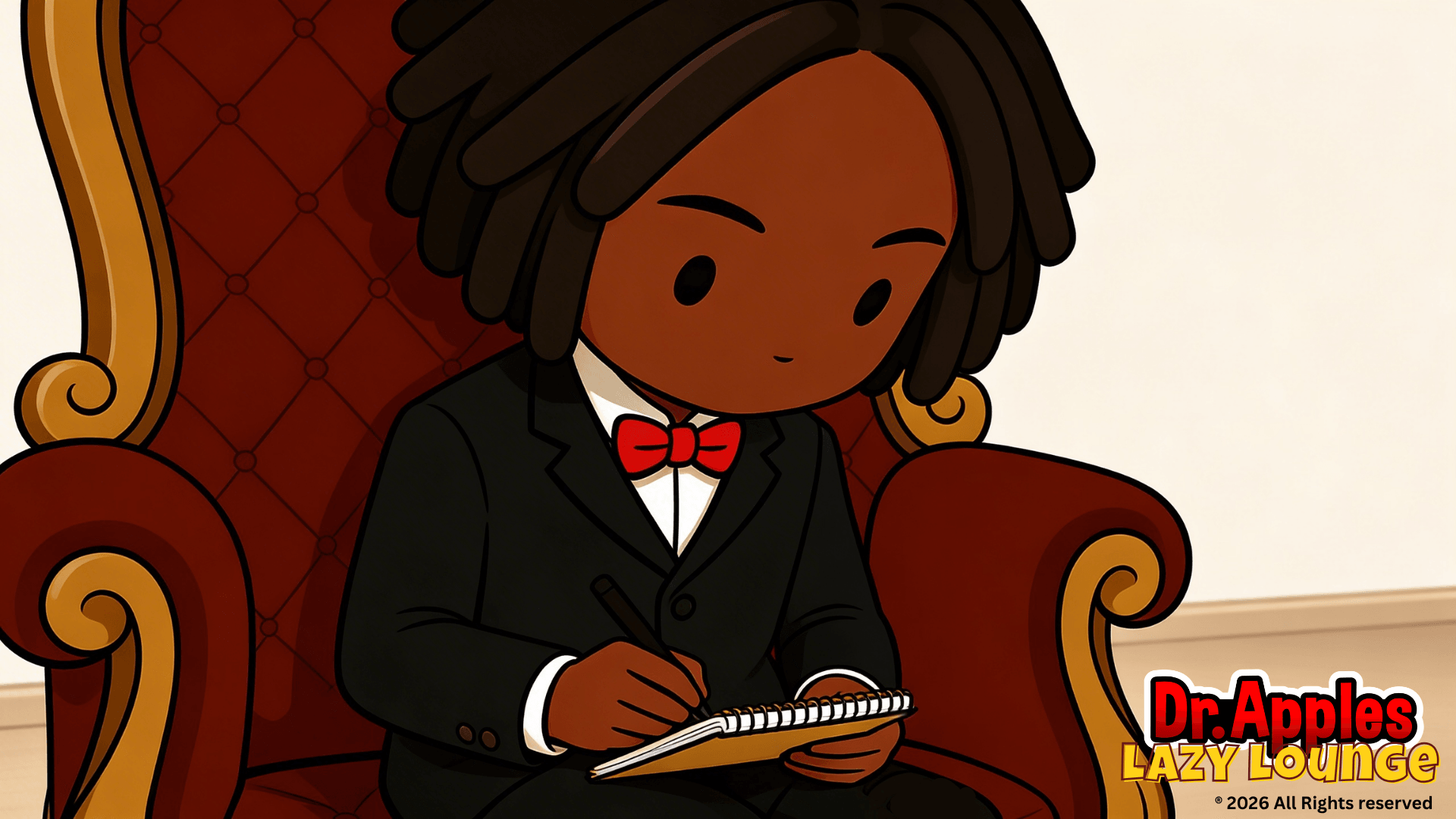
That decision led me further into independent animation and eventually to my current project, Dr. Apples’ Lazy Lounge — an independently produced adult animated TV comedy about an arcane wizard therapist whose clients can come from anywhere in the multiverse, while a serialized mystery unfolds in the waiting room outside his office.
I’ve spent nearly two years immersed in building the series.
So the road from sculpture to television wasn’t something I mapped out. It was almost a chain reaction: someone asked the wizard’s name, someone suggested a novella, someone suggested a podcast, someone suggested I produce my own work — and every time the story asked me to go further, I did.
Now that three-foot wizard has his own adult animated show, Dr. Apples Lazy Lounge.
We all face challenges, but looking back would you describe it as a relatively smooth road?
The hardest part of independently producing Dr. Apples’ Lazy Lounge is that there is no department to hand the problem to.
If a performance needs direction, that’s me. If the animation isn’t working, that’s me. If I realize a character’s outfit is the wrong color and it needs to be fixed before final cut, that’s me too. If the sound is too low, a scene needs to be rebuilt, or something simply doesn’t look right, there’s no separate department waiting to fix it. It’s just me.
That is the part people don’t always see when they look at independent work. You’re not only making creative decisions. You’re constantly switching between artist, director, producer, problem-solver and person staring at the screen asking, “Why are you doing that?”
The other challenge is protecting the scale of the idea without pretending I have the infrastructure of a studio. Lazy Lounge can pull from fantasy, horror, science fiction, mythology and absurdity, so creatively the possibilities are enormous. Production-wise, enormous possibilities can become an excellent way to bankrupt your time.
I’ve had to become very intentional about where the audience actually needs to see the scale and where one strong choice can do the work of twenty expensive ones.
That has probably been the biggest lesson: independence gives you control, but it also makes you responsible for every consequence of that control.
Alright, so let’s switch gears a bit and talk business. What should we know about your work?
I make strange worlds feel completely normal to the people living in them.
That’s probably the thread through most of my work. I’m drawn to fantasy, mythology, absurd comedy and characters who behave as if the impossible thing happening around them is simply another Tuesday. I like building a world with its own logic and then letting the characters ruin everybody’s plans inside of it.
But I also have a deep respect for comedy as an art form.
Comedy looks effortless when it works, which is probably why people underestimate how technical it can be. Timing matters. Rhythm matters. The exact word matters. Where the reaction lands matters. Sometimes the funniest choice is dialogue. Sometimes it’s silence. Sometimes it’s a character holding a look half a second longer than they should.
I love studying how comedy has changed while the mechanics underneath it stay recognizable — from physical comedy and silent film, to screwball dialogue, vaudeville, Looney Tunes, sitcoms, satire, absurdism, deadpan, visual gags and the kind of joke that doesn’t fully pay off until three scenes later.
And I don’t think every character should be funny in the same way. One person can be funny because of what they say. Another because they take something ridiculous completely seriously. Another should barely have to speak. Part of writing comedy is knowing who gets the joke, who is the joke, who refuses to acknowledge the joke, and when to get out before you kill it.
My current project, Dr. Apples’ Lazy Lounge, is probably the clearest version of all of that. It’s an independently produced adult animated TV series centered on an arcane wizard therapist whose office can receive clients from anywhere in the multiverse. One episode can introduce a completely different creature, mythology or impossible problem, while the waiting room outside his office quietly carries a serialized mystery through the season.
That gives me an enormous playground, but the world still needs structure. I don’t just want something to look imaginative. I want to know why the world works, how the characters move through it, where the comedy comes from and how one ridiculous idea can support another story six episodes later.
I also still think visually in a very tactile way. I care about silhouettes, expressions, environments, props, clothing, where somebody is sitting, what they’re doing with their hands — all the things that can tell you who a character is before they say anything. In comedy, those details can also become part of the joke.
What I’m most proud of with Lazy Lounge is that I created a format that can keep expanding without losing its center.
The universe can change every week. The therapist’s office doesn’t.
And that’s probably what sets my work apart. I like making the impossible feel organized enough that you almost believe somebody could actually have an appointment for it — and then figuring out exactly how long to make them wait before the joke lands.
Can you share something surprising about yourself?
I’m surprisingly willing to destroy my own finished work.
I learned that from sculpting. Sometimes the only way to fix a piece is to cut into something you already spent hours building.
Not literally. Mostly.
I can spend months building something, finish it, watch it back and decide, “Nope. I can do better.” Then I’ll reopen it and start replacing things other people probably would have left alone.
That happened with Dr. Apples’ Lazy Lounge. I had completed episodes and still went back into them because my eye had changed, the animation had improved, and I could see where the work wasn’t matching what I now knew I could make.
I’m not very sentimental about the labor just because I already did it. The hours are gone either way. I’d rather have the stronger scene.
That probably surprises people because artists are supposed to become attached to everything they make. I’m attached to the idea. The execution has to earn its place.
Contact Info:
- Website: https://www.drapples.com
- Instagram: https://www.Instagram.com/thedrapples
- Youtube: https://www.youtube.com/c/drapples
- Other: https://podcasts.apple.com/us/podcast/dr-apples/id1531756450

Popular
-

Hidden Gems: Local Businesses & Creatives You Should Know
-

ATL’s Most Inspiring Stories
-

Portraits of Atlanta
-

Dr. Hildiah Martin-Suggs Is Building Second Chances for Youth Who Were Almost Lost in the System
-

From Showing Up to Seeing His Face on a Billboard: Anthony Green Is Just Getting Started
-

Wayne Smith Jr on Survival, Psychological Thrillers, and the Cost of Staying Alive