


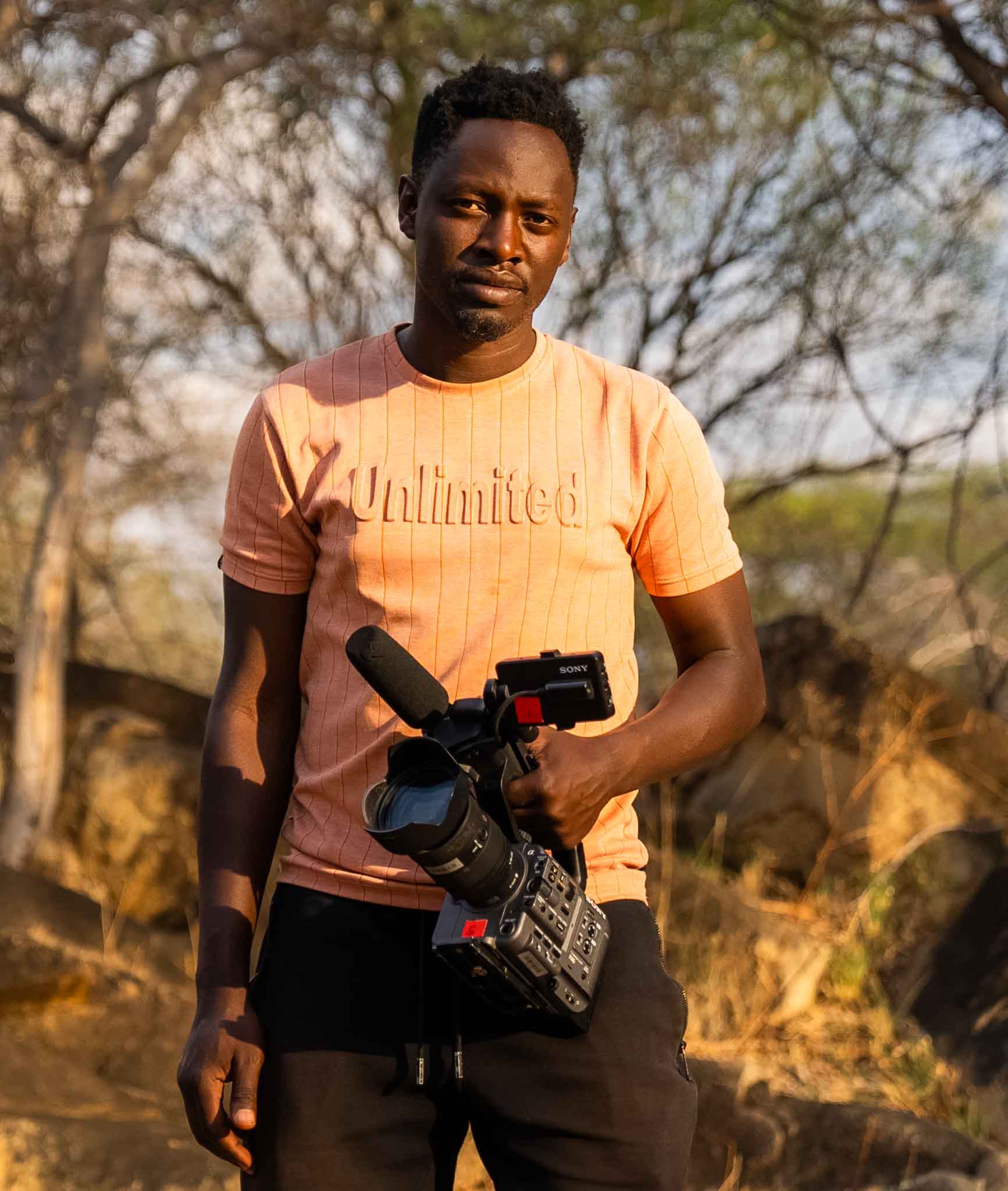
Today we’d like to introduce you to Emmanuel Mollel.
Emmanuel, we appreciate you taking the time to share your story with us today. Where does your story begin?
My journey as a documentary filmmaker started with a deep fascination for storytelling and the rich, diverse cultures here in Tanzania. I wanted to create a bridge between local reality and global audiences by using the lens to amplify voices that are often unheard. I began by learning the fundamentals of camera operations and visual storytelling, taking on small community projects and capturing nature and local life.Over time, my passion evolved into formalizing my craft, which led me to study filmmaking and work on professional sets, capturing the powerful landscapes, wildlife, and human stories unique to East Africa. Today, I am proud to be established within Tanzania’s growing creative industry as a documentary filmmaker. I dedicate my work to capturing authentic cultural narratives, conservation efforts, and human-interest stories that provoke thought and inspire change.
Alright, so let’s dig a little deeper into the story – has it been an easy path overall and if not, what were the challenges you’ve had to overcome?
It has definitely not been a smooth road, but the challenges have been essential in shaping my resilience as a filmmaker. In the early days, one of the biggest hurdles was gaining access to reliable, high-quality filmmaking equipment, which is often incredibly expensive to purchase or rent in Tanzania. Beyond the technical limitations, documentary filmmaking requires building deep trust with communities and navigating complex logistics, from securing filming permits to traveling into remote areas with delicate gear. Furthermore, funding for independent documentaries is highly competitive, and proving the value of a project before it is made takes immense patience. Overcoming these obstacles taught me how to be resourceful, how to pitch effectively, and how to build lasting relationships with the people whose stories I tell.
Alright, so let’s switch gears a bit and talk business. What should we know about your work?
As a documentary filmmaker based here in Tanzania, my professional life is dedicated to uncovering, filming, and sharing authentic African narratives. I specialize in human-interest storytelling, cultural heritage preservation, and environmental or wildlife conservation documentaries. I am known for my ability to capture raw, unscripted moments and translate complex social or environmental realities into visually captivating, emotionally resonant cinema.What I am most proud of in my career is the trust I have built with local communities and the real-world impact my films create. There is nothing more rewarding than seeing a documentary spark vital conversations, change perspectives, or bring international attention to an urgent local issue. I am deeply proud to stand as a homegrown Tanzanian creator who is proving that we have the vision, technical skill, and passion to produce world-class films entirely from within the continent.What truly sets me apart from others is my insider perspective and my approach to the craft. For decades, stories about East Africa have been told predominantly through a foreign lens. As a local filmmaker, I don’t just visit these communities to shoot a story; I understand the language, the cultural nuances, and the social fabric deeply. This allows me to build a unique level of mutual respect with my subjects. I combine this intimate cultural access with high-end, modern cinematography, ensuring that the final film is both visually stunning and profoundly authentic.
If you had to, what characteristic of yours would you give the most credit to?
The characteristic most important to my success is empathy combined with a deep capacity to listen. As a documentary filmmaker, you cannot capture an authentic story if you enter a community with preconceived notions or rigid agendas. Success in this field requires sitting with people, understanding their lives, respecting their boundaries, and listening to what they have to say long before the camera starts rolling. This ability to empathize allows me to build mutual trust with my subjects, which ultimately translates onto the screen as a raw, honest, and profoundly moving narrative that touches audiences globally.
Pricing:
- Tailored, Project-Based Rates: Because every documentary is unique, pricing is structured based on the specific scope of the project, including total production days, location logistics, and the required crew size.
- Full-Service Production Packages: Comprehensive rates are available that cover the entire filmmaking lifecycle from initial concept development and scripting to filming, professional editing, sound design, and color grading.
- Flexible Crew Scales: Able to scale operations to fit varying budget requirements, ranging from a lean “one-man crew” setup for intimate community stories to a full-scale commercial production team.
- Day Rates for Specialized Freelance Roles: Available for hire on a day-rate basis for specific project needs, specializing in directing, cinematography (DP), fixed local production support, and interviewing.
- Custom Quotes Upon Request: Transparent, itemized budgets are provided following an initial consultation to map out the vision, timelines, and delivery goals of your project.
Contact Info:
- Website: https://maasaidreamfoundation.org/
- Instagram: https://www.instagram.com/emma_maasai?stkn=MWNzN2dzbW1vdDZoaw%3D%3D&utm_source=qr
- Facebook: ttps://www.facebook.com/share/1DQ21xzzmp/?mibextid=wwXIfr
- Youtube: https://www.youtube.com/@maasaidreamfoundation
- Soundcloud: https://soundcloud.com/ima-masai


Popular
-

Hidden Gems: Local Businesses & Creatives You Should Know
-

ATL’s Most Inspiring Stories
-

Portraits of Atlanta
-
Peyten Williams Is Helping Parents Trade the Pressure of Perfect Parenting for Better Judgment
-

Dr. Hildiah Martin-Suggs Is Building Second Chances for Youth Who Were Almost Lost in the System
-
From Showing Up to Seeing His Face on a Billboard: Anthony Green Is Just Getting Started