



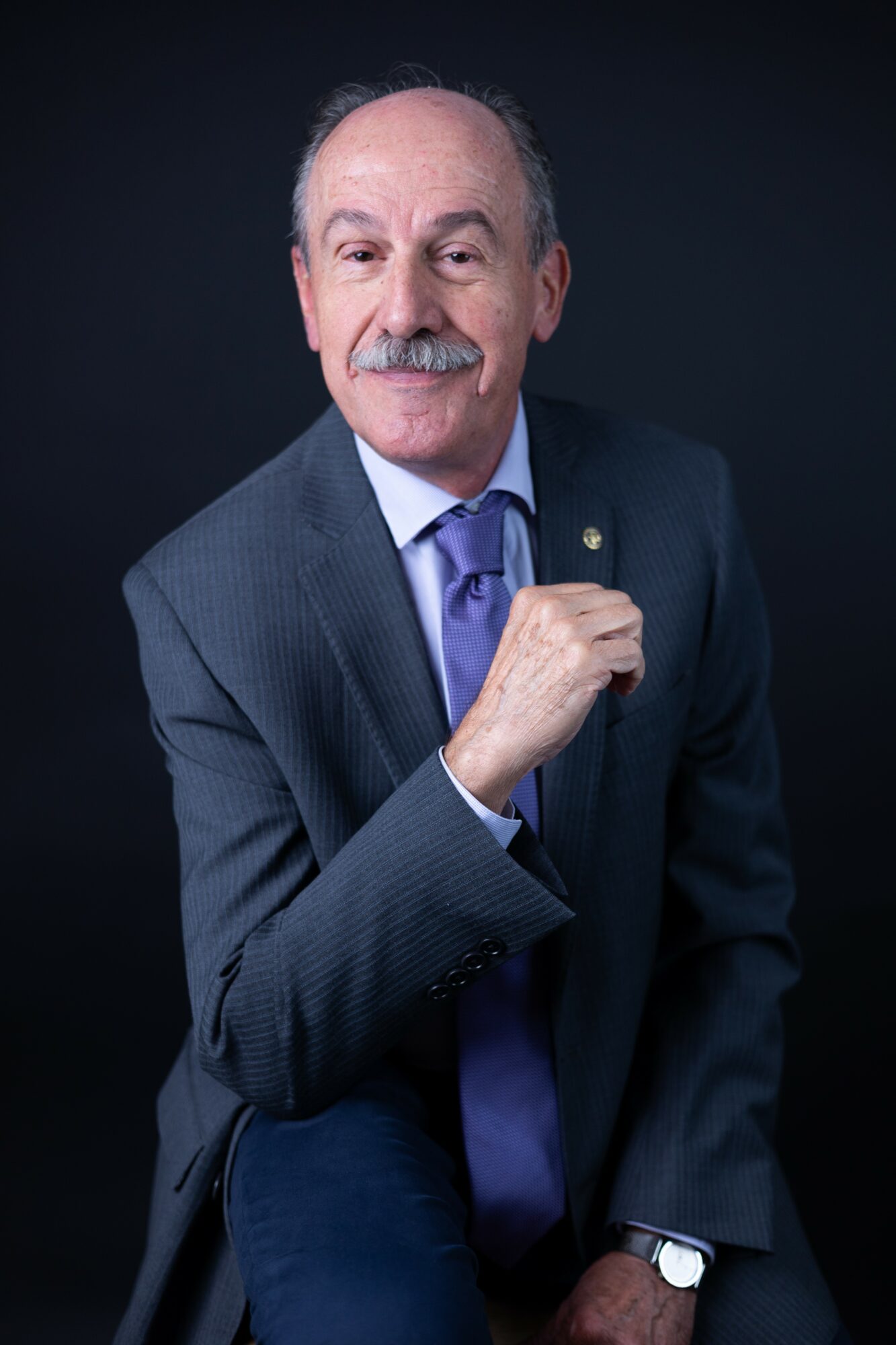
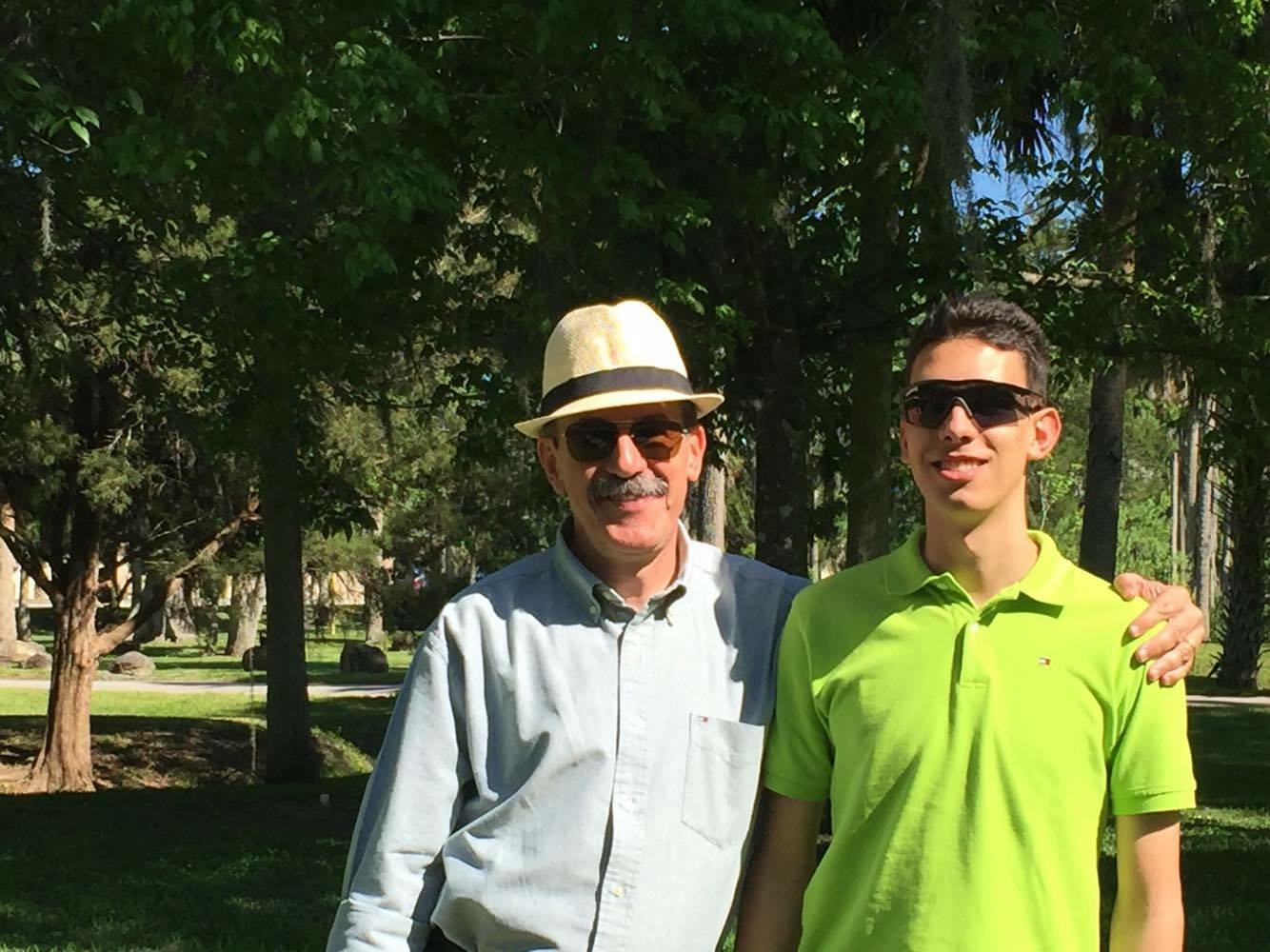
Today we’d like to introduce you to Carlos Ranzani.
Hi Carlos, we’re thrilled to have a chance to learn your story today. So, before we get into specifics, maybe you can briefly walk us through how you got to where you are today?
I am deeply honored to receive this invitation — and it comes at a particularly meaningful moment. I am currently writing my autobiography. I have learned how gratifying, important, and enriching it is to reflect deeply on one’s own journey.
My great-grandfather, Dionísio Ranzani, was born in Italy in 1863, in the small town of Occhiobello, in the Veneto region, about an hour from Venice. He arrived in Brazil in 1891, at the age of 27, in search of a better life — the conditions in Italy at the time left little choice. In 2021, 130 years later, it was my turn to immigrate with my family to the United States. A portal opened — just as one had opened for him.
I am a Médico do Ser Humano — a Physician of the Human Being, as I call myself — having graduated in 1980 with over 40 years of clinical practice. What drew me to medicine was an enormous curiosity to understand human beings and life itself — a curiosity that has never left me. I have always sought the broadest knowledge I could reach, both about human nature and the natural world.
Within medicine, I built my own path — acquiring the knowledge available to me while always seeking to fill the gaps. After my foundational training in general practice, I specialized in Gastroenterology and Psychosomatic Medicine. I later pursued postgraduate studies in Psychoanalysis, Homeopathy, Phytotherapy, and Floral Essences. Here in the United States, I completed a certified training in Positive Psychology and Happiness Management. My practice in Brazil has more than 40,000 registered patients — and I continue to care for them, now remotely. From Atlanta, I see patients both in person and online, including Brazilians in the American diaspora and American clients seeking a more integrative and human-centered approach.
I have a deep understanding of human beings and their behavior — and I remain an eternal student, endlessly curious about life and its mysteries. I am also dedicated to the study of philosophy — not only academically, but in a very practical way, as a student of the Nova Acrópole institution — and I apply this knowledge directly in my clinical work.
Music holds a special place in my life and in my understanding of what it means to be human. I have a deep appreciation for classical music, progressive rock, jazz, bossa nova, new age, and blues. More than a personal pleasure, music is for me one of the primary pathways to connecting with one’s own essence — a school of sensitivity, listening, presence, and the perception of nuances that make all the difference in a therapeutic encounter. I believe that a therapist who cultivates artistic sensitivity sees more deeply — and reaches further.
I believe that when we truly understand our emotions — recognizing them as one of our primary senses — we connect with our essence, gaining the strength and clarity to walk our path and build a legacy that is worthy and inspiring.
My mission is to bring this vision to as many people as possible. For decades, I fulfilled that mission in the consultation room — one appointment at a time. Coming to the United States opened a new dimension: today I give lectures, workshops, and human development and flourishing programs for companies, and I produce educational content on the human psyche and behavior — articles, e-books, and social media.
And now the next chapter arrives: I am launching the course A Arte de Enxergar o Ser Humano — The Art of Seeing the Human Being — a training program for therapists of any background who have realized that technical knowledge alone is not enough. That there is a skill that precedes any technique — the ability to truly see the person in front of you. The official launch takes place at the end of this month of August, during an open masterclass.
At the same time, I am writing my autobiography — not merely as an exercise in memory, but as a reflection on what it means to build a life in which thought, feeling, and action are coherent with one another. Between the legacy of a great-grandfather who crossed the Atlantic and the portal that opened for me, 130 years later, on the other side of the world.
Alright, so let’s dig a little deeper into the story – has it been an easy path overall and if not, what were the challenges you’ve had to overcome?
Every meaningful path comes with its own set of obstacles — and mine were no exception.
The first challenge was choosing to walk a road that diverged significantly from the conventional formation of a physician. Medical training, by its very nature, follows established structures. But from early on, I felt that those structures, as valuable as they were, left important gaps — in the understanding of the human psyche, in the integration of body and soul, in the broader dimensions of healing. Finding the right teachers, the right courses, the right traditions to fill those gaps required years of independent research, personal initiative, and a great deal of persistence. Conciliating that ongoing search with the demanding daily life of a practicing physician — with a full patient load, family responsibilities, and all that comes with it — was perhaps the most constant challenge of my professional life. But it was also the most rewarding.
The second challenge was, in many ways, a consequence of the first: choosing to see and practice medicine differently from the vast majority of my peers. To place the human being — rather than the disease — at the center of clinical care; to integrate psychosomatic medicine, psychoanalysis, philosophy, and positive psychology into a practice that most colleagues viewed through a purely biomedical lens — this required a certain quiet courage. Swimming against the current is never comfortable. But over time, the results in my patients’ lives became the most powerful validation I could have asked for.
The third challenge was deeply personal: my desire to live and practice in the United States. This dream solidified roughly twenty years ago — long before it became reality. And it was entirely self-driven. I did not come transferred by a corporation or sponsored by an institution. I came through my own research, my own resources, my own discoveries — navigating immigration processes, legal requirements, and professional reconfigurations largely on my own. It was a long journey, full of uncertainty, but one I chose with full conviction.
The fourth challenge was perhaps the most difficult to carry. For seven years — including the years of the global pandemic — my wife and children were already living here in Atlanta, building their new life, while I remained in Brazil, continuing to work and fulfilling the commitments that kept me there. During that period, I watched from a distance as the social, ethical, and moral fabric of Brazilian society deteriorated in ways that were deeply troubling to me. That growing discomfort — the feeling of being in the wrong place, at the wrong time, for reasons that felt increasingly out of alignment with my values — made those years particularly heavy. The separation from my family was difficult enough on its own. The surrounding context made it harder still. When I finally arrived in Atlanta in 2021, it was not just a geographic transition. It was a profound liberation.
Thanks – so what else should our readers know about your work and what you’re currently focused on?
I have been a physician for over 40 years — but the way I practice medicine has been built well beyond the conventional boundaries of the profession.
I am known, before any title or specialty, as Médico do Ser Humano — a Physician of the Human Being, as I call myself — an identity I chose consciously, and one that defines what I do and how I do it better than any technical classification. This name says something at once simple and profound: the human being in front of me is always greater than the symptom that brought them to me.
What am I most proud of? Of having built, over a lifetime dedicated to care — with more than 40,000 registered patients and appointments I lost count of long ago — a way of caring that goes beyond prescription. A way that begins with genuine listening — not only to words, but to what lies beneath them. That recognizes emotions as one of our primary senses. That understands that a patient who has been truly seen is already, in some measure, in the process of healing.
But what brings me the deepest satisfaction — the kind that is beyond price and that renews the meaning of everything — is something else entirely. It is witnessing the flourishing of a human being. When that light appears in someone’s eyes as they discover themselves. When they truly see themselves, perhaps for the first time. When they realize the power they have — and have always had — but had not yet recognized within themselves. When a person feels that they are truly living their own life — not being carried along by it, not being a puppet of circumstances, fears, or the expectations of others. When they know how to choose. When they choose. And when they put that choice into practice with courage and clarity. These are the moments that are the heart of my work. And the reason why, after so many years, I still carry the same flame.
I am also proud of having chosen, at every stage of my life, the most truthful path — even when it was the most difficult. Of swimming against the current when necessary. Of seeking teachers outside my field, studying philosophy, and allowing art and music to refine my clinical sensitivity. And of arriving, after decades of practice, at a method that is my own — structured, named, and now ready to be taught.
What sets me apart from other health professionals?
I believe it comes down to three things, inseparable from one another.
The first is the depth of listening. I have learned — and continue to learn — to listen to the human being on multiple frequencies at once: what they say, how they say it, what the body communicates, what the emotions reveal, and what has not yet found words. This listening is not a technique — it is an internal posture cultivated over a lifetime.
The second is the genuine integration of knowledge. I do not accumulate specialties — I integrate visions. Psychosomatic medicine, psychoanalysis, perennial philosophy, positive psychology, and complementary therapies are not separate drawers in my practice. They are different lenses illuminating the same human being.
The third is the inversion that defines my method: before thinking about treatment, I dedicate myself to understanding who that person is. How they function. What moves them. What they have not yet been able to name about themselves. When that understanding is genuine and deep, the clinical approach emerges as a natural consequence — not as an intellectual choice.
This inversion — simple in form, transformative in practice — is the heart of the course I am launching: A Arte de Enxergar o Ser Humano — The Art of Seeing the Human Being — a training program for therapists of any background who have realized that technical knowledge alone is not enough. That there is something that precedes any technique — and that this something can be developed, trained, and taught.
After more than four decades of caring for people, I know that the greatest gift a health professional can offer is not a precise diagnosis or a well-chosen prescription. It is the experience of being truly seen. Of feeling that someone has come to meet you where you are — without judgment, without hurry, without wanting you to be anything other than what you are.
This is my work. And it is also my legacy.
So, before we go, how can our readers or others connect or collaborate with you? How can they support you?
If you get in touch with me, we can meet—even if just online—to get to know each other, find our synergy and common ground, and then build something together.
Contact Info:
- Instagram: https://www.instagram.com/dr.ranzani/
- Facebook: https://www.facebook.com/DrRanzani
- LinkedIn: https://www.linkedin.com/in/dr-carlos-alberto-ranzani-711a4117/
- Youtube: https://www.youtube.com/@Dr.Ranzani
Popular
-

Hidden Gems: Local Businesses & Creatives You Should Know
-

ATL’s Most Inspiring Stories
-
From Showing Up to Seeing His Face on a Billboard: Anthony Green Is Just Getting Started
-

Portraits of Atlanta
-
Wayne Smith Jr on Survival, Psychological Thrillers, and the Cost of Staying Alive
-
Meet Laya Hoffman | Award-Winning Voice Actor, Live Announcer & Champion for Authentic Storytelling