





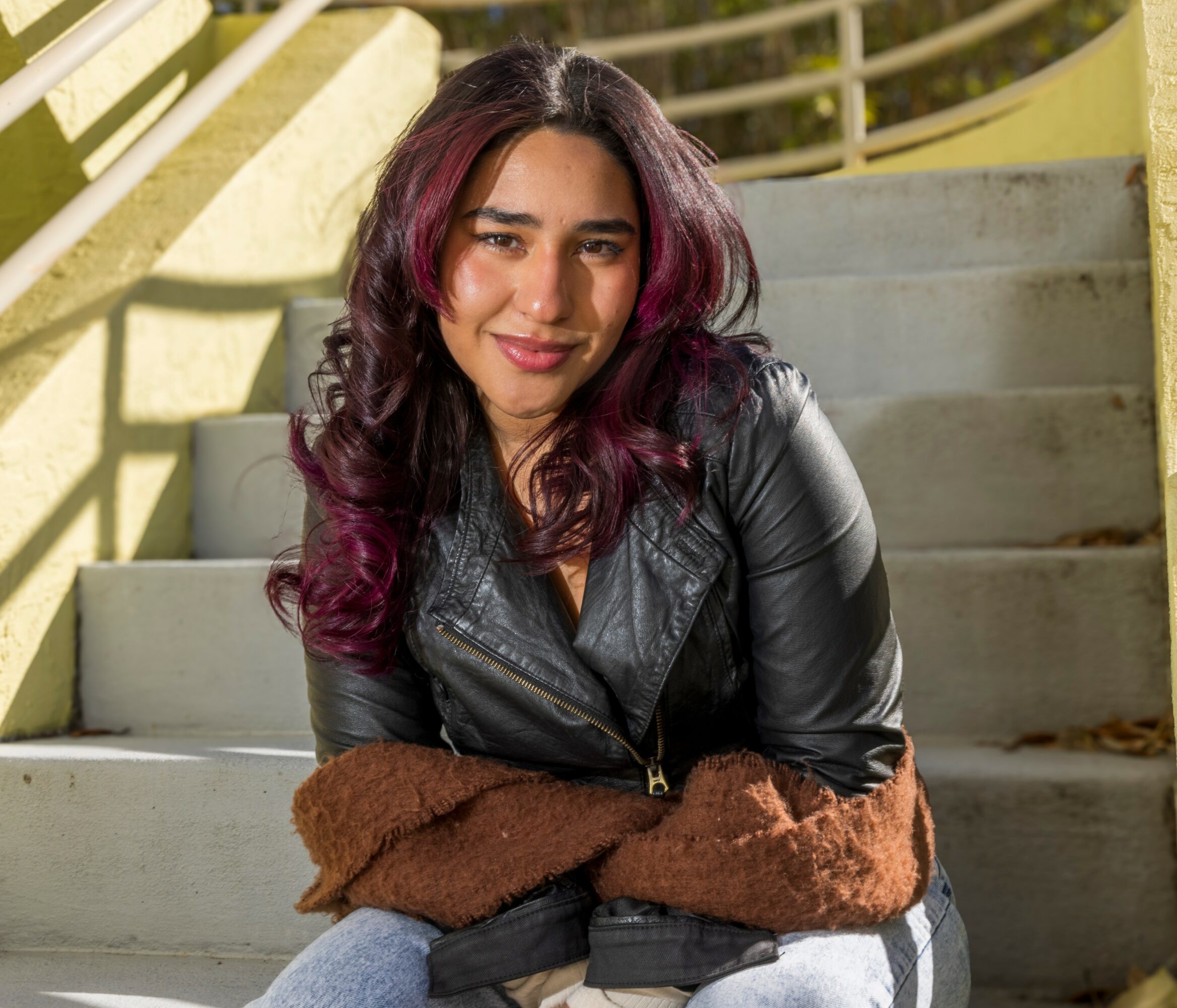
Today we’d like to introduce you to Luzmarie Castillo Rivera.
Luzmarie, we appreciate you taking the time to share your story with us today. Where does your story begin?
I grew up in Santiago de Veraguas, a small city in Panama, in a family that valued curiosity, honesty and critical thinking above almost everything else. That upbringing gave me a childhood full of scattered passions, music, dance, literature, science, among others, all circling around one question I couldn’t quite answer yet: what was I actually here to do?
That search eventually pulled me toward history, philosophy, and politics, toward wanting to understand the world beyond my small city. It also turned studying abroad from a want into something closer to a need. Then, when I was 16, I discovered UWC and their competitive national selection process, I was awarded a scholarship from United World Colleges to pursue my high school experience in Germany. UWC is a non-profit global movement with 18 boarding schools, built on the idea that education can unite people across cultures in pursuit of peace and sustainable future.
Doing the International Baccalaureate Diploma, I was lucky to be able to select my educational interest. Those two years changed how I saw everything. I focused my studies on Global Politics, sustainability, and comparative literature, but the bigger education was personal: I came to believe that most social problems trace back to education; to how people understand their own culture and the world around them. I also came to a harder realization about change itself. I still believe deeply that there are good people working inside government and diplomacy trying to do right by their countries. But by watching Panama, I saw that the change that actually lands usually comes from society itself — from people choosing to act, protest, vote, or simply live differently — more than it comes from the slow machinery of politics.
That reframed what I wanted to do with my life. I started paying attention to what had actually shaped me: the cultural exchange that gave me patriotic pride instead of taking it away, the environmental diversity I grew up with that built my sense of care for nature, the sheer range of perspectives I’d been exposed to. Looking for universities in other countries, I found Ringling College and its Entertainment Design program, it didn’t look like a natural next step from politics and literature and it even felt far away from my values and convictions— but two things convinced me to apply: the multidisciplinary nature of the work matched the complexity of what I actually cared about, and it reconnected me to a passion I’d sidelined — storytelling and design.
In 2024, during my last months in Germany, I was accepted to Ringling College of Art and Design under the Shelby Davis Scholarship. This and the idea of moving to a second new country felt less like a risk and more like a sign. Now, starting my third year, I’m excited to keep building the skills and having the conversations that let me chase those early idealistic questions in a more tangible form. I have zero doubts I made the right call.
I’m sure it wasn’t obstacle-free, but would you say the journey has been fairly smooth so far?
Not smooth, no — though these days I can tell the story in a pretty guided, natural way. At the time, all these shifts in perspective and identity created a lot of impostor syndrome, and around that same period I was diagnosed with Generalized Anxiety Disorder.
I see my idealism and the high standards I hold myself to as things that push me every day — but the truth is, having them at a young age also created constant uncertainty about the future. The expectations I placed on myself took a real toll on my mental health and self-esteem. Finding the answers I have now wasn’t easy, especially in the middle of UWC’s highly competitive environment, far away from everything known to me — my family, my culture, my friends. Taking care of my mind had to become a priority instead of something I pushed to the background.
Now, with a more mature perspective and a lot of gratitude for the support I got from my parents and my psychologist, I’ve found a way to work alongside my values instead of constantly trying to serve them. Talking about this matters to me, because that experience made me aware of how much pressure we put on young people, and how much guidance and a stable sense of identity matter at that age. It’s part of why I joined the Panamanian National Committee right after graduating from UWC — I now work as a mentor for incoming students. I get to meet incredible dreamers every year, and I get to tell them that it’s okay to feel caught in a spiral of decision-making. There’s always a way out and usually a happier, more passionate one on the other side.
Can you tell our readers more about what you do and what you think sets you apart from others?
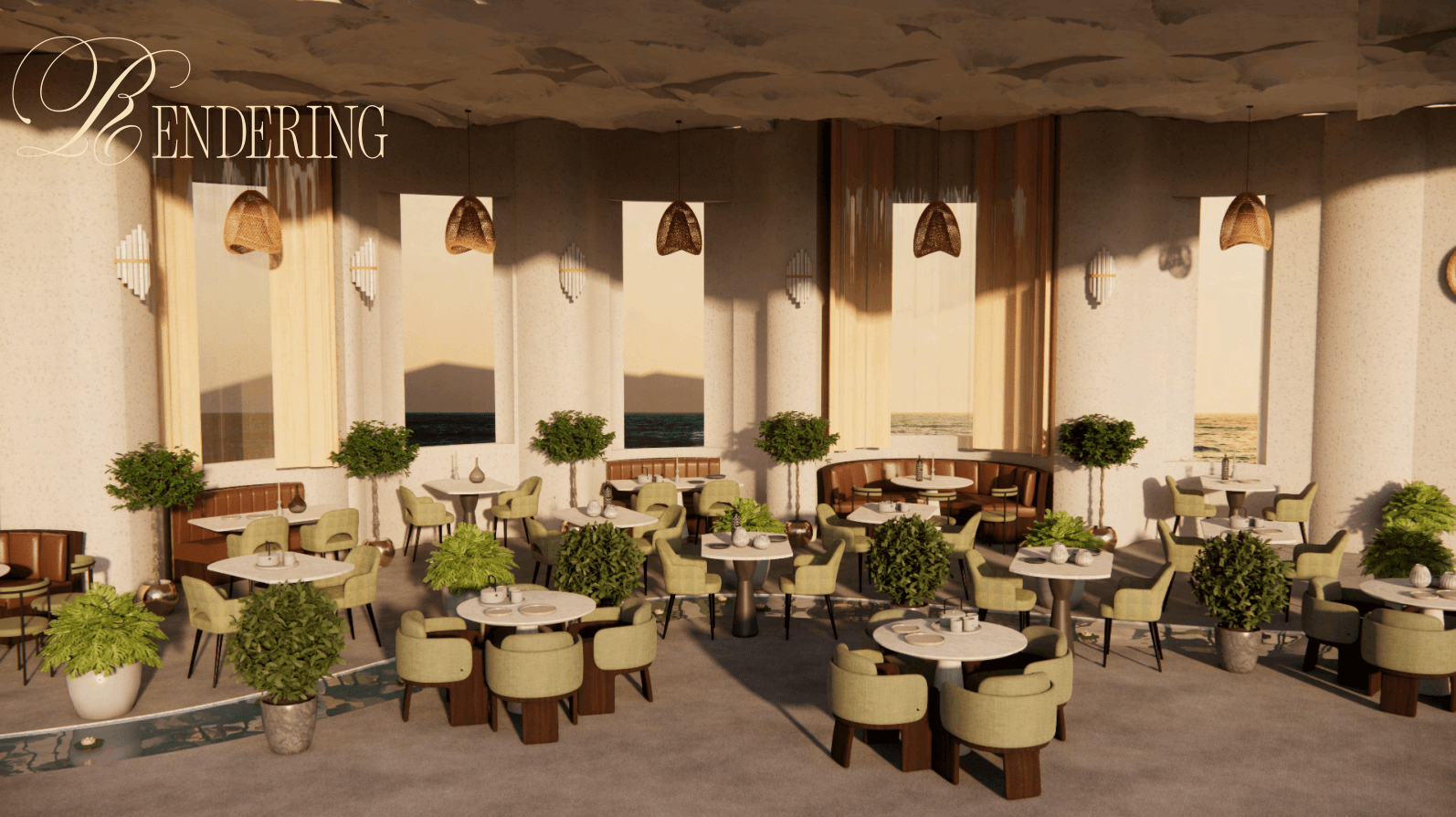
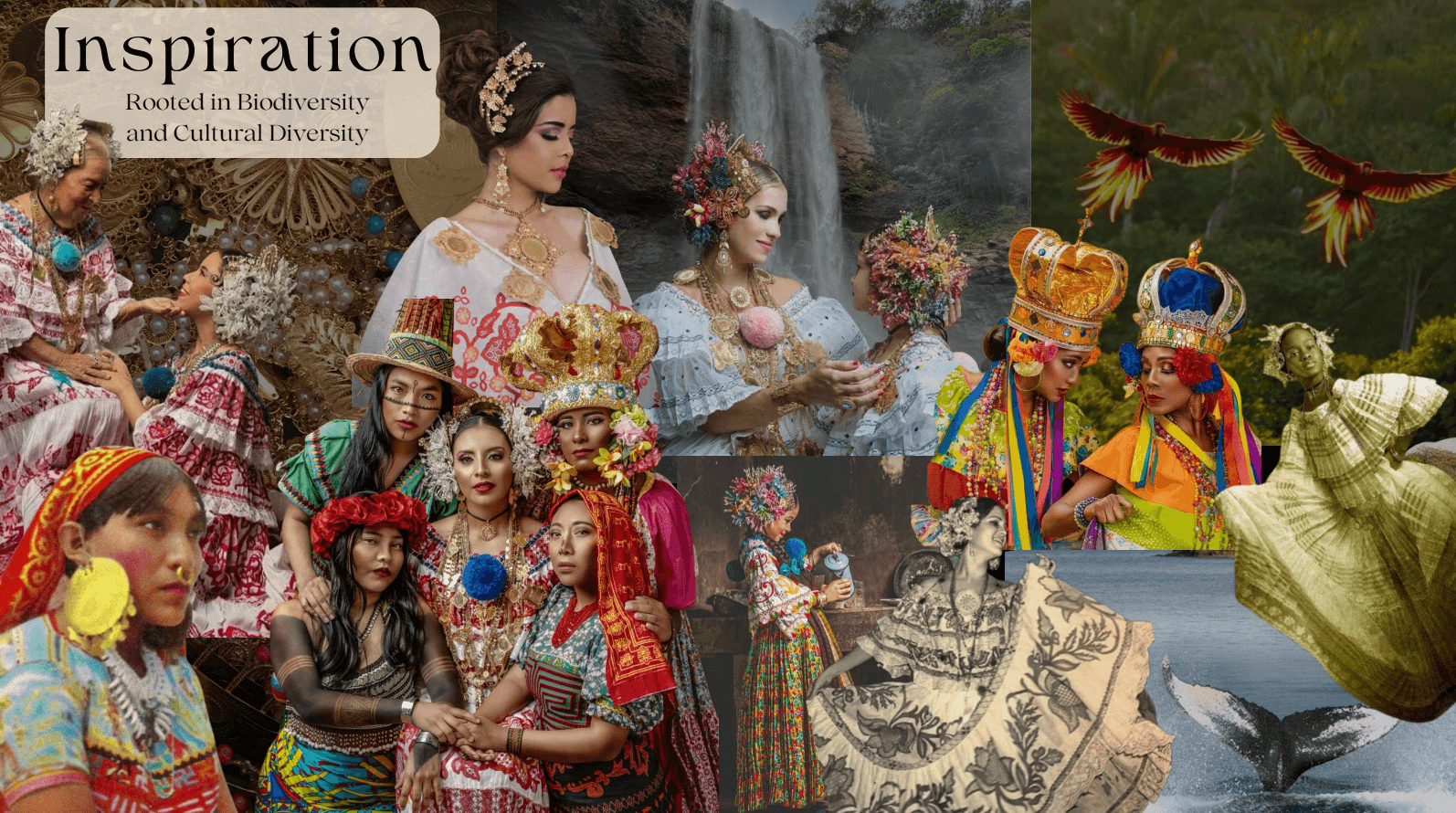
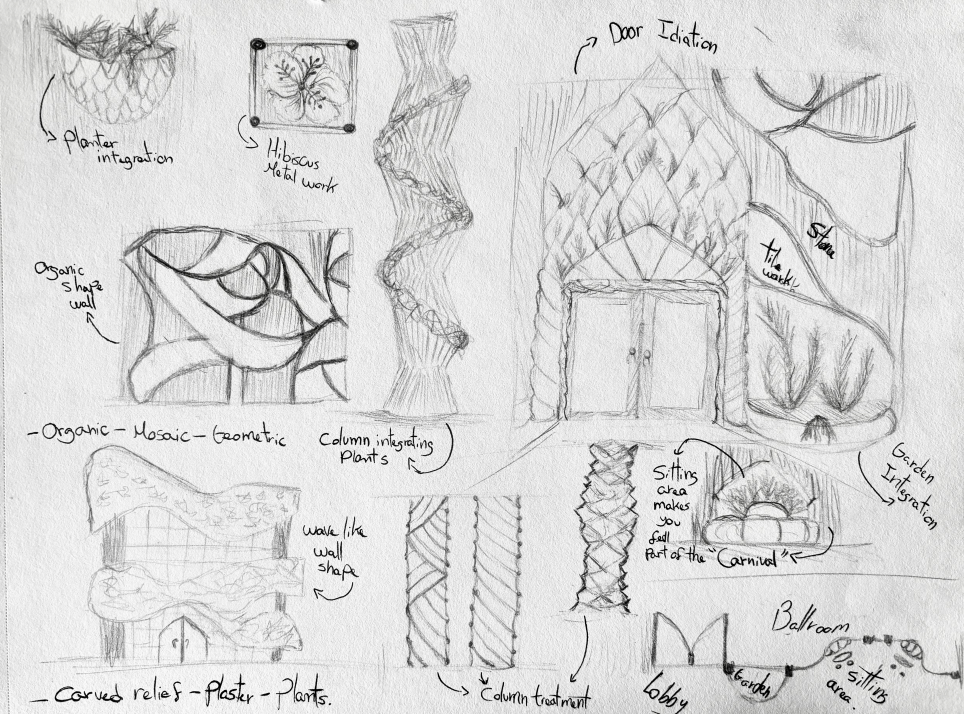
Outside of my academic projects, I’m always looking for experiences that let me develop the multidisciplinary approach to design I mentioned earlier. Alongside my major in Entertainment Design, I’m pursuing a minor in Photography with an emphasis in lighting, and a minor in Art History with an emphasis in architecture. My biggest sources of inspiration come from world history and Panamanian culture — I’m always trying to find ways to bring those into my work.
Ringling has given me a lot of room to actually apply that. Last year I was Head of Lighting and Set Construction Lead for Genesis, a student-led sustainable fashion show — it’s on YouTube, and I’d genuinely recommend checking it out. I’ve also worked on academic projects in exhibition design and museum storytelling, including an exhibition on sustainable decision-making called Labyrinth of Choice, which I built with my peer Martina Belanche. That project led me to join Ringling’s Exhibition Design and Management class and the Gallery team — we’re currently putting together an exhibition opening in January across two of the university’s main galleries.
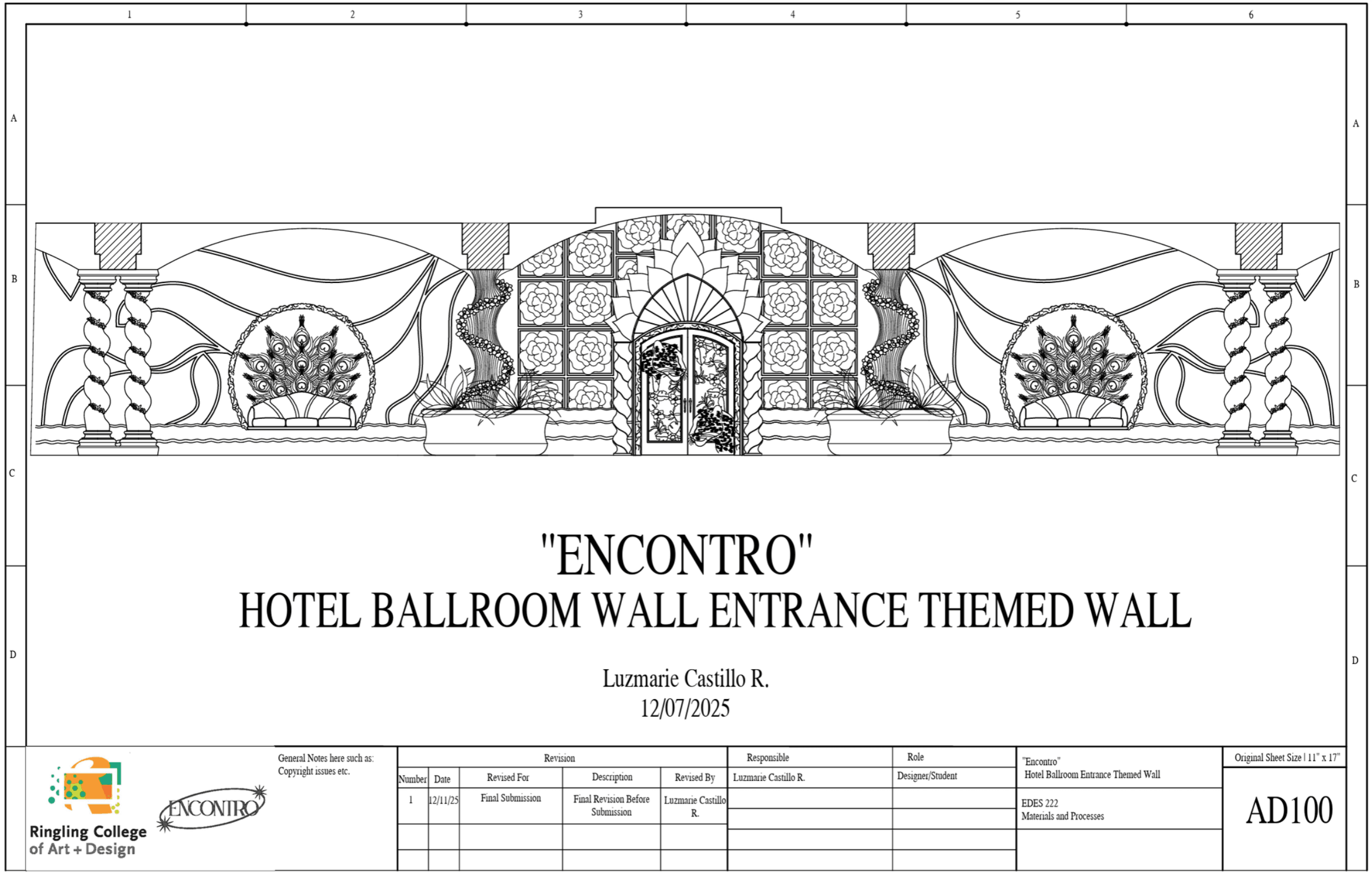
What I’m most proud of isn’t a specific project — it’s how intrinsic it’s become for me to follow my own values, no matter what path I’m on, and the fact that I’ve actually taken the time to define what my design values and approach are. That’s not something I take for granted, especially since I still catch myself second-guessing whether I’m in the right place. But last semester I was named Outstanding Sophomore of the year by my department and received an Award of Excellence in Spatial Design at Best of Ringling, the college’s annual celebration of student work — and that meant a lot, especially in a year where I was still working through some of that self-doubt.
I think what sets me apart is the highly multicultural background I come from, and the fact that I see design as having a bigger purpose than momentary pleasure or entertainment. I’m trying to become a designer that truly understand what a multidisciplinary approach really means in practice — how psychology, architecture, history, sustainability, lighting, public space, and materials and process can come together to actually benefit people through design.
Is there anything else you’d like to share with our readers?
I think the thing I’d most want to share is this: you don’t have to choose between where you come from and where you’re going. For a long time I thought I had to pick a lane — politics or my own passions, Panama or the world, idealism or practicality. What I’ve learned is that the most honest work comes from refusing to separate those things.
To anyone reading this from Santiago, Panama, or from a small city like it — in the US or anywhere in the world — your background isn’t something to grow out of. It’s the thing that will make your work, whatever it ends up being, actually yours. I’m still early in figuring out what that looks like for me, but I’m building it one exhibition, one project, one conversation at a time, and I’m excited for what’s next.
Finally, I want to thank all the support I’ve gotten along the way. To my family for encouraging me to follow my dreams even when it’s meant missing each other. To friends and sister in Panama and scattered around the world for being a source of joy and motivation. To the UWC Panamanian National Committee, for the opportunity that I think started this whole story. To the Ringling community and friends, who’ve been a constant source of motivation and opportunity to keep growing. And to my boyfriend, who has become one of my biggest supports and comfort and, as a fellow designer, a source of inspiration and learning for a curious mind like mine.
Contact Info:
- Instagram: https://www.instagram.com/luzcas5_7?stkn=MXF4ZXkxMnczNnA0bw%3D%3D&utm_source=qr
- LinkedIn: https://www.linkedin.com/in/luzmarie-castillo-rivera-516416391
- Youtube: https://www.youtube.com/live/6NRbwYdehyg?si=yG–AStoSS6q448L
- Other: https://www.behance.net/luzmaricastill1
Popular
-

Hidden Gems: Local Businesses & Creatives You Should Know
-

ATL’s Most Inspiring Stories
-

Portraits of Atlanta
-

Dr. Hildiah Martin-Suggs Is Building Second Chances for Youth Who Were Almost Lost in the System
-

From Showing Up to Seeing His Face on a Billboard: Anthony Green Is Just Getting Started
-
Wayne Smith Jr on Survival, Psychological Thrillers, and the Cost of Staying Alive