







Today we’d like to introduce you to Eugene E. Jones, Jr..
Hi Eugene E. , thanks for sharing your story with us. To start, maybe you can tell our readers some of your backstory.
I was born on September 29 1955 on Selfridge Air Force Base near Mount Clemens, Michigan – just outside of Detroit. I am the second of six children, with an older sister among the four girls and two boys in my family. Unlike many other families, the six of us were really close and did everything together. I remember surviving on Carnation powdered milk, cabbage, cornbread, beans, spaghetti, and bologna. But life was good, we had a lot of fun and never realized we were poor. Living on the base we weren’t exposed to the turmoil and rioting going on in the city and I didn’t understand why people were rioting. I enjoyed living in Detroit. The only regret I have about my time there (and elsewhere for that matter) is I can’t remember who I grew up with because we moved around so much. If you grew up in a military family, you’ll understand! Showing up in mid-year as the new kid and trying to make new friends while figuring out who you want to be friends with and who the bully is who will challenge you.
We weren’t back in Detroit very long before dad was transferred to Yokota Air Force Base in Japan. I attended school in Tokyo and was exposed to a different culture as well as meeting a lot of embassy kids and experiencing old Japan. In 1971, we returned to the states from Japan and I continued going to high school. I got A’s and B’s, with a focused goal of graduating so I could follow in my father’s footsteps and join the Air Force.
During my time in the Air Force I learned the importance of humor, mentorship, communication skills, problem-solving cognitive processes. I learned the ability to harmonize actions at the three levels of war, sociability and a preference for relationship building, cross-cultural and language capabilities and an understanding of organizations. A leader must think critically, strategically, and creatively to meet both present and future challenges. In addition, visionary leadership incorporates creative interventions to processes, technological developments, and keeping up with emerging challenges. Strategic thinking is an ongoing activity where leaders constantly scan the current environments seeking a glimpse of possible futures. A dose of creative thinking supported by critical thinking skills helps the leader in this endeavor.
I have spent my entire career working for public housing agencies in cities like Atlanta, Chicago, Toronto, New Orleans, and Detroit. I have learned that there are solutions to the housing crisis in America. But we can’t even begin to fix these problems until we first free ourselves from the lingo that has become all too commonplace. This includes phrases such as affordable housing, public housing, projects, etc. In my 35 years working in the public housing sector, I’ve been nicknamed Mr. Fix-It because that is what I do. I am brought in when things are already sliding downhill.
Alright, so let’s dig a little deeper into the story – has it been an easy path overall and if not, what were the challenges you’ve had to overcome?
It’s my job to lend my experience and skills to troubled housing agencies. Most of the time, these agencies face financial challenges and a host of other problems that have impacted their ability to effectively and economically provide what people need: safe housing. Throughout my career, I frequently work with agencies already experiencing financial instability. That means confronting limited resources, while still being responsible for maintaining properties, delivering services, meeting regulatory obligations, and protecting residents.
Housing reform involves residents, housing authority boards, employees, local governments, federal agencies, developers, nonprofits, community organizations, and taxpayers—groups that don’t always have the same priorities. Moving from a troubled agency toward a broader community-development vision requires getting many of those stakeholders moving in the same direction. (Enter the bureaucratic red tape here).
Entering a troubled housing authority with financial difficulties is often accompanied by deeper institutional challenges—inefficient operations, aging housing stock, administrative problems, weak systems, or an agency that has lost the capacity to fulfill its mission effectively. After working across multiple cities over three-plus decades, I have had to address housing challenges that may share common themes, but exist within very different economic, political, demographic, and community environments. A solution that succeeds in one city cannot simply be copied into another.
Perhaps one of the most significant challenges is making change that ‘endures’. A leader can improve one agency during their tenure; but ‘meaningful reform’ requires building systems, partnerships, organizational cultures, and community structures that continue working after that leader leaves.
As you know, we’re big fans of Housing Advocate & Practitioner. For our readers who might not be as familiar what can you tell them about the brand?
I am a Chief Executive with a proven track record spanning over 40 years of leadership experience in management, public/private partnerships, operations, finance and governance in the public housing industry. Billion-dollar P&L responsibility for organizations requiring strategic planning, revenue management and risk management. Responsible for building over $3 billion of housing developments including leading the financing structures for these developments. Globally recognized as turnaround/recovery expert, delivering strong results while creating public/private business partnerships in this highly regulated housing industry.
CEO/Leadership positions have included housing authorities in eight major cities in North America including one in Canada. Demonstrated expertise in transformational leadership, business strategy, construction and development, bond issuance, operations, government relations (federal, state and local) and public policy, and building and managing high performance teams.
Special expertise in entrepreneurial leadership, operations, finance, governance and public policy.
It’s my job to lend my experience and skills to troubled housing agencies. Americans do not just need a roof over their head. They need safe homes where they can settle down and settle in. Homes where they can grow roots. Places that they are proud to call home. Not just a box in a sky-rise, but a home that is part of a broader community. I have a vision to address the nation’s housing challenges much as I have done in each and every city where I’ve served over the last three-plus decades. My vision is not about changing a specific housing authority, but rather about bringing the spirit and the framework for creating community social change that is meaningful and which endures.
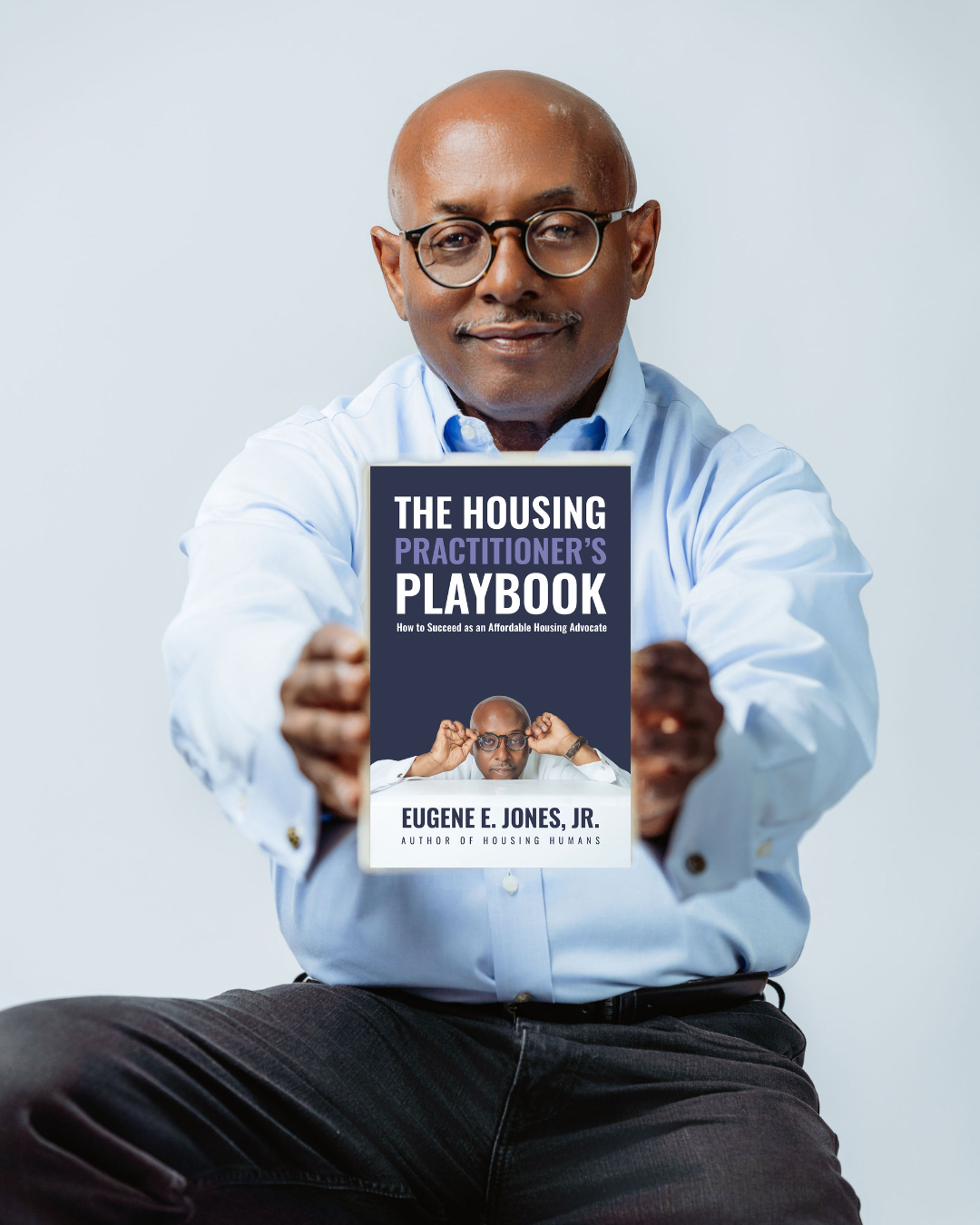
Over the last ten years, it has become my mission to not only advocate and lead housing authorities out of troubles status, but to teach, mentor and empower other passionate housing practitioner’s on how to be effective at this. That is why I am most proud of the book I am currently launching this September, The Housing Practitioner’s Playbook. In these pages, practitioners will find a blend of historical insights, case studies, and actionable strategies. The lessons learned from past policies—both their successes and failures—offer valuable guidance for shaping the future of affordable housing. By examining these experiences, I hope to inspire practitioners to think critically, act compassionately, and innovate boldly, but most importantly to DO SOMETHING.
The Housing Practitioner’s Playbook is for anyone who is committed to making a difference in the current affordable housing crisis. Whether you are a passionate advocate, seasoned professional or someone just beginning to explore this space as a professional career, this book offers valuable insights and practical strategies for creating meaningful change.
Who else deserves credit in your story?
I have been fortunate throughout my career to have people who believed in me, challenged me, stood beside me, and sometimes reminded me why this work mattered when the work itself became difficult.
After more than three decades in affordable housing, one thing I know with certainty is that no meaningful change happens because of one person. Housing is about people, and so is leadership. Every housing authority I have led, every community I have had the privilege to serve, and every difficult turnaround or transformation I have been part of has depended on people willing to roll up their sleeves and believe that we could do better.
I have worked alongside some extraordinary housing professionals, board members, elected officials, community partners, employees, resident leaders, developers, advocates, and public servants. Many of them never receive the recognition they deserve. They are the people doing the work every day—listening to residents, solving problems, navigating bureaucracy, stretching limited resources, and continuing to push forward when progress feels painfully slow.
There have also been individuals whose support has meant a great deal to me personally and professionally. Congressman Emanuel Cleaver II and I worked together during an important chapter at the Kansas City Housing Authority. Leaders like Ivory N. Mathews, a dear friend and colleague, represent the kind of passionate housing professionals who continue to challenge and inspire this industry. These relationships have reinforced something I have believed throughout my career: strong leaders need other strong leaders around them.
My family and closest friends deserve enormous credit as well. My mother, Kay Frances Jones, helped shape the person I became. My late best friend, Cordelle Olive, remains someone whose character and friendship I carry with me. And Linda, Rachel, Oscar, Eugene III, and my extended family have supported a career that has required long hours, difficult decisions, moves, sacrifices, and a great deal of emotional investment.
But some of my greatest teachers have been the residents themselves.
When you sit across from a mother who wants a safer place for her children, talk with a senior who simply wants to age with dignity, or listen to someone who feels forgotten by the system that was supposed to serve them, housing stops being about buildings, budgets, occupancy rates, or policies. It becomes human.
Those conversations have stayed with me throughout my career. They have challenged me, humbled me, and pushed me to think bigger about what affordable housing should be.
So when someone asks who deserves credit for whatever success I have had, my answer is: a lot of people.
The mentors who gave me an opportunity. The colleagues who challenged my thinking. The employees who believed in the mission. The elected officials and community partners willing to take difficult steps with us. The residents who trusted us enough to tell us what wasn’t working. The friends who encouraged me. And the family members who stood beside me through all of it.
Contact Info:
- Website: https://eugenejonesjr.com
- Facebook: https://facebook.com/HousingHumans
- LinkedIn: https://linkedin.com/in/eugenejones1
- Twitter: https://x.com/EugeneEJonesJr
- Youtube: @eugenejonesjr2223
- Other: https://Amazon.com/Housing-Humans-Eugene-Jones
Popular
-

Hidden Gems: Local Businesses & Creatives You Should Know
-

ATL’s Most Inspiring Stories
-

Portraits of Atlanta
-

Dr. Hildiah Martin-Suggs Is Building Second Chances for Youth Who Were Almost Lost in the System
-

From Showing Up to Seeing His Face on a Billboard: Anthony Green Is Just Getting Started
-

Wayne Smith Jr on Survival, Psychological Thrillers, and the Cost of Staying Alive