



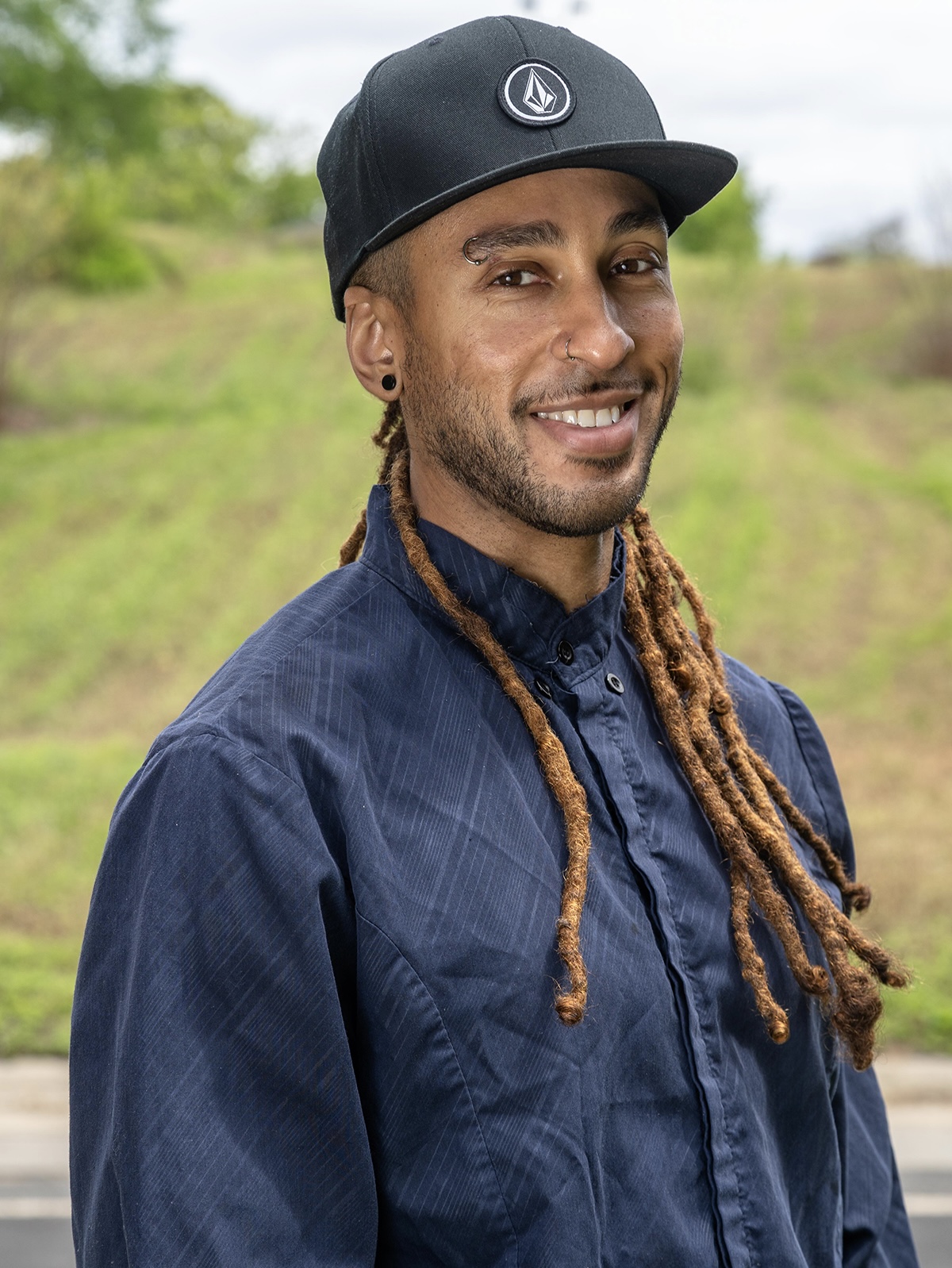
Today we’d like to introduce you to Dario Mohr.
Hi Dario, can you start by introducing yourself? We’d love to learn more about how you got to where you are today?
My story really begins a desire to create the kinds of spaces I wanted to see more of in the art world. I’m an interdisciplinary artist, curator, educator, and the founder and director of AnkhLave Arts Alliance. While those roles may appear separate on paper, they become interconnected over the course of my career.
I studied art at Buffalo State College, where I received my BFA, and later earned my MFA from the City College of New York. As I developed as an artist in New York City, I became increasingly aware of disparities in representation and opportunity for artists of color. I was especially interested in artists whose contemporary practices were deeply informed by their cultural and Indigenous heritage, and in the question of who actually feels welcomed into the spaces where contemporary art is traditionally presented.
Those questions contributed to my founding AnkhLave Arts Alliance. AnkhLave has three major programs: the AnkhLave Art Gallery and Artist Residency on Governors Island, featured in Hyperallergic and Impulse Magazine; our International Artist Exchange Program, which includes the Echoes of Home exhibition series presented across regions of Africa and the African Indigenous Mural Project; and our flagship Annual AnkhLave Garden Project Fellowship and Public Art Exhibition.
From the beginning, I wanted AnkhLave to do more than provide exhibition opportunities for BIPOC artists. I wanted us to reconsider where contemporary art is encountered and who gets to encounter it.
That idea became particularly important through the AnkhLave Garden Project Fellowship, which is now in its eighth year and has become our flagship program. Through the Garden Project, we present BIPOC artists in public green spaces and affinity communities where people can encounter contemporary art as part of their everyday lives. Many people, particularly people from communities historically underrepresented by arts institutions, may not be inclined to walk into a traditional gallery. We believe they should not have to enter one in order to experience ambitious contemporary art that reflects cultures and experiences connected to their own communities.
At the same time, my own artistic and curatorial practices have continued to evolve around ancestry, cultural memory, migration, belonging, and cultural inheritance. Increasingly, I understand my work as an artist, curator, and nonprofit leader not as three separate careers, but as different ways of asking similar questions and creating spaces for those questions to become collective.
We all face challenges, but looking back would you describe it as a relatively smooth road?
It definitely has not been a smooth road. One of the greatest challenges has been building an organization with grand ideas while developing the resources and infrastructure necessary to sustain those ideas.
When you are growing a nonprofit, especially one committed to artists and communities that have historically received fewer resources, you quickly learn that vision alone is not enough. There have been times when I have simultaneously been the fundraiser, administrator, curator, relationship builder, program developer, marketer and person making sure everything physically gets where it needs to go. Im grateful to say this past year I’ve received tremendous support from a fantastic team including our Lead Curator, Darlene Deloris, Curatorial Fellow, Megan Elevado, House Manager Rafaelina Tineo and her assistant Alison Borrero, and install support from Byron Smith and photography from David Yonghwan-Lee among others who have contributed so much to the community.
Access itself has also been one of the challenges that shaped our model. There are extraordinary BIPOC artists making culturally significant contemporary work, but representation is only one part of the equation. We also have to ask who has access to the places where that work is presented. If we place diverse artists inside spaces that portions of their own communities do not feel invited or accustomed to entering, we have only addressed part of the problem.
That realization is one reason our partnerships with places like Queens Botanical Garden have become so important. Public and community spaces can create a different relationship between an artwork and its audience. Someone does not necessarily have to decide, “Today I am going to visit a contemporary art gallery.” They might encounter an artwork while spending an afternoon in a garden with their family and discover themselves reflected in a cultural conversation they were not expecting to have.
Another challenge has been learning that sustainable leadership requires letting other people lead. As AnkhLave has grown, I’ve had to move away from feeling that I need to personally carry every aspect of the organization. Developing curators, fellows, artists, and collaborators and trusting their perspectives has become an increasingly important part of our growth.
I’ve learned that building something sustainable is less about controlling every outcome and more about creating the conditions for other people to contribute their strengths.
We’ve been impressed with AnkhLave Arts Alliance, Inc., but for folks who might not be as familiar, what can you share with them about what you do and what sets you apart from others?
AnkhLave Arts Alliance supports BIPOC artists who continue, investigate, and reinterpret Indigenous and cultural heritage through contemporary art. One of the things that distinguishes our approach is that we think very intentionally not only about who gets represented, but where that representation happens.
We believe there is tremendous value in presenting artists within affinity spaces, places located within or connected to communities where BIPOC audiences already live, gather, celebrate, learn, and spend time. Traditional galleries remain important, but they are not the only places where serious contemporary art should exist. Many people are simply not inclined to enter those spaces. Rather than waiting for those audiences to come to us, AnkhLave brings contemporary art into environments where new relationships with art can develop organically.
Our flagship program is the AnkhLave Garden Project Fellowship, which celebrated its eighth annual exhibition this year at Queens Botanical Garden. Prior venues include Brooklyn Botanic Garden and partnerships with Manhattan Land Trust.
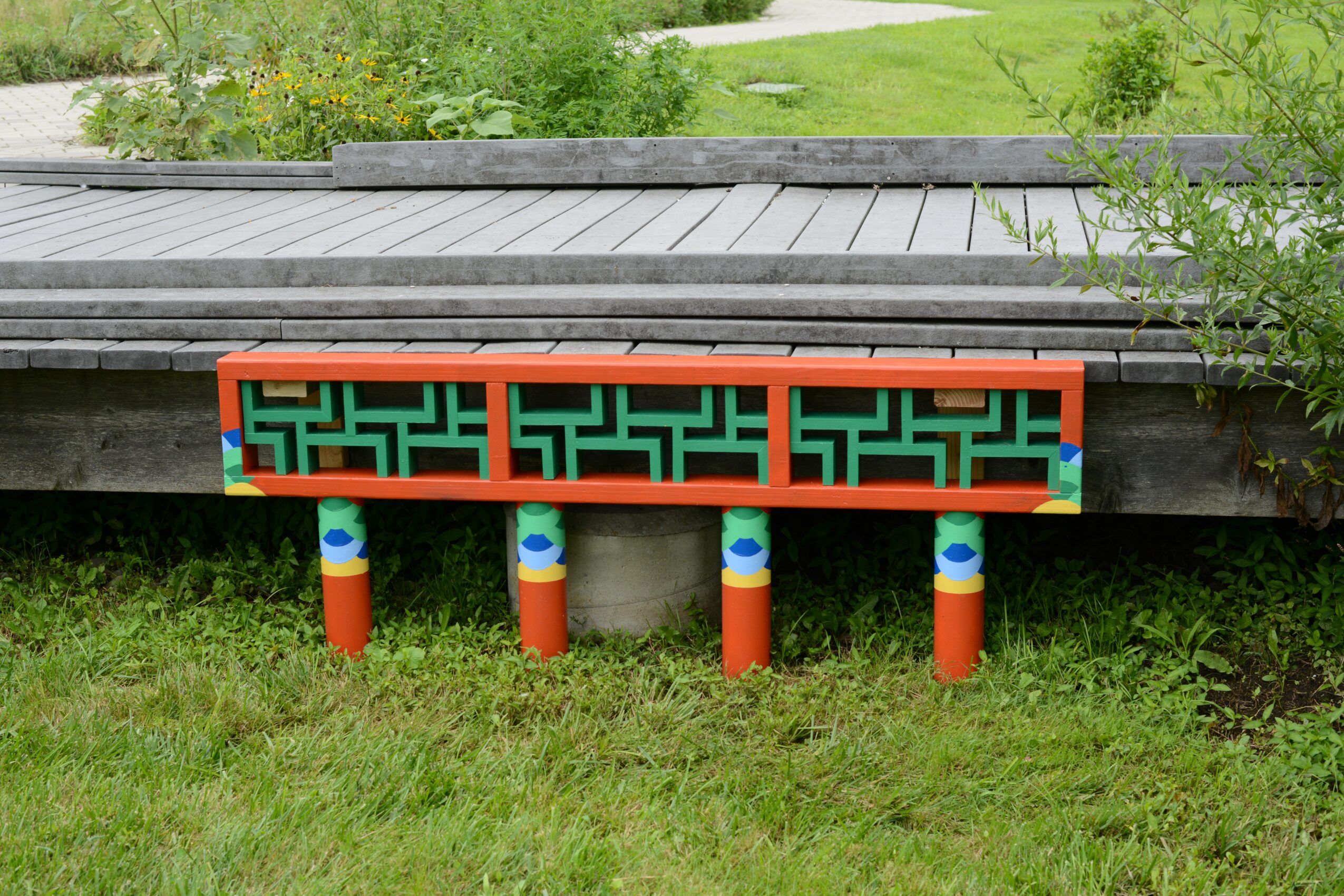
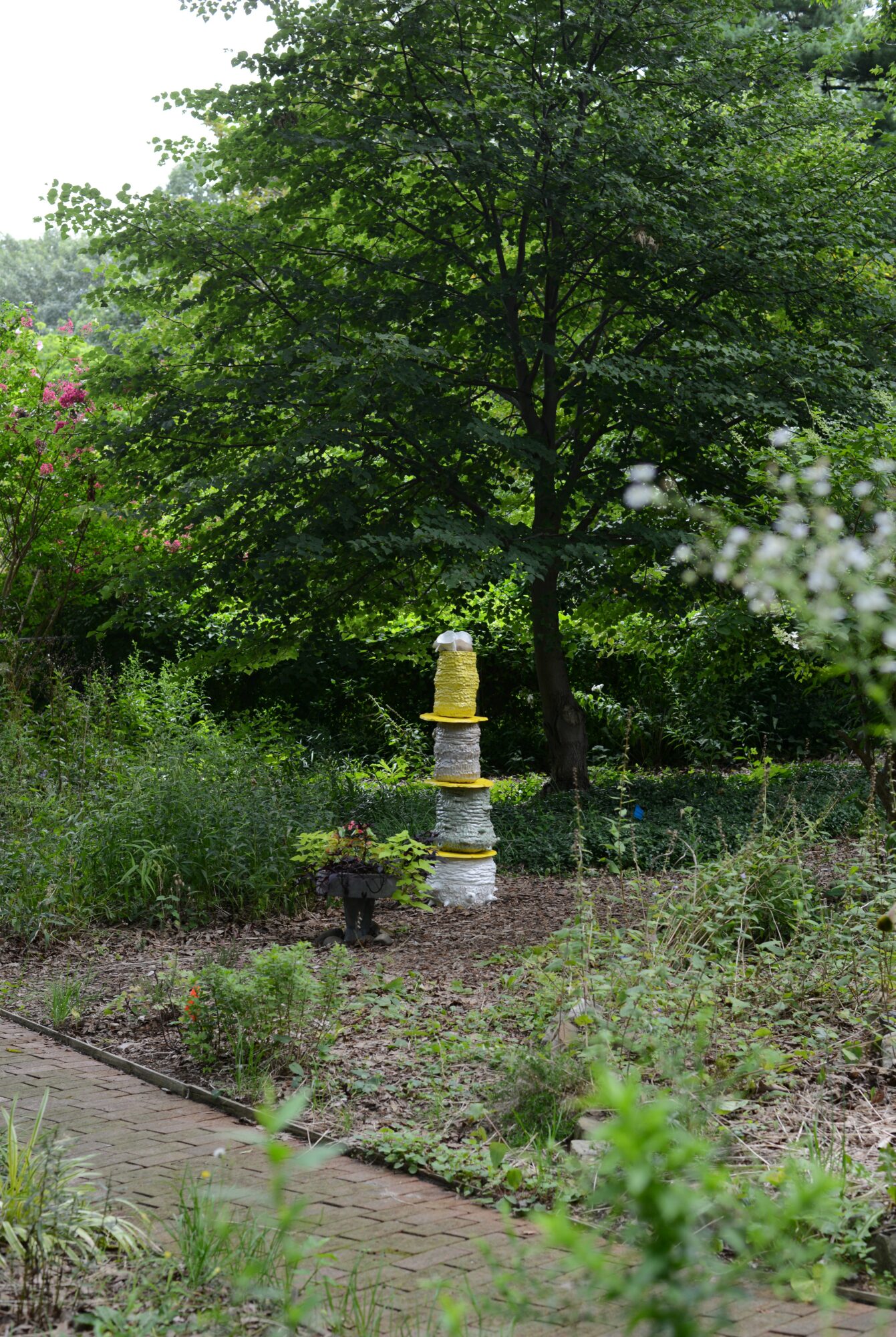
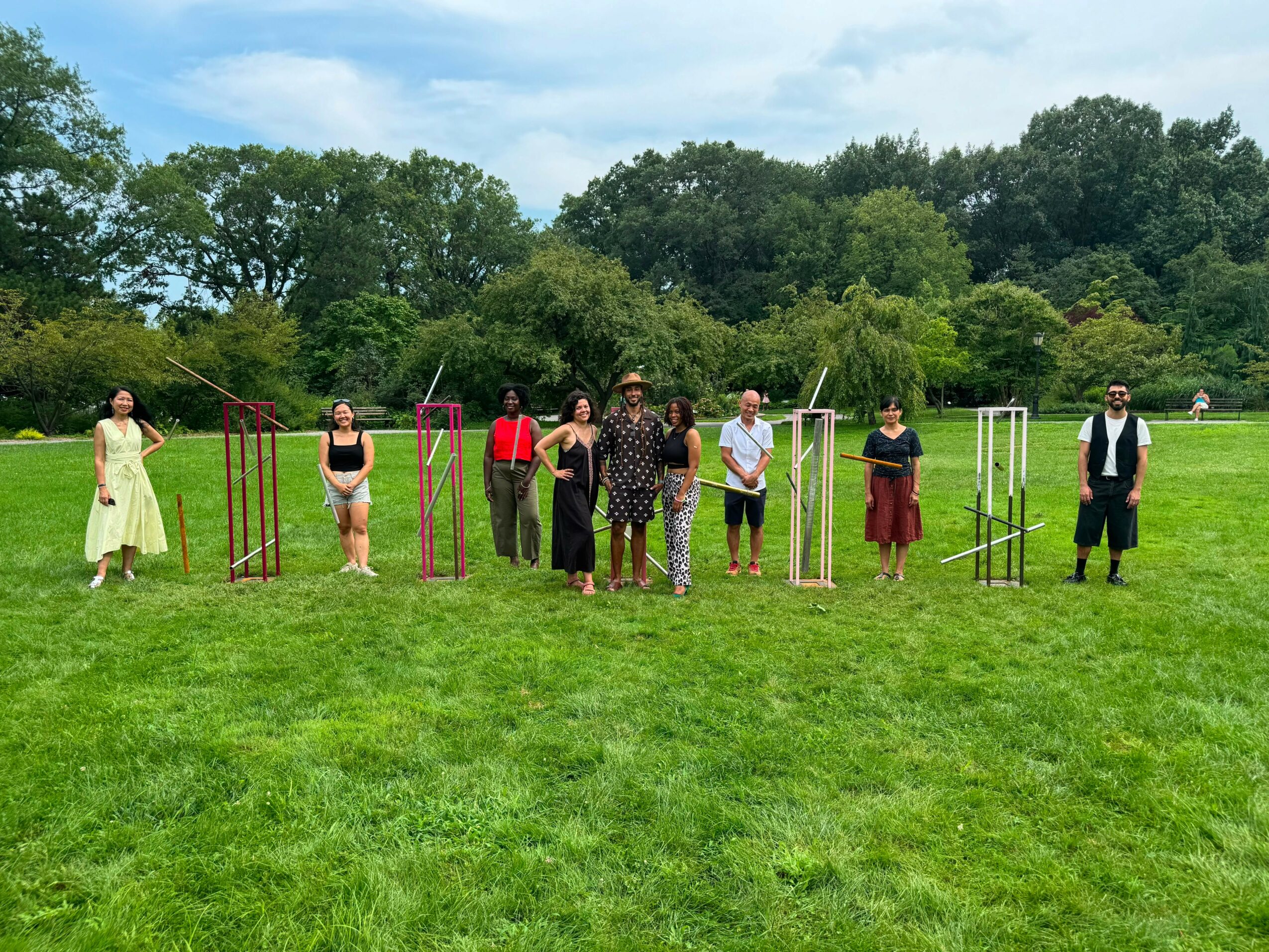
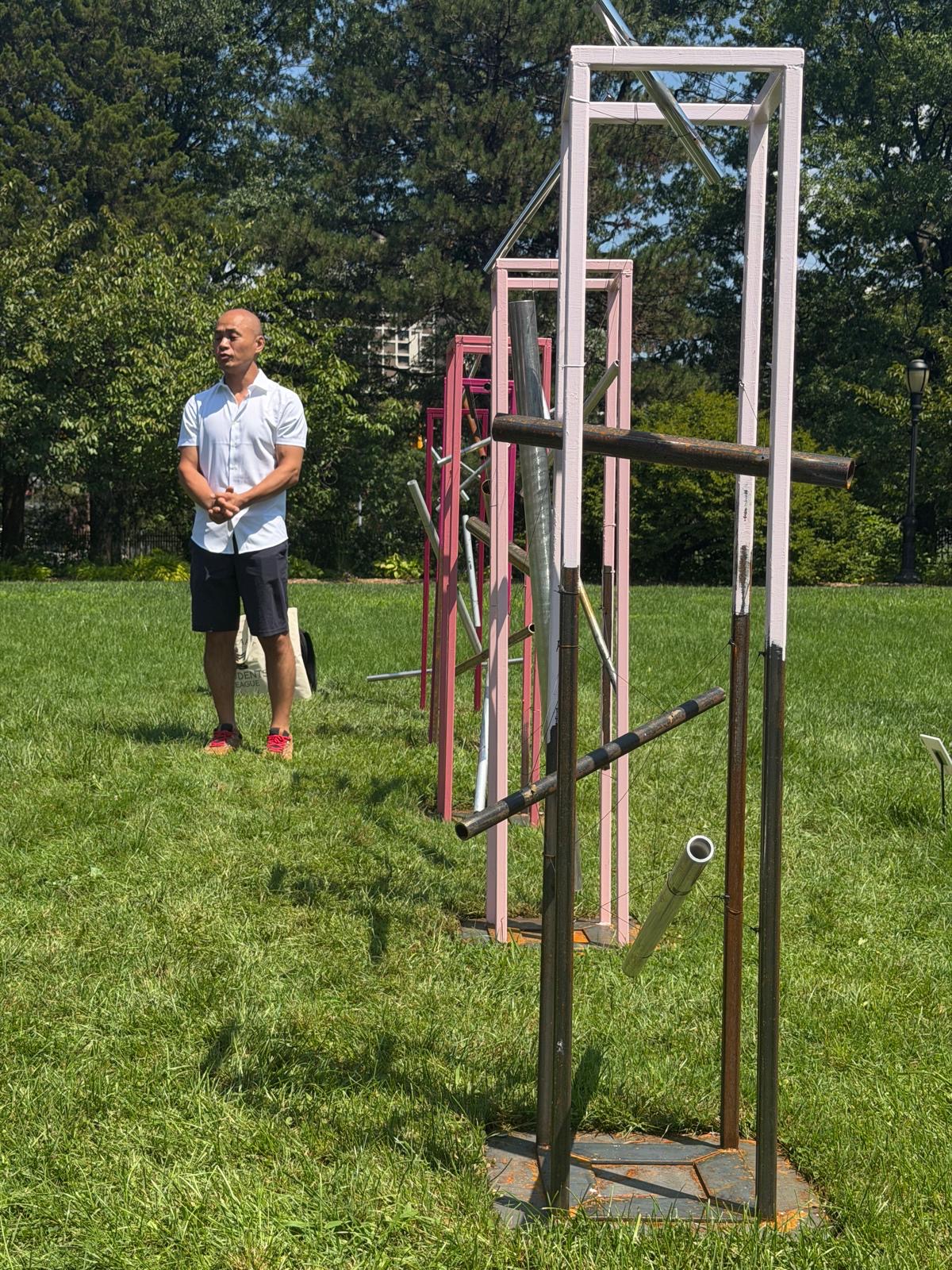
This year’s public exhibition, The Art of Storytelling, is led by our Lead Curator, Darlene Deloris, with Megan Elevado, our AnkhLave Curatorial Fellow. The exhibition features work by Haksul Lee, Marco DaSilva, Elisa Soliven, Naya Lee Chang, Cecile Chong, and Oluwadara Ojugbele.
The exhibition considers storytelling as something much larger than the written or spoken word. Across sculpture, symbolism, cultural traditions, ancestral memory, ecology, and other forms of expression, these artists demonstrate the many ways stories and knowledge can be carried between people and across generations. The curatorial framework also draws upon the idea of the storyteller as a keeper of collective memory and cultural knowledge.
What makes the Garden Project particularly meaningful to me is the setting itself. Visitors do not have to cross the psychological threshold of a gallery to encounter the work. A family visiting the garden, someone interested in plants, a neighborhood resident, or a person who may never describe themselves as an “art person” can unexpectedly find themselves standing in front of contemporary work by an artist whose cultural experiences may resonate with their own.
That accessibility is fundamental to AnkhLave.
Our programming has expanded into exhibitions, artist residencies, curatorial fellowships, public art, community programming, and international cultural exchange, but the Garden Project remains especially important because it embodies the philosophy on which so much of the organization was built.
I’m also proud that AnkhLave has grown beyond my individual curatorial voice. Darlene’s leadership as Lead Curator and Megan’s development through our Curatorial Fellowship are important examples of that. Supporting artists is one part of building an equitable arts ecosystem. Supporting curators and cultural workers who contextualize, advocate for, and create opportunities for those artists is another.
The Art of Storytelling is on view at Queens Botanical Garden through December 6, 2026, when we will conclude the exhibition with a closing tour of the show. After this season we will welcome our 9th Annual AnkhLave Garden Project Cohort presenting at Wave Hill!
Ultimately, I want people to understand that AnkhLave isn’t simply trying to put more BIPOC artists into existing systems. We are interested in expanding where contemporary art can live, who feels invited into the conversation, and who gets to participate in shaping that conversation.
If you had to, what characteristic of yours would you give the most credit to?
I would say curiosity.
Persistence has certainly been necessary, but curiosity has probably shaped my trajectory more profoundly.
Curiosity makes me ask why something has traditionally been done a certain way and whether it actually needs to remain that way. It is part of what led me to question why contemporary art needs to be concentrated within traditional galleries and museums in the first place. If the artists we support come from communities throughout New York City, why shouldn’t ambitious contemporary art also exist in the gardens, parks, historic sites, neighborhoods, and other spaces those communities already inhabit?
That same curiosity informs my personal artistic practice. It has taken me into deeper investigations of ancestry, cultural memory, environmental relationships, spirituality, travel, and cultural exchange. It also informs how I curate because I don’t want to approach another artist already believing I know what their work means. I want to understand the histories, experiences, and cultural contexts from which they are creating.
Curiosity has also made me comfortable with experimentation. AnkhLave itself has grown because we have been willing to try things, learn from them, develop new partnerships, and allow programs to evolve.
Persistence gets me through the difficult parts, but curiosity gives me a reason to keep moving.
It keeps me in a state of wonder, and I think maintaining that capacity for wonder becomes even more important as your work becomes professionalized and your responsibilities increase.
Contact Info:
- Website: https://ankhlavearts.org/
- Instagram: https://www.instagram.com/ankhlave?stkn=MWRrczZ2MHRmMXc5eg%3D%3D&utm_source=qr
- Facebook: https://www.facebook.com/share/1BqSLcV1qt/?mibextid=wwXIfr
- Youtube: https://youtube.com/@ankhlaveadmin5760?si=blh8Uf-E_pP4M2qz



Popular
-

Hidden Gems: Local Businesses & Creatives You Should Know
-

ATL’s Most Inspiring Stories
-

Portraits of Atlanta
-

Peyten Williams Is Helping Parents Trade the Pressure of Perfect Parenting for Better Judgment
-

Dr. Hildiah Martin-Suggs Is Building Second Chances for Youth Who Were Almost Lost in the System
-

From Showing Up to Seeing His Face on a Billboard: Anthony Green Is Just Getting Started