






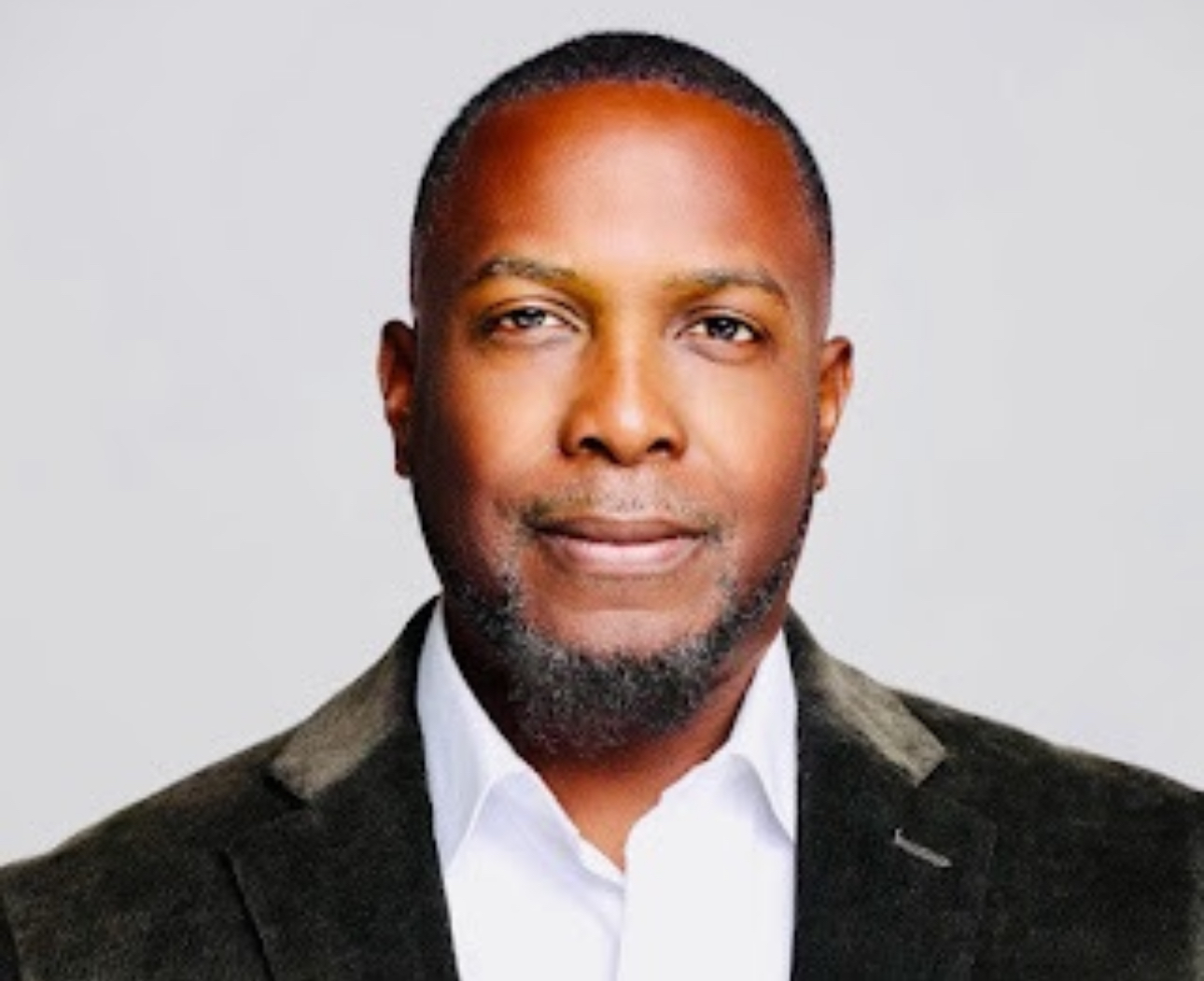
Today we’d like to introduce you to Demetrius Hunter.
Hi Demetrius, so excited to have you on the platform. So before we get into questions about your work-life, maybe you can bring our readers up to speed on your story and how you got to where you are today?
From “Little Zelb” to the Black Farmers Hub
Demetrius Hunter Continues a Family Legacy of Feeding and Serving the Community
Long before Demetrius Hunter became known as the founder of the Black Farmers Hub, his education in community service began beside his father, Zelb Hunter.
Hunter grew up in Southeast Raleigh as the youngest of Zelb Hunter’s ten children. His father’s work was rooted in an even older family tradition. The Hunter family grew food in Johnston County, and Zelb developed a grocery and produce route that brought fresh food directly into Raleigh neighborhoods.
As a late teenager and young adult, Demetrius worked beside his father. Residents and farmers knew the younger Hunter as “Little Zelb.” He unloaded crates of collard greens and other produce, carried groceries for elderly customers and traveled with his father through communities including College Park, Hertiage Park, South Park, Rochester Heights, Halifax Court, Lincoln Park, Halifax Court, Chavis Heights and Walnut Terrace.
Those years became much more than a job.
“The time together doing deliveries was my bonding time with him,” Hunter recalled in a published interview. It was also where, he said, his father taught him how to treat people and remain humble.
At the same time, Hunter was building another foundation: education.
As a teenager, he participated in a summer youth employment program at Shaw University, working as a library assistant. That early exposure to a university environment became part of a longer educational journey that included studies at Saint Augustine’s University and Cornell University, where his studies included organizational management and human resources.
Those disciplines would eventually prove valuable far beyond a classroom.
When neighborhoods changed, traditional grocery routes disappeared and technology transformed the food business, Hunter helped adapt the family model. His father retired in 2008, but the mission did not.
Demetrius expanded the concept through Grocers on Wheels, bringing fresh North Carolina produce and other foods directly into senior communities, low-income neighborhoods and areas with limited grocery access throughout Wake and Durham counties.
The work eventually grew beyond delivering food.
Hunter began connecting farmers directly to consumers, developing markets for Black farmers and advocating for communities where healthy food and economic investment had been absent.
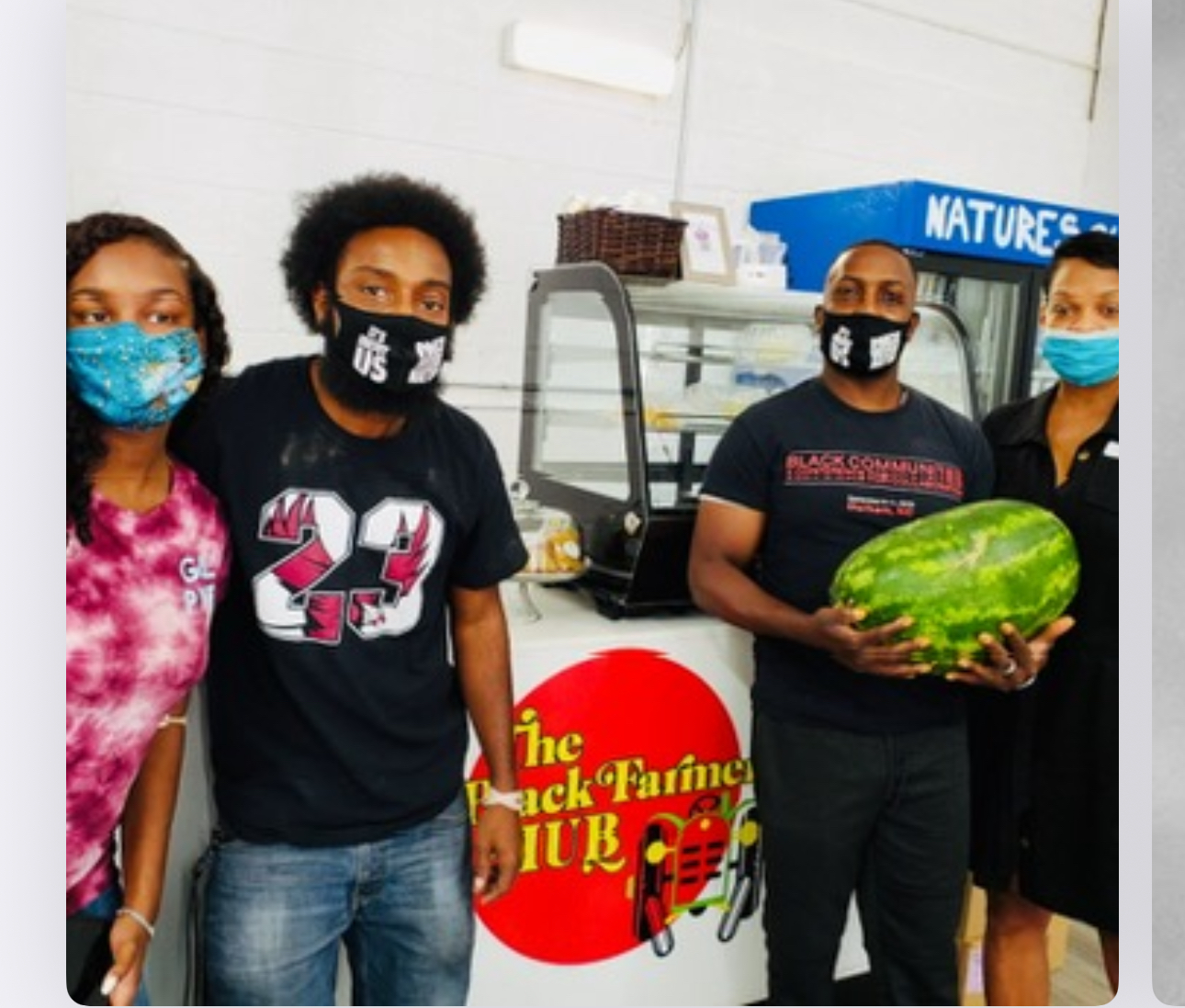
In 2020, during one of the most uncertain periods in modern history, that vision took another major step forward with the establishment of the Black Farmers Hub in Southeast Raleigh.
The Hub became more than a grocery store. It created a marketplace where Black farmers, growers and food entrepreneurs could bring their products into the community while consumers gained greater access to locally produced food.
The evolution is remarkable:
A family farm. A mule and cart. A father’s grocery route. A teenager carrying bags for senior citizens. A mobile grocery operation. Grocers on Wheels. And eventually, the Black Farmers Hub.
But Hunter’s work has never been solely about food.
Agriculture, health, history, land, economic development and community ownership increasingly intersect in his work. His efforts have included farmer education and technical assistance, food-access initiatives, farmers markets, Food Is Medicine programming, wellness initiatives, historical preservation and advocacy for Black farmers and underserved communities.
For Hunter, that work remains connected to what he learned riding beside his father.
The vehicles have changed. The neighborhoods have changed. The technology has changed. And the scale of the work has changed.
The underlying responsibility has not:
Feed people. Support farmers. Preserve the legacy. Build something the next generation can inherit.
I’m sure it wasn’t obstacle-free, but would you say the journey has been fairly smooth so far?
No, it has not been a smooth road. Much of my work has actually grown out of obstacles—both those I experienced personally and those I saw facing Black farmers and underserved communities.
One of the earliest challenges was watching the communities my father and I served change through redevelopment and displacement. As a young man working alongside my father, Zelb Hunter, I saw firsthand how important access to fresh food was for seniors and families. Over time, many of the neighborhoods and communities along his traditional grocery route changed or disappeared. We had to learn how to adapt while still holding on to the mission of serving people.
Another major challenge has been access to capital and resources. Building food infrastructure is expensive. Refrigeration, transportation, staffing, insurance, equipment, facilities and purchasing products from farmers all require significant resources. Small Black-owned organizations and businesses often do not begin with the same financial cushion or access to investment that larger companies have.
Working with Black farmers also exposed me to another side of the struggle. Many farmers can grow excellent products but still struggle to find consistent and profitable markets. I realized that helping people grow food was only part of the solution. We also had to create places where farmers could sell their products and receive fair opportunities.
That realization eventually helped lead to the Black Farmers Hub.
Opening the Hub in 2020 brought its own challenges. We were building during the COVID-19 pandemic while communities were dealing with illness, unemployment, food insecurity and tremendous uncertainty. At the same time, farmers still needed markets and families still needed food.
There have also been challenges associated with maintaining a physical community space. Operating in a historically underserved area while dealing with redevelopment, changing property conditions, rising costs and the realities of running a small business has required us to continually rethink what the next version of the work should look like.
Another challenge has been navigating large institutions and government systems. Grants and agricultural programs can create tremendous opportunities, but the paperwork, reimbursement processes, regulations and administrative requirements can be difficult for small community-based organizations and farmers with limited staff. Sometimes the people who most need a program are also the people with the fewest resources to navigate it.
I have also learned that partnerships are not always equal. Community organizations may bring the relationships, history, trust and people to a project, while larger institutions have greater financial and administrative resources. Part of my journey has been learning to advocate for community organizations and farmers to be treated as genuine partners—not simply as participants in someone else’s vision.
There have been personal sacrifices as well. Community work does not always happen between nine and five. There have been long days, financial risks, disappointments, projects that did not develop as planned, relationships that changed and moments when we simply had to find another way forward.
But those challenges have shaped my philosophy.
My father taught me that serving people requires consistency and humility. I learned that lesson riding beside him and carrying groceries into people’s homes. Years later, I still carry it with me.
The biggest lesson has been that the mission cannot depend on one building, one grant, one program or one partnership.
When one door closes, we have to be willing to build another door.
That is why the work has continued to evolve—from my father’s grocery route, to Grocers on Wheels, to farmers markets, to the Black Farmers Hub, to farmer education, food and wellness initiatives, historical preservation and our continuing efforts to build community-owned agricultural spaces.
The road has certainly not been smooth.
But every obstacle has forced me to think more deeply about sustainability, ownership and legacy. Today, I am less interested in simply creating programs and more interested in building systems and institutions that our farmers, families and communities can own, sustain and pass to the next generation.
Thanks for sharing that. So, maybe next you can tell us a bit more about your business?
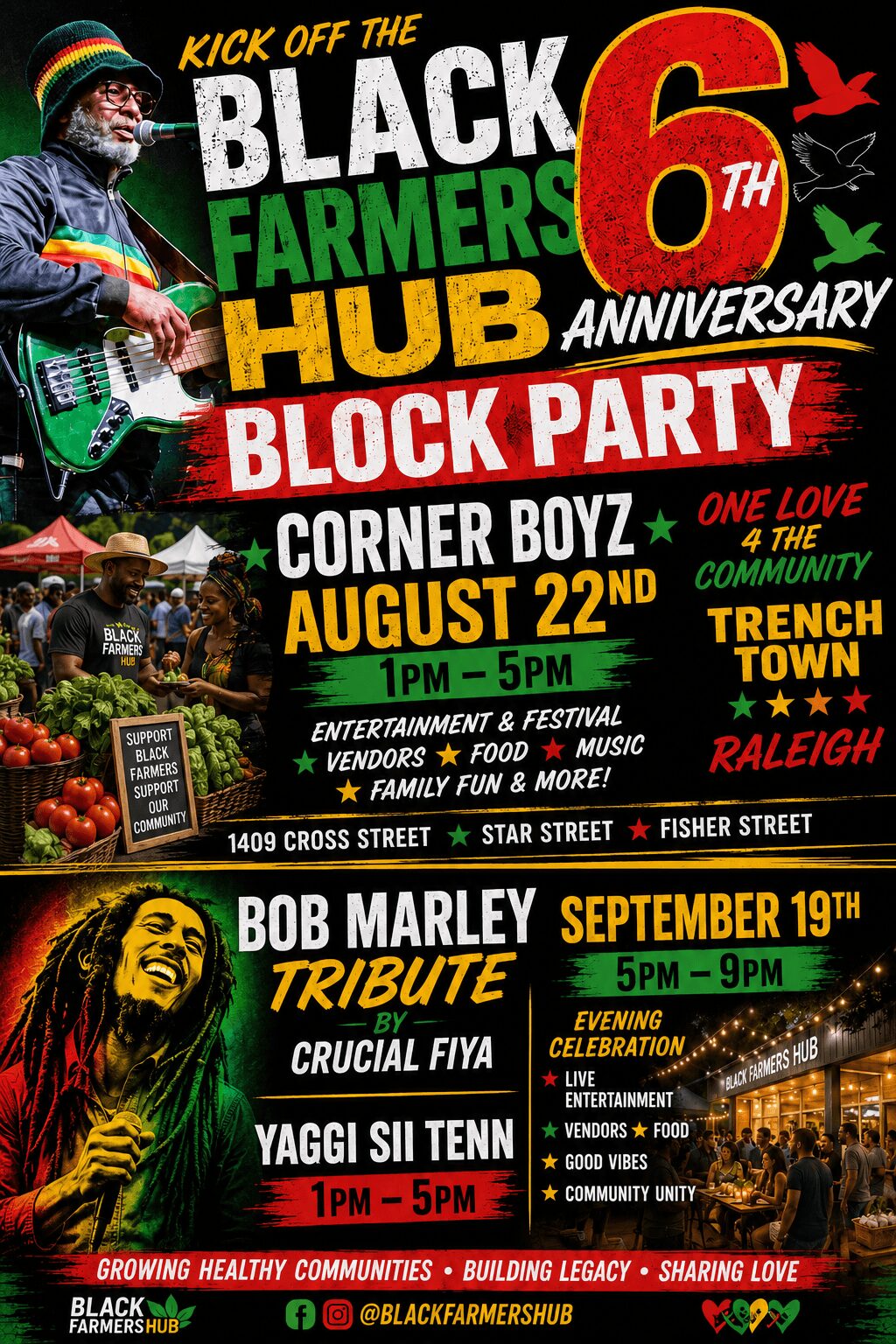
Black Farmers Hub is more than a grocery store or farmers market. We are a Black-led food and agricultural ecosystem built around farmers, food access, health, community ownership and legacy.
Our work is rooted in a multigenerational family tradition. Long before Black Farmers Hub opened its doors in Southeast Raleigh in 2020, I was working alongside my father, Zelb Hunter, delivering fresh produce and groceries to families and seniors throughout Raleigh. That experience taught me that food can be both a business and a form of community service.
Today, Black Farmers Hub builds upon that foundation by creating markets and opportunities for Black, historically underserved and small farmers, while connecting communities with fresh, locally produced food. We specialize in farmer market development, aggregation and distribution, community food access, agricultural education and technical assistance, farmers markets, community wellness, Food Is Medicine initiatives, and garden/farm startups that create added value products. Subsequently bringing income into young mothers household.
What sets us apart is that we understand the food system from multiple sides because we have lived it. We understand the farmer who can grow a great crop but needs somewhere profitable to sell it. We understand the senior who needs fresh food but may not have transportation. We understand neighborhoods that have lost grocery stores. And we understand that simply teaching someone how to farm is not enough if we do not also help build the markets, infrastructure and relationships necessary for that farmer to survive.
Our work has evolved from my father’s grocery route to Grocers on Wheels, and then into Black Farmers Hub, The People’s Farmers Market and broader agricultural and community-development initiatives. We have worked with farmers, healthcare institutions, universities, government agencies, churches, community organizations and researchers to find innovative ways to connect agriculture with health and economic opportunity.
One area I am particularly proud of is our work helping farmers move beyond simply growing food toward building viable agricultural businesses. Through outreach, education and technical assistance, including our USDA-supported work, we have helped socially disadvantaged, veteran, beginning and historically underserved farmers gain knowledge, prepare for farming, start agricultural operations and identify new market opportunities.
We are also helping broaden the conversation about what agriculture can be. Food Is Medicine with Dr. Danner, mental wellness, agritourism, indoor growing, technology, telehealth, historical preservation and community education can all have a place within a modern agricultural system.
Perhaps what I am most proud of, brand-wise, is that Black Farmers Hub has become bigger than a physical building.
The name represents a gathering point—a HUB.
It is where farmers meet consumers, agriculture meets health, history meets the future, and community needs meet community-created solutions. Our goal has never been to make people dependent on Black Farmers Hub. Our goal is to create opportunities, knowledge, markets and infrastructure that allow farmers and communities to become stronger themselves.
Our next chapter is increasingly focused on land, legacy and sustainability. We are developing ways to bring agriculture, farmer training, wellness, Food Is Medicine, community education and agritourism together in spaces where people can not only purchase food, but experience how food is grown, understand its relationship to health and reconnect with the history of the land.
I want readers to understand that Black Farmers Hub did not appear overnight. It is the continuation of generations of work. What started with my family growing food and my father carrying produce into Raleigh communities evolved into mobile food distribution, farmers markets, farmer advocacy and eventually a physical Hub.
We are not simply selling food. We are helping build a food system in which farmers can earn, communities can access healthy food, history can be preserved, and the next generation can inherit something stronger than what we started with.
That is what Black Farmers Hub represents: food, farmers, health, ownership and legacy—all connected
Risk taking is a topic that people have widely differing views on – we’d love to hear your thoughts.
I believe there is a difference between taking a risk and taking a chance. A chance can be based on hope. A risk, at least for me, is something I take after looking at the need, understanding what could be lost, and deciding that what could be created is worth pursuing.
I have taken several major risks throughout my professional journey.
One of the earliest was deciding that the work my father, Zelb Hunter, had built should not end with his generation. The traditional way he delivered groceries and produce was changing. Neighborhoods were being redeveloped, customers were being displaced, technology was changing, and the economics of food distribution were different. I could have simply looked at my father’s work as something from another era. Instead, I took the risk of adapting it.
That eventually grew into Grocers on Wheels and a much larger commitment to food access.
Another significant risk was opening Black Farmers Hub in Southeast Raleigh in 2020, during the COVID-19 pandemic. There could hardly have been a more uncertain time to open a new community-based food business. But the pandemic also exposed exactly why the work was needed. Families needed access to food, farmers needed places to sell their products, and communities needed local organizations capable of responding quickly.
Opening the Hub required financial risk, personal sacrifice and faith in an idea that had no guarantee of succeeding. We were attempting to create something that was not simply another grocery store. We wanted a place where Black farmers and food entrepreneurs could have market access and where the community could see itself represented in the food system.
I have also taken risks by choosing mission over comfort.
There are easier ways to operate a business than working with small and historically underserved farmers, addressing food insecurity, navigating government programs, building community partnerships and operating in neighborhoods undergoing economic change. Community-based work can require you to continue investing time and resources long before you know whether the financial return will follow.
But I have learned something important about risk: sometimes maintaining the status quo is the greater risk.
If we don’t create markets for our farmers, we risk losing farms and farmland. If we don’t build community-owned food infrastructure, we remain dependent upon someone else deciding whether our neighborhoods are worth investing in. If we don’t preserve our history, we risk allowing other people to tell our stories without us. And if one generation doesn’t take some risks, the next generation may inherit fewer opportunities.
That perspective comes from my father. When I was young, I watched him work with what he had. His generation did not always have access to abundant capital, technology or institutional support. They used relationships, reputation, ingenuity and hard work to create opportunities.
My approach today is similar, although the tools are different.
Some risks I have taken have worked exactly as I hoped. Others have required adjustment, and some have taught me difficult lessons. I no longer measure success by whether every idea works according to the original plan. I measure it by whether I learned enough to make the next decision stronger and whether the work continues moving the mission forward.
At this stage of my life, I am increasingly willing to take risks around ownership, land, agriculture, health, history and building institutions that can outlive me.
I don’t believe in reckless risk. I believe in purposeful risk.
For me, the question is not simply, “What could I lose if I do this?”
I also ask, “What could our community lose if nobody is willing to try?”
That question has guided much of my journey—from working beside my father, to Grocers on Wheels, to Black Farmers Hub, and now toward building the next generation of agricultural, health and legacy-centered spaces.
I would rather take a thoughtful risk trying to build something our community can inherit than play it safe and leave the next generation with the same problems we inherited.
Pricing:
- Fresh Produce & Local Foods: Prices vary by product, season, availability and participating farmer. We work to keep fresh, locally grown food accessible to the community while supporting fair prices for farmers.
- SNAP/EBT & Food Access: We support food-access programs and work to make fresh, nutritious food available to families across different income levels.
- Farmers Markets & Community Events: Many Black Farmers Hub and People’s Farmers Market community events are free and open to the public. Vendor fees, when applicable, vary by event.
- Partnerships & Community Programming: Food-access programs, wellness initiatives, agricultural education and special community partnerships are customized according to the scope of the project.
Contact Info:
- Website: https://Thesweeterjuice.com
- Instagram: @blackfarmershub
- Facebook: @blackfarmershub
Popular
-

Hidden Gems: Local Businesses & Creatives You Should Know
-

ATL’s Most Inspiring Stories
-
From Showing Up to Seeing His Face on a Billboard: Anthony Green Is Just Getting Started
-

Portraits of Atlanta
-

Wayne Smith Jr on Survival, Psychological Thrillers, and the Cost of Staying Alive
-

Meet Laya Hoffman | Award-Winning Voice Actor, Live Announcer & Champion for Authentic Storytelling