






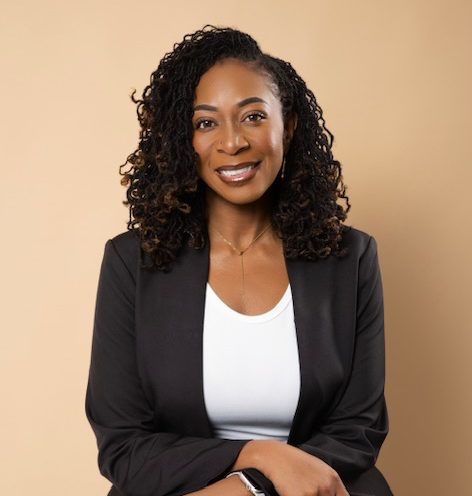
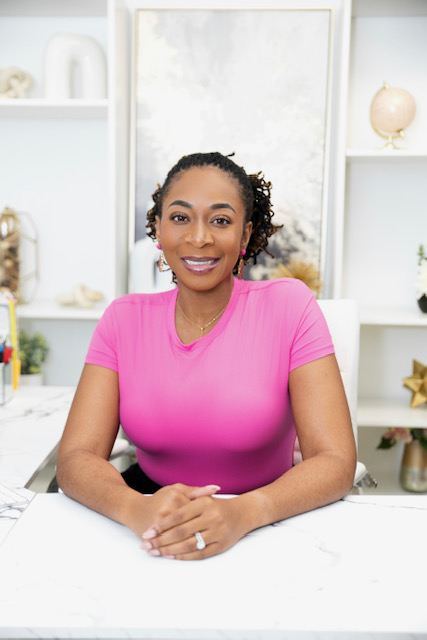
Today we’d like to introduce you to Camille Brockett-Walker.
Hi Camille, thanks for joining us today. We’d love for you to start by introducing yourself.
Can you briefly walk us through your story – how you started and how you got to where you are today?
Honestly, nursing wasn’t the plan. I’m a first-generation American from a Caribbean family, and in a lot of Caribbean households, you’ll find nurses or teachers, but growing up, that wasn’t necessarily what I imagined for myself. I started college at Spelman here in Atlanta as a psychology major, even briefly flirted with the idea of medical school before watching my pre-med friends run themselves ragged and thinking, “that’s not it for me!”
The real turning point came when I landed a job in a biochemistry research lab at Morehouse School of Medicine, studying nutrition and sickle cell disease. The lab work was interesting, but what changed everything was the exposure I got to the Grady Sickle Cell Center, my first real, meaningful interaction with patients. I loved it immediately. A family friend who was a psychiatric nurse noticed something in me before I did: that I was comfortable with both the science and the human connection. She simply asked, “Have you ever thought about nursing?” That question sent me down a completely different path.
Once I decide something, I move, so I transferred from Spelman to Kennesaw State University to pursue nursing. From there, I completed my BSN, and worked as an RN on a surgical floor and in the emergency room at Wellstar Kennestone Hospital. Upon graduation and while working as a new RN, I began graduate school at Emory University, in their Nurse Practitioner program starting in 2006. I graduated in December 2007 and took my first NP job in the Emergency Department at Emory University Hospital, the same site where I’d trained as a student.
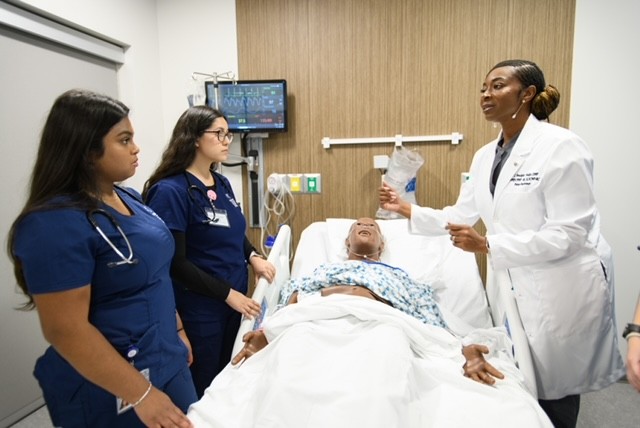
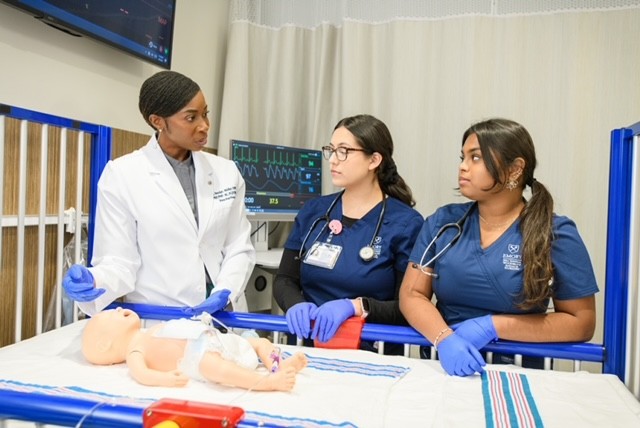
From there, my clinical world kept expanding, emergency medicine, urgent care, critical care, hospice, oncology, psychiatry, hospital medicine, student health, aesthetics. But it was returning to Kennesaw State as a clinical instructor that revealed my real passion: teaching. That eventually led me to pursue my Doctor of Nursing Practice, and then into full-time academia, where I became Assistant Director of the Adult-Gerontology Acute Care Nurse Practitioner program, and now serve as Assistant Dean at Emory’s Nell Hodgson Woodruff School of Nursing, focused on recruiting and developing nursing faculty.
Alright, so let’s dig a little deeper into the story – has it been an easy path overall and if not, what were the challenges you’ve had to overcome?
Has it been a smooth road? If not, what were some of the struggles along the way?
Not even close. And I think it’s important to say that out loud, because people meet me now as a nurse practitioner, educator, and academic leader and assume it was a straight line. It wasn’t.
After finishing my prerequisites, I applied to nursing school and got waitlisted. I was devastated. But I scheduled a meeting with the admissions counselor to go over my application, and it turned out there had been an administrative error in my application. She handed me my acceptance letter right there in her office. That early moment taught me something I carry with me to this day: you have to advocate for yourself, the same way we teach nurses to advocate for their patients.
Then, once I was actually in nursing school, I failed a course. That was one of the lowest points of my journey watching my classmates move forward while my whole timeline fell apart. I had a choice in that moment: quit, or persist. I chose to persist, and that decision shaped how I’ve approached every setback since.
Becoming a new nurse practitioner in my early twenties came with its own kind of struggle, too. I was giving orders to nurses with decades more experience than me, and I wrestled hard with imposter syndrome. If I’m honest, it still shows up sometimes, even in the role I hold now. What I’ve learned is that you have to balance humility with confidence. You will never know everything. You just have to trust your training and your capacity to keep learning.
And later, pursuing my doctorate while working full-time night shifts and raising two young children, for three years, I barely slept. It was one of the most intense seasons of my life. But it’s also proof that persistence isn’t a one-time decision; it’s something you keep choosing.
Thanks for sharing that. So, maybe next you can tell us a bit more about your work?
We’d love to learn more about your work. What do you do, what do you specialize in, what are you known for? What are you most proud of? What sets you apart?
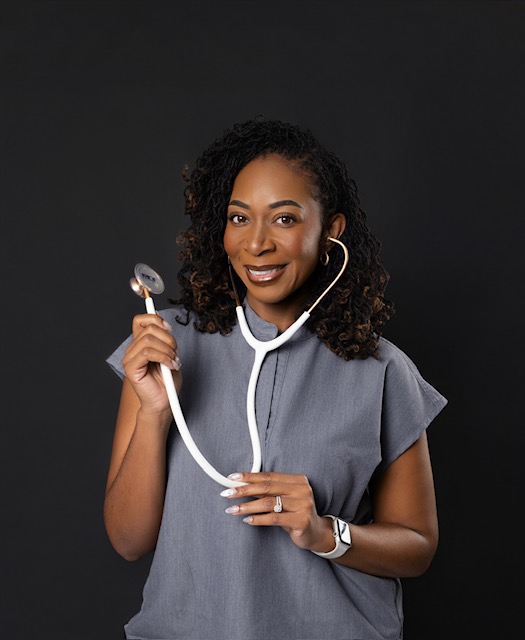
I’m a double board-certified Adult-Gerontology Acute Care and Family Nurse Practitioner with nearly two decades of experience in emergency, ICU, and acute care settings. Clinically, I’m known for quick judgment under pressure and for genuinely valuing interdisciplinary teamwork. Critical care is where my passion and purpose meet. There’s something about the ability to act swiftly, think critically, and change the trajectory of someone’s life in a matter of moments that I’ve never stopped being drawn to.
Outside the clinical space, I’m faculty at Emory’s Nell Hodgson Woodruff School of Nursing, and I now serve as Assistant Dean, where I focus on recruiting and developing nursing faculty and shaping how we train the next generation of nurse practitioners.
What sets me apart, I think, goes back to a lesson I learned very early in my career: people are always watching how you show up. During my clinical rotations, what distinguished me wasn’t just clinical skill, it was initiative. Arriving early, reviewing charts before I was asked to, preparing to present cases, treating everyone with respect, whether that’s the clerk, environmental services, nurses, or physicians. Every single person contributes to the culture of a workplace, and I’ve never forgotten that.
What I’m most proud of isn’t an award or a title, it’s stepping fully into leadership. For a long time, I didn’t see myself the way my mentors and colleagues saw me. I’ve never really thought of myself as extraordinary; I think of myself as someone who works hard, believes in students, and keeps moving forward even when doubt shows up. But eventually I decided to trust the vision others had of me, and stepping into that has let me mentor, create, and influence change in a way I couldn’t have from the bedside alone.
We’d love to hear about how you think about risk taking?
Can you talk to us about your view on risk taking? Have you taken any major risks? How do you think about risk in general?
I don’t think of myself as reckless, but I am decisive, and I think decisiveness and risk tolerance are closely related. Once I commit to a direction, I move on it, even when it’s uncomfortable.
The clearest example is transferring from Spelman to Kennesaw State University to pursue nursing. Leaving an HBCU experience I genuinely loved wasn’t easy. There was real loss in that decision, a community and an identity I was stepping away from. But I understood that growth sometimes requires courage, and staying somewhere comfortable wasn’t going to get me where I needed to go.
Choosing to pursue advanced practice nursing directly, rather than working as a bedside RN for years first, was another risk. At the time, it wasn’t common for nurses to move straight into NP school. And later, pursuing my DNP while working full-time night shifts and raising two young children was a risk of a different kind: a risk to my health, my sleep, my margin for error, all for three years straight.
The way I think about risk now is this: the biggest risk usually isn’t failing, it’s staying in a place you’ve outgrown because it feels safer than the unknown. Failing a course in nursing school felt like the end of something at the time. In hindsight, it was one of the most important turning points in my life, because it forced me to choose between quitting and persisting. I chose to persist, and that choice has defined nearly every risk I’ve taken since. Your journey doesn’t have to be perfect to be powerful, it just has to keep moving forward.
Contact Info:
- Instagram: drcamillethenurseprofessor
- LinkedIn: https://www.linkedin.com/in/camille-brockett-walker-dnp-fnp-bc-agacnp-bc-70459a103/








Popular
-

Hidden Gems: Local Businesses & Creatives You Should Know
-

ATL’s Most Inspiring Stories
-

Portraits of Atlanta
-

Dr. Hildiah Martin-Suggs Is Building Second Chances for Youth Who Were Almost Lost in the System
-

From Showing Up to Seeing His Face on a Billboard: Anthony Green Is Just Getting Started
-

Wayne Smith Jr on Survival, Psychological Thrillers, and the Cost of Staying Alive