





Today we’d like to introduce you to Sylvia Nwaozuzu.
Hi Sylvia, we’re thrilled to have a chance to learn your story today. So, before we get into specifics, maybe you can briefly walk us through how you got to where you are today?
My journey into wig making began with my own experience with hair loss in the mid-2000s. At the time, I struggled to find a wig that looked as natural as the sew-ins I was used to wearing during my Corporate days in London. The options available didn’t give me the look or confidence I wanted, so I started experimenting with ways to create my own.
Before modern wigs became what we know today, I was gluing hair wefts onto stocking caps. It worked until I traveled to Nigeria and found myself in 102-degree heat. The glue began melting, and the wefts started slipping from the cap. It was an uncomfortable experience, but it also became a defining moment in my journey. I knew I needed to find a secure and professional way to construct wigs.
That search eventually led me to machine-sewn wig making. I spent years developing my skills, making wigs, and selling them to clients. Through that experience, I learned the technical side of wig construction and began to understand what women truly wanted from their wigs: security, comfort, a natural appearance, and the confidence to feel like themselves.
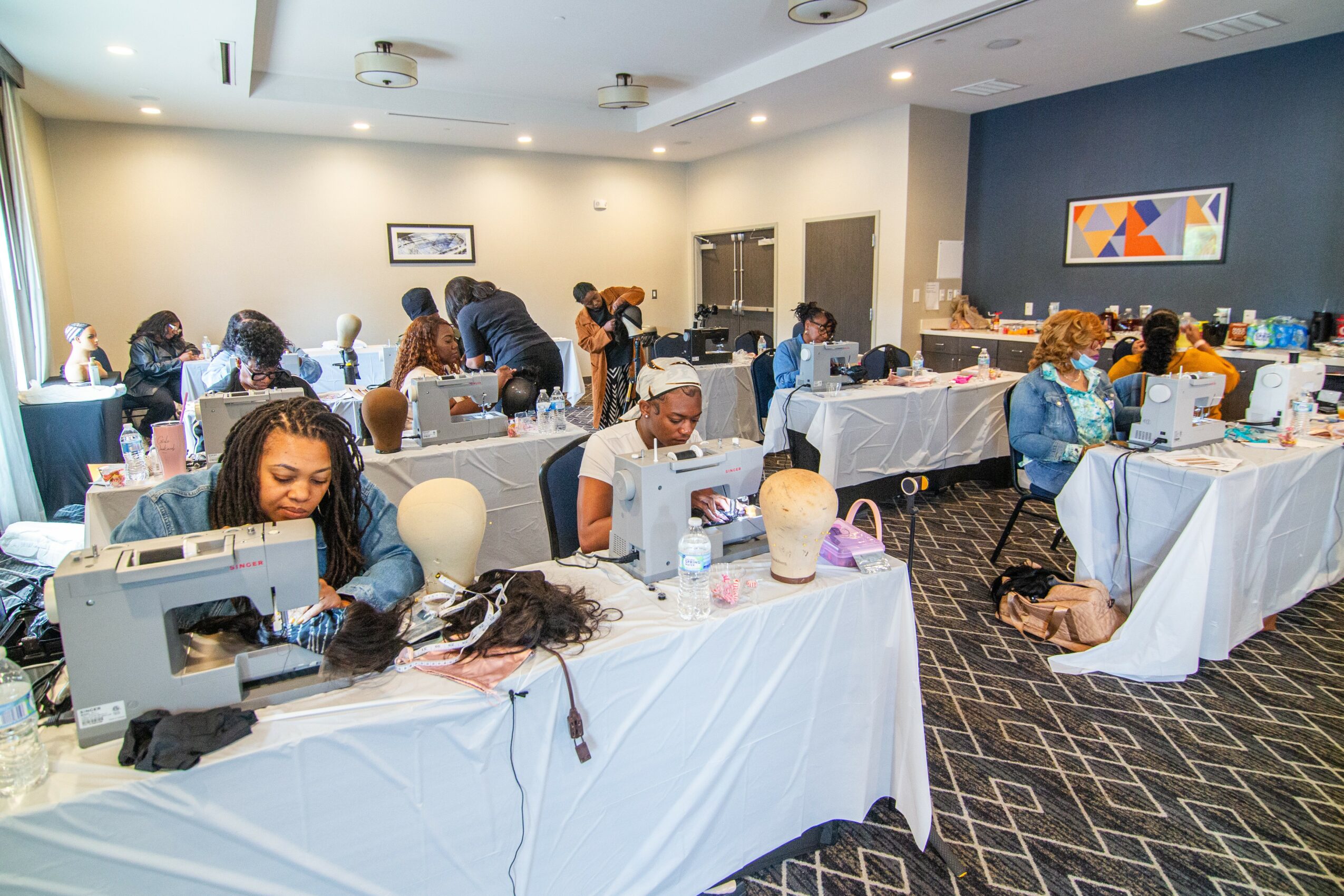
After years of making and selling wigs, I moved into education. I wanted to give other women the hands-on guidance I wished I had when I was learning. Today, I teach women how to construct professional wigs using a sewing machine, even if they arrive with little or no previous experience.
My work as an educator has taken me across three continents, with classes in London, Toronto, Nigeria, and Atlanta. Women have also traveled to Atlanta from across the United States, Canada, the Bahamas, Barbados, Curaçao, and the U.S. Virgin Islands to learn wig making from me.
Some students want to add a premium service to an existing beauty business. Others want to create an additional source of income, serve women experiencing hair loss, or finally use the sewing machine they have been afraid to touch.
Over time, teaching wig making became a women’s empowerment movement for me. I have watched women enter the classroom feeling nervous and leave with a completed wig, a valuable skill, and a new level of confidence in what they can create.
What began as my search for a natural looking solution to hair loss has grown into an opportunity to help women build skills, generate income, and create new possibilities for themselves and their families.
Can you talk to us a bit about the challenges and lessons you’ve learned along the way. Looking back would you say it’s been easy or smooth in retrospect?
It definitely hasn’t been a smooth road. When I started making wigs, the industry looked completely different. I had a lot to learn, so I sought out education early in my journey. That training gave me the foundation and confidence I needed to keep going, but I still had to practice, make mistakes, and figure out what worked for me.
I’ve continued to invest in my education throughout my career because this industry keeps evolving. I never want to become so comfortable that I stop learning. Every class, course, and experience has helped me improve my craft, grow my business, and become a better teacher.
Once I learned how to make wigs properly, I faced another challenge: turning that skill into a business. Making a good wig was one thing. Learning how to find clients, price my work, manage orders, and build trust took time.
Teaching came with a different learning curve. I knew how to make wigs, but I had to learn how to explain each step in a way that made sense to someone who had never touched a sewing machine. I also had to learn how to spot what a student was doing wrong and help her correct it without making her feel discouraged.
A lot of the women who come to my classes are already talented hairstylists. They know wig making could help them grow, but fear has held them back. Some are intimidated by the sewing machine. Others worry about ruining expensive bundles. Many have owned a machine for years and still haven’t used it.
I understand that feeling. Education gave me the confidence to move forward, and now I get to provide that same confidence for other women. That is a big part of why I teach the way I do.
Can you tell our readers more about what you do and what you think sets you apart from others?
My work centers on teaching women how to make professional wigs using a sewing machine. I offer hands-on group workshops, private training, and online courses for complete beginners and experienced beauty professionals.
My Atlanta workshop is a full-day experience where each student constructs a wig from start to finish. I teach the entire process, including taking measurements, preparing the wig cap, placing the closure, drawing guidelines, doubling the wefts, setting up the machine, and sewing the wig.
I’m known for making the technical side of wig making easier to understand. I pay close attention to each student because everyone struggles with something different. One person may have difficulty controlling the machine, while another needs help with her tension, measurements, or closure placement. I can usually spot the issue quickly and help her correct it before frustration takes over.
That personal attention is a big part of what sets my training apart. Students get hands-on correction during class and continued support afterward. I want them to understand why something went wrong, how to fix it, and how to repeat the process when they get home.
I also bring business conversations into the classroom. Some students want to add wigs to their salon services, while others want to serve women experiencing hair loss or create another source of income. I help them think about how they can use the skill based on their own experience, community, and goals.
I’m most proud of the moment a student realizes she can actually do this. Many women arrive feeling nervous, especially if they have never used a sewing machine or had a disappointing experience with another course. Watching them leave with a completed wig and the confidence to make another one is the part of my work that means the most to me.
Let’s talk about our city – what do you love? What do you not love?
What I love most about Atlanta is the energy. It’s a city filled with people who are building businesses, creating opportunities, and turning their ideas into something real. As a woman and business owner, I appreciate seeing so many professionals, creatives, and entrepreneurs doing well here. There’s also a strong beauty community, so Atlanta feels like the right home for the work I do.
What do I like least? The traffic, without question. Atlanta’s so spread out that a short distance can easily become a long drive. You’ve got to plan your day around traffic, especially when you’re organizing an event and people are coming from different parts of the city. Atlanta’s taught me to leave early and add extra time to everything.
Contact Info:
- Website: https://www.fabluxwigs.com
- Instagram: https://www.instagram.com/fabluxwigcoach/
- Youtube: https://www.youtube.com/@Fabluxwigs


Popular
-

Hidden Gems: Local Businesses & Creatives You Should Know
-

ATL’s Most Inspiring Stories
-

Portraits of Atlanta
-

Peyten Williams Is Helping Parents Trade the Pressure of Perfect Parenting for Better Judgment
-

Dr. Hildiah Martin-Suggs Is Building Second Chances for Youth Who Were Almost Lost in the System
-

From Showing Up to Seeing His Face on a Billboard: Anthony Green Is Just Getting Started